

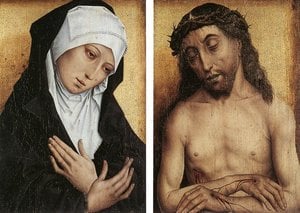
 Oil On PanelEarly Netherlandish
 1459Renaissance
 56.0 x 147.0 cm
 슈타틸리체 무제엔
온라인 미리보기보다 훨씬 뛰어난 품질의 고해상도 디지털 이미지를 구매해 보세요.
각 파일은 사내 전문가가 고급 도구와 숙련된 수동 리터칭 기술을 사용하여 세심하게 준비합니다. 우리는 모든 이미지가 탁월한 선명도, 정확한 색상 재현력, 그리고 미세한 디테일까지 완벽하게 갖추도록 보장합니다.
최종 파일은 전문적인 편집 및 인쇄 환경에서 즉시 사용할 수 있도록 최적화되어 72시간 이내에 이메일로 발송됩니다. 이는 세계적인 디자인 스튜디오, 출판사 및 갤러리가 신뢰하는 것과 동일한 품질입니다.
개인 소장 및 전시, 인쇄, 창작 프로젝트를 위한 고해상도 파일을 다운로드하세요. ( 프린트 주문으로 전환 수제 페인팅으로 전환하기)
WahooArt.com를 선택하시면 단순히 이미지를 받는 것을 넘어, 정밀한 보정 과정을 거친 전문적인 디지털 예술 작품을 만나보실 수 있습니다. 모든 작품에는 만족 보장 서비스가 함께 제공되며, 주문 시 다음과 같은 사항들이 자동으로 포함됩니다:

주문 후 72시간 이내에 고해상도 디지털 이미지 파일이 이메일로 발송되며, 즉시 사용하실 수 있습니다.

귀하의 작품은 고급 AI 도구와 수동 편집 과정을 거쳐 전문적으로 최적화되며, 이를 통해 디테일과 선명도, 색상의 정확도를 극대화합니다.

파일을 실수로 삭제하거나 분실하셨나요? 걱정 마세요. 언제든 무료로 다시 보내드립니다.

관세나 부가세, 배송비 부담 없이 작품을 즉시 감상하세요 - 디지털 다운로드는 언제나 면세 혜택이 적용됩니다.

전문적인 도구와 색상 관리 시스템을 통해 디지털 이미지가 원본의 색상을 최대한 정확하게 구현하도록 보장합니다.

구매하신 디지털 이미지에 만족하지 못하실 경우, 60일 이내에 수정 또는 100% 환불을 진행해 드립니다 - 어떠한 문의도 필요 없습니다.

만족하지 못하셨나요? 디지털 파일을 수령하신 후 60일 이내라면 별도의 이유를 밝힐 필요 없이 전액 환불해 드립니다.

이미지 3매 구매 시 10% 할인 - 5매 구매 시 15% 할인 - 10매 이상 구매 시 20% 할인. 크리에이티브 프로젝트, 갤러리, 에이전시에 매우 유용합니다.
In the delicate brushstrokes of Simon Marmion’s "Scenes from the Life of St. Bertin," we are transported back to the year 1459, a period where the spiritual and the terrestrial were inextricably woven together. This masterpiece serves as more than just a religious narrative; it is a profound window into the soul of the late Middle Ages. As one gazes upon the composition, the viewer is immediately drawn into a world of monastic piety and communal devotion. The painting captures a pivotal moment in the hagiography of St. and Bertin, presenting a tapestry of human interaction where monks and followers gather with a sense of shared purpose. Marmion, often celebrated as the "Prince of Illuminators," utilizes his mastery of detail to create a scene that feels both intimate and monumental, inviting the observer to witness the quiet strength found in religious unity.
The artistry of this piece is deeply rooted in the Early Netherlandish tradition, characterized by an exquisite attention to texture and light. Marmion’s technique allows for a remarkable clarity, where the heavy folds of medieval garments, the cold solidity of stone pillars, and the soaring arches of the background architecture all coexist in a harmonious balance. The artist employs a palette that, while grounded in the earthy tones of the 15th century, is punctuated by vibrant highlights that guide the eye through the complex narrative. Each figure, from the central group of men engaged in solemn discussion to the solitary figures drifting in the periphery, is rendered with a psychological depth that suggests a life lived in constant contemplation of the divine.
Beyond the human drama, the architectural elements within the work play a crucial role in establishing its historical and symbolic weight. The presence of grand arches and imposing structures does not merely provide a setting; it symbolizes the enduring strength of the Church and the stability of the monastic order. These stone sentinels frame the characters, creating a sense of sacred space that separates the holy narrative from the mundane world. For the collector or interior designer, this interplay between the structural and the organic offers a sophisticated aesthetic balance, making it an ideal centerpiece for spaces that value historical depth and classical elegance.
The emotional impact of "Scenes from the Life of St. Bertin" lies in its ability to evoke a sense of timelessness. There is a palpable stillness within the movement—a moment frozen in time that speaks to the eternal nature of faith. The way the light falls upon the gathered figures creates a soft, ethereal glow, reminiscent of the illuminated manuscripts for which Marmion was so renowned. This luminosity lends the painting an atmospheric quality that can transform a room, providing a sense of tranquility and intellectual stimulation. To possess a reproduction of this work is to bring a piece of history into the modern home, offering a continuous dialogue between the artistry of the Burgundian era and the contemporary appreciation for fine, narrative-driven art.
In the golden twilight of the Middle Ages, a period where the flickering candlelight of monastic scriptoriums met the burgeoning splendor of the Burgundian court, there emerged an artist of unparalleled delicacy and prestige. Simon Marmion, a master whose brush breathed life into the parchment of history, earned the reverent title of "the prince of illuminators." Born in Amiens around 1425, Marmion was a product of a rich artistic lineage, raised in an environment where the craft of painting was woven into the very fabric of family life. With his father, Jean, and his brother, Mille, also practicing the arts, Marmion’s early development was steeped in the technical rigors of the French and Netherlandish traditions.
His career was inextricably linked to the heights of political power and the opulent tastes of the Duchy of Burgundy. As the Burgundian territories expanded in influence, so too did Marmion's reputation. His presence at the legendary Feast of the Pheasant in Lille, under the patronage of Philip the Good, signaled his ascent into the inner circles of European nobility. This was an era of profound cultural synthesis, and Marmion stood at the crossroads of two worlds. While his roots lay in the French tradition, his work increasingly embraced the innovative Flemish spirit, characterized by a burgeoning interest in atmospheric landscapes and complex compositions that would define the Early Netherlandish style.
Marmion’s true genius resided in the intimate scale of the illuminated manuscript. To look upon his miniatures is to witness a world captured in jewel-like precision. He possessed an extraordinary ability to manipulate color and light, creating scenes that felt both spiritually transcendent and tangibly real. His work on the Grandes Chroniques de France remains a pinnacle of his achievement; within its pages, one finds a breathtaking array of miniatures ranging from vibrant, sweeping battle scenes to experimental works executed in a subtle, near-grisaille technique. This versatility allowed him to navigate between the grandiosity required for royal chronicles and the quiet, contemplative stillness needed for devotional texts.
Beyond the borders of manuscripts, Marmion’s hand extended to larger altarpieces and portraits, showcasing a stylistic evolution that bridged the gap between medieval symbolism and Renaissance naturalism. While some critics have noted a certain stiffness in his figures or occasional awkwardness in proportion, these elements often contribute to the unique, rhythmic grace of his compositions. His technical command of perspective was remarkably sound for his era, providing a structural depth that allowed his landscapes to breathe, even within the confines of a small panel. This mastery of space and atmosphere helped pave the way for the more robust realism seen in later Netherlandish masters.
The historical footprint of Simon Marmion is visible across the great museums of the world, from the Gemäldegalerie in Berlin to the Metropolitan Museum of Art in New York. His ability to serve the most powerful patrons of his time—including Charles the Bold and Margaret of York—ensured that his aesthetic would influence the visual language of the Burgundian court for generations. Even after his death in 1489, his legacy continued through his pupils, such as Jan Provoost, who carried forward the traditions Marmion had refined.
Marmion’s significance lies not merely in the beauty of his creations, but in his role as a cultural bridge. He captured a moment of profound transition in European art:
1425 - 1489 , France


최신 미술 뉴스, 특별 혜택 및 인테리어 아이디어를 가장 먼저 만나보세요.
프로젝트에 대해 알려주시면 저희 미술 전문가들이 맞춤형 아트 제안 3가지를 전달해 드립니다.
당신만을 위한 맞춤형 옵션 3가지를 무료로 추천해 드립니다!


 미리보기
미리보기
 공유하기
공유하기 공유하기
공유하기
 상세 정보
상세 정보

 다운로드
다운로드
 유사 작품
유사 작품 X-레이
X-레이 슬라이드 쇼
 더 보기
더 보기

