Exploring Human Condition and Society
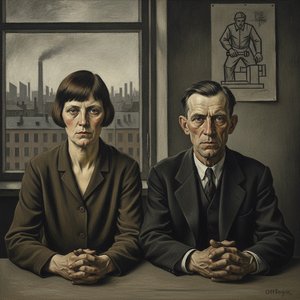
This powerful triptych by Max Beckmann captures the complex tapestry of human existence and societal roles through a vivid, emotionally charged composition. Each panel presents a dynamic scene filled with distorted figures, symbolic objects, and expressive gestures that invite viewers to reflect on themes of confinement, identity, and social interaction. Beckmann’s portrayal of human figures—some seated, others standing or behind bars—evokes a sense of tension, introspection, and defiance, making this work a profound commentary on the human condition during a turbulent era.
Distinctive Style and Technique
Created in 1942, during a period of intense personal and global upheaval, this artwork exemplifies Beckmann’s signature style rooted in German Expressionism and New Objectivity. The bold, gestural brushstrokes and exaggerated forms emphasize emotional immediacy over realistic accuracy. The layered textures, achieved through thick application of oil or acrylic paints, add tactile richness and depth. Stark contrasts of light and shadow heighten the dramatic impact, while the flattened perspective enhances the sense of emotional intensity and symbolic storytelling.
Historical Context and Artistic Significance
Produced amidst the chaos of World War II, this work reflects Beckmann’s response to societal upheaval and personal trauma. As a leading figure of German modernism, Beckmann’s art often explores themes of existential angst, societal critique, and human resilience. The triptych format allows for a multifaceted narrative, engaging viewers in a visual dialogue about power, restriction, and the search for meaning in uncertain times. Today, it stands as a testament to Beckmann’s mastery in blending symbolism with raw emotional expression.
Symbolism and Emotional Impact
Every element within this triptych is imbued with symbolic significance—cages representing confinement, crowns hinting at power, and varied attire reflecting societal roles. The vibrant palette, contrasting yellows, reds, and earthy tones, energizes the composition and evokes a lively yet chaotic atmosphere. The expressive figures and symbolic objects evoke a spectrum of emotions—from introspection and vulnerability to defiance and resilience—making this piece not just a visual experience but an emotional journey.
A Masterpiece for Collection and Interior Design
This compelling artwork is an ideal choice for collectors seeking a significant piece of modernist history or for interior designers aiming to create a statement space filled with depth and meaning. Its layered symbolism and vivid colors make it a captivating focal point in any setting, inspiring conversation and reflection. Whether displayed in a private collection or a sophisticated public space, this high-quality reproduction offers an authentic glimpse into Beckmann’s visionary artistry and enduring legacy.
질의응답
막스 베크만의 "배우들"은 밝은 분위기의 작품인가요, 아니면 어두운 분위기의 작품인가요?
"배우들"의 전체적인 밝기는 명암이며, 휘도는 부드러운 음영입니다.
"배우들"은(는) 어떤 분위기를 담고 있나요?
"배우들"은(는) 드라마틱한 분위기를 자아냅니다.
막스 베크만의 "배우들"의 제작 연도와 화풍은 무엇인가요?
"배우들"은(는) 1942년에 독일 표현주의 사조의 작품으로 제작되었습니다. 제작 연도와 미술 사조는 미술사적 맥락에서 이 작품의 위치를 확고히 해줍니다.
막스 베크만의 "배우들"의 구성을 주도하는 색상은 무엇인가요?
"배우들"에서 가장 돋보이는 색상은 에스프레소 (#633e32)입니다. 작품의 주된 색상은 인테리어와 작품을 조화롭게 매치할 때 유용합니다.
막스 베크만의 "배우들"의 특징적인 기법과 화풍은 무엇인가요?
"배우들"은(는) 캔버스에 유채 기법을 사용하여 독일 표현주의 양식으로 제작되었습니다.
"배우들"의 파노라마형 형식은 어디에 전시하는 것이 가장 좋을까요?
파노라마형 형태의 "배우들" 복제 작품은 거실 공간에 배치하시기에 좋습니다.
막스 베크만의 "배우들"은 어떤 사조와 시대에 속하나요?
막스 베크만의 "배우들"은(는) 작가의 근대 미술 시대 중 독일 표현주의 사조에 속합니다.
"배우들"에 대한 가이드는 어디에서 확인할 수 있나요?
막스 베크만의 "배우들"에 대한 가이드 페이지를 이용하실 수 있습니다. 이 페이지는 학생들과 수업용으로 제작된, 인쇄 가능한 작품 정보 시트를 제공합니다.