
원하는 크기와 액자로 주문 제작되는, 작가들이 직접 캔버스에 손으로 그린 유화 작품입니다. ( 프린트 판매로 전환 디지털 이미지로 전환)





























작품의 원본 비율을 유지하는 미리 설정된 크기 중에서 선택하세요.

특정 프레임이나 공간에 맞도록 직접 크기를 입력할 수 있습니다. 선택하신 크기가 원본 이미지의 비율과 일치하지 않는 경우, 작품을 자르거나 추가적인 손으로 그린 요소를 사용하여 그림을 확장합니다. 제작 시작 전 승인을 위해 디지털 목업을 보내드립니다.
화면 미리 보기는 실제 자르기 또는 확장을 반영하지 않습니다. 최종 구성은 목업을 통해서만 정확하게 확인하실 수 있습니다.
맞춤 크기 제작도 가능하지만, 원본 비율을 유지하기 위해 사전 정의된 목록에서 크기를 선택하시는 것을 권장합니다.

Portrait of Erasmus of Rotterdam Writing
복제본 크기
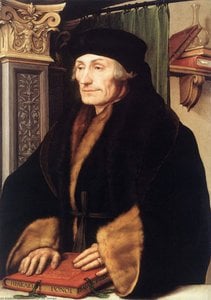
Hans Holbein the Younger’s “Portrait of Erasmus of Rotterdam Writing,” painted in 1523, is more than just a likeness; it's a profound distillation of the intellectual fervor and humanist ideals that defined the burgeoning Northern Renaissance. This intimate portrait, currently residing within the Kunstmuseum Basel, offers a rare glimpse into the mind of Desiderius Erasmus Roterodamus, a towering figure in 16th-century thought – a Catholic priest, theologian, scholar, and champion of religious reform. Measuring just 37 x 30 cm, its compact size belies the monumental impact of its subject and the masterful execution of Holbein’s brush.
The painting immediately draws the eye to Erasmus himself, depicted in a moment of intense concentration as he meticulously writes upon a parchment sheet. His features – the thoughtful furrow of his brow, the subtle curve of his lips, the intelligent gleam in his eyes – are rendered with an astonishing level of realism, a hallmark of Holbein’s skill. The artist doesn't simply depict; he captures the very essence of Erasmus’s intellectual energy, conveying both his scholarly pursuits and the quiet dignity of a man deeply engaged with ideas. The inclusion of a ring on his finger subtly hints at his status as a respected figure within the humanist circles of his time.
“Portrait of Erasmus of Rotterdam Writing” is firmly rooted in the Northern Renaissance art movement, a style distinguished by its meticulous attention to detail, vibrant realism, and innovative use of oil paints on paper mounted on pine. Unlike the more idealized forms prevalent in Italian Renaissance painting, the Northern style embraced a greater sense of immediacy and observation. Holbein’s technique exemplifies this perfectly – every wrinkle, every strand of hair, every texture of the parchment is rendered with painstaking precision. The background, a simple yet effective green wall, provides a harmonious backdrop that complements the portrait's color scheme without distracting from the central subject.
Beyond mere representation, the painting is laden with symbolism. Erasmus’s act of writing represents his lifelong dedication to scholarship and intellectual discourse. The open book on the shelf – a deliberate inclusion by Holbein – alludes to Erasmus’s vast knowledge base and his commitment to classical learning. The empty wine flask suggests a contemplative pause, a moment for reflection amidst the demands of scholarly life. These subtle details elevate the portrait beyond a simple likeness, transforming it into a visual meditation on the nature of intellect and the pursuit of wisdom.
Hans Holbein the Younger was a pivotal figure in 16th-century art, renowned for his unparalleled ability to capture the likeness and personality of his subjects. His workshop produced a diverse range of works, from religious scenes and satirical prints to elaborate court portraits. “Portrait of Erasmus of Rotterdam Writing” stands as one of his most celebrated achievements, showcasing his mastery of portraiture and his deep understanding of human psychology. The painting’s influence extended far beyond Basel; copies proliferated throughout Europe, spreading Holbein's reputation and solidifying his place among the greatest artists of the era.
Considered alongside works like “Erasmus (detail),” “Head of a Male Saint,” and “Adam and Eve,” this portrait reveals a consistent artistic vision – a commitment to realism, an appreciation for detail, and a keen awareness of the symbolic potential of visual imagery. For those seeking to own a piece of art history, WahooArt offers meticulously crafted oil painting reproductions of "Portrait of Erasmus of Rotterdam Writing," allowing you to experience the beauty and intellectual depth of this iconic masterpiece firsthand.
To delve deeper into the world of Hans Holbein the Younger, we encourage you to explore “The Workshop of Hans Holbein the Younger” on WahooArt.com, where you can discover a comprehensive collection of his works. Furthermore, Wikipedia’s entry on Hans Holbein the Younger provides invaluable biographical information and historical context. And for those interested in the broader artistic landscape of the time, a visit to the Kunstmuseum Basel is highly recommended – where this remarkable portrait continues to captivate viewers centuries after its creation.

1497 - 1543 , 이탈리아
Explore the breathtaking precision of Hans Holbein the Younger. From Tudor royal portraits to intricate Northern Renaissance details, discover the mastery behind his legendary works and learn how to bring this historical grandeur into your collection with museum-quality reproductions.


 미리보기
미리보기
 공유하기
공유하기 공유하기
공유하기
 상세 정보
상세 정보

 다운로드
다운로드
 유사 작품
유사 작품 X-레이
X-레이 슬라이드 쇼
 통계 정보
통계 정보


 더 보기
더 보기









 유리 옵션은 110cm 미만 크기에서만 선택 가능합니다.




![장 드 댕트빌과 조르주 드 셀의 이중 초상화 (일명 대사들) [세부 사항]](/media/artworks/images-thumb/bb/ab/bbab7ce77b7dd15d23d21114a63b51a4.jpg)

![장 드 댕트빌과 조르주 드 셀브의 이중 초상화 (일명 ‘대사들’) [세부 상세]](/media/artworks/images-thumb/42/81/42813dc49b2f72bce897aaf8b747ad5b.jpg)


