The Painting
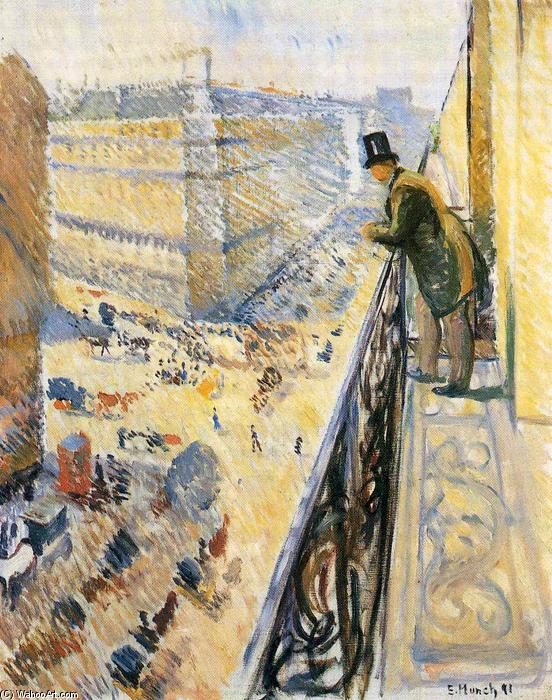
"CITE>Street Lafayette" by
Edvard Munch is a large oil on canvas painting, measuring 92 x 73 cm. Created in 1891, it captures the vibrant energy of urban life during that era. The scene depicts a busy city street filled with people walking around, some carrying umbrellas, and several horses visible amidst the bustling atmosphere. Notably, there is also a car present on the street, indicating the early stages of automobile integration into daily life.
Artistic Style
This painting exemplifies
Expressionism, a modernist movement that emphasizes emotional experience and subjective interpretation. Munch's distinctive style, influenced by his own emotional and psychological state, is evident in the composition. The use of bold colors and dynamic brushstrokes adds to the overall sense of energy and movement.
Influences and Context
Munch was influenced by various artists during his time in Paris, including
Paul Gauguin,
Vincent van Gogh, and
Henri de Toulouse-Lautrec. These influences are reflected in his use of color and the emotional depth of his paintings. In Berlin, he met
August Strindberg, a Swedish dramatist whom he painted, which further shaped his artistic vision.
Significance
"CITE>Street Lafayette" is part of Munch's broader series known as "The Frieze of Life," which explores themes such as love, anxiety, jealousy, and betrayal. This painting captures the essence of urban life during a period of significant change, reflecting the anxieties and emotions of the modern person.
Legacy
Edvard Munch's legacy is cemented by his iconic work
The Scream, which has become one of Western art's most acclaimed images. His contributions to Expressionism have influenced generations of artists, ensuring his place in the history of modern art.
Reproductions and Preservation
For those interested in owning a piece of this artistic heritage,
handmade oil painting reproductions are available at WahooArt. These reproductions allow art enthusiasts to appreciate the beauty and emotion of Munch's work in their own homes.
Conclusion
"CITE>Street Lafayette" by
Edvard Munch is a captivating expression of urban life, reflecting the anxieties and emotions of the modern person. As part of his broader series "The Frieze of Life," it showcases Munch's unique style and contribution to Expressionism.



 미리보기
미리보기
 프린트 구매
 공유하기
공유하기 공유하기
공유하기
 상세 정보
상세 정보

 다운로드
다운로드
 유사 작품
유사 작품 X-레이
X-레이 슬라이드 쇼


 더 보기
더 보기





