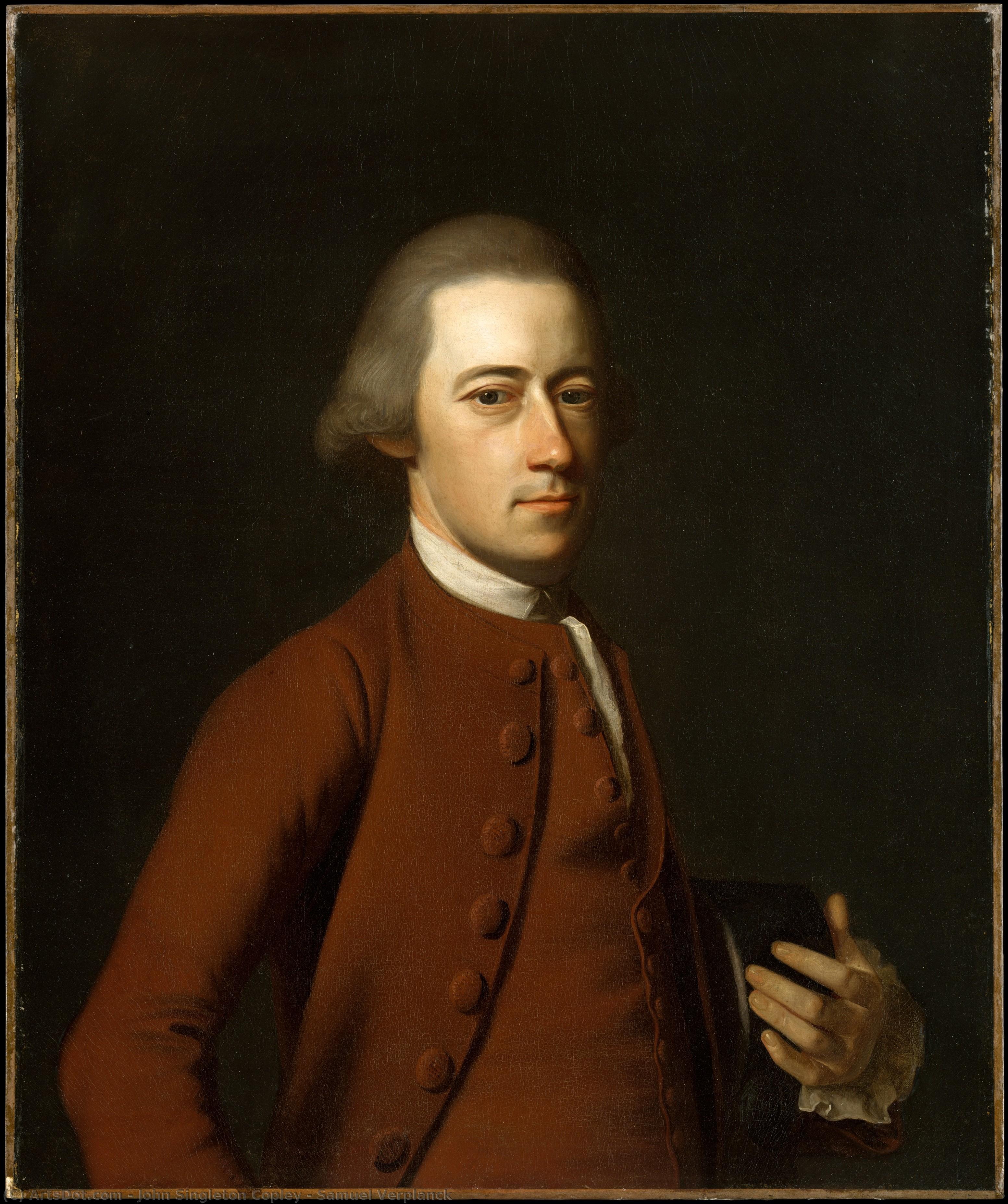
A Portrait of Dignity Amidst Turbulent Times: Examining John Singleton Copley’s Samuel Verplanck
John Singleton Copley stands as a singular figure in the burgeoning landscape of American art – not merely a painter, but a conduit between British artistic traditions and the evolving sensibilities of his new homeland. Born in Boston in 1738, he possessed an extraordinary talent honed largely through self-reliance, fueled by ambition, and blessed with an unparalleled ability to imbue his canvases with more than just likenesses; he captured the very spirit of his subjects within the crucible of their era. His formative years were inextricably linked to the vibrant maritime commerce of colonial Boston, a city pulsating with entrepreneurial energy and reshaping itself as a global hub. Richard Copley Sr., his father, though absent early in John’s life due to mercantile pursuits abroad, established a foundation for his son's artistic journey through his involvement in the lucrative tobacco trade. Mary Singleton Copley, John’s mother, skillfully managed their family business on Long Wharf, exposing young John to the tactile realities of craftmanship and material culture – elements that would profoundly influence his artistic vision.
- Subject Matter: The portrait depicts Samuel Verplanck (1739–1820), a prominent New York businessman and landowner, alongside his brother Gulian and son Daniel Crommelin Verplanck. This familial tableau speaks to the importance of lineage and social standing within the context of 18th-century American society.
- Style: Copley’s style exemplifies Neoclassical elegance, prioritizing clarity of form and meticulous detail. He eschewed flamboyant ornamentation favored by earlier Baroque painters, opting instead for a restrained aesthetic that reflects the intellectual currents of his time.
Technique & Material Considerations
Copley’s mastery lay in his painstaking application of oil paint on canvas—a technique demanding considerable patience and precision. He employed glazing techniques, layering translucent washes of color over underlying tones to achieve remarkable luminosity and depth. The artist meticulously rendered textures – the folds of Verplanck's clothing, the sheen of his hair, and the subtle contours of his face – demonstrating an unwavering commitment to realism. Furthermore, the dark background serves as a crucial compositional element, isolating Verplanck’s figure and intensifying the impact of his gaze.
- Color Palette: The painting utilizes a muted palette dominated by earthy reds and creams, reflecting the prevailing tastes of the period. However, Copley skillfully incorporates highlights of white – particularly in Verplanck’s collar and cuffs – to accentuate his aristocratic bearing.
- Composition: The portrait's pyramidal structure lends it stability and grandeur, directing the viewer’s eye upwards towards Verplanck’s face. The inclusion of a book or Bible subtly underscores Verplanck’s intellectual pursuits and moral character.
Historical Context & Symbolic Significance
Painted in 1771, shortly after Copley's solitary voyage to New York City—a pivotal moment in establishing American artistic identity—the portrait encapsulates the spirit of Enlightenment ideals. Verplanck’s dignified posture and contemplative gaze embody virtues valued during this era: reason, piety, and civic responsibility. The Bible symbolizes faith and moral integrity, aligning with the broader cultural ethos of colonial America.
- Provenance & Display: Currently housed in the Metropolitan Museum of Art in New York City—one of the world’s foremost repositories of art—the painting stands as a testament to Copley's enduring legacy and its continued relevance to contemporary artistic appreciation.
Emotional Impact & Artistic Legacy
Beyond mere representation, Copley’s Samuel Verplanck achieves an extraordinary feat: it conveys the sitter’s inner life with palpable sincerity. The artist's meticulous attention to detail captures not only physical likeness but also psychological nuance—a rare accomplishment that elevates the portrait beyond a simple depiction of appearance. It remains an inspiring exemplar of Neoclassical portraiture, demonstrating how art can illuminate both individual character and broader societal values.