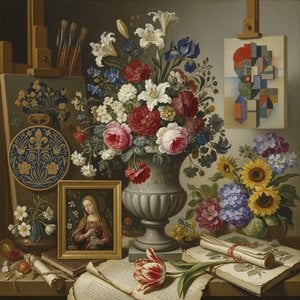
Nicolas Baudesson: A Master of French Floral Still Life
Born in Troyes, France, in 1611, Nicolas Baudesson emerged as a significant figure within the burgeoning world of 17th-century French painting. His life’s work centered on the captivating genre of still life, specifically the exquisite depiction of flowers and bouquets – a pursuit that cemented his reputation as “the best flower painter of his time” (Benezit: “Le meilleur peintre de fleurs de l'époque”). His story is one of artistic evolution, shaped by training under his uncle, Jacques Linard, and influenced by both the meticulous detail of Flemish masters and the dramatic flair of Italian Baroque painting.
Baudesson’s early artistic development was intrinsically linked to his family’s established presence within the Parisian art scene. Jacques Linard, a respected painter himself, provided Baudesson with a foundational education in technique and composition. However, it was Baudesson's relocation to Rome during the 1630s that proved pivotal. This period of residence allowed him to immerse himself in the artistic currents circulating through the Italian art world – a realm renowned for its vibrant colors, dynamic lighting, and theatrical arrangements. He absorbed influences from both the precise botanical studies championed by Flemish painters like De Heem and the opulent, decorative style prevalent in banquet still lifes originating from Italy, exemplified by Jean-Baptiste Monnoyer.
The Art of the Bouquet: Technique and Style
Baudesson’s paintings are characterized by a remarkable balance between observation and artistic interpretation. Unlike some of his contemporaries who prioritized an exact imitation of nature, Baudesson skillfully blended Flemish realism with Italian theatricality. His compositions often featured simple tables or cloths as backdrops for his floral arrangements, avoiding the elaborate props frequently employed in Monnoyer’s work. This restrained approach allowed the delicate beauty and intricate details of the flowers themselves to take center stage.
A key element of Baudesson's style was his masterful use of color. He favored rich, saturated hues – deep reds, vibrant blues, and luminous yellows – that captured the essence of each bloom. His brushwork was loose and expressive, conveying a sense of movement and vitality within the arrangement. The artist’s attention to detail extended beyond mere representation; he sought to evoke the very scent and texture of the flowers through his technique.
Notable Works and Legacy
While Baudesson never signed his paintings, several works attributed to him have survived, offering valuable insights into his artistic practice. The “Bouquet of Flowers” held in the Musée des Beaux-Arts in Troyes is a particularly compelling example, showcasing his ability to capture the fleeting beauty of a floral arrangement with remarkable precision and sensitivity. Other notable pieces include arrangements within the Palace of Versailles, reflecting his recognition by the French court.
Baudesson’s influence extended beyond his own lifetime. His work was engraved by Mariette in the 18th century, ensuring its continued visibility and appreciation for future generations. Furthermore, he left a lasting legacy through his son, Jean François Baudesson, who followed in his father's footsteps as a painter of flowers and fruit, continuing the family’s artistic tradition.
Historical Context and Significance
Baudesson’s rise to prominence coincided with a period of significant change within the art world. The transition from Mannerism to Baroque painting was underway, and artists were increasingly experimenting with new techniques and approaches. Baudesson's work exemplifies this shift, blending elements of both earlier styles while forging his own distinctive voice. His focus on floral still life reflects a broader cultural trend – the growing appreciation for nature and its beauty during the 17th century.
His place as “the best flower painter of his time” is a testament to his skill, dedication, and artistic vision. Nicolas Baudesson’s paintings continue to captivate viewers with their exquisite detail, vibrant colors, and evocative portrayal of nature's fleeting beauty, solidifying his position as a key figure in the history of French art.
კითხვები და პასუხები
შესችლება Nicolas Baudesson-ის ნამუშევრების ვირტუალური მუზეუმით დავესტუმრო?
ვირტუალური ጉብარი შესაძლებელია: Nicolas Baudesson-ის 3D მუზეუმი გვერდი ხელოვანის ნამუშევრებს სამგანზომილებიან გალერეაში წარმოგიდგენთ.
რამდენი ნამუშევარია ხელოვან Nicolas Baudesson-ის ხელსმოწმენე, რომლის ნახვაც შესაძლებელია?
თქვენ შეგიძლიათ ნახოთ 2 ნამუშევარი ნამუშევარი ხელოვან Nicolas Baudesson-ისგან ყველა ნამუშევარი გვერდზე.
სად შემიძლია Nicolas Baudesson-ის ნამუშევრების ქრონოლოგიური თანმიმდევრობით ნახვა?
Nicolas Baudesson-ის ნამუშევრების ქრონოლოგიური თანმიმდევრობით ნახვა შესაძლებელია ხელოვანის ნამუშევრების ქრონოლოგია გვერდზე.