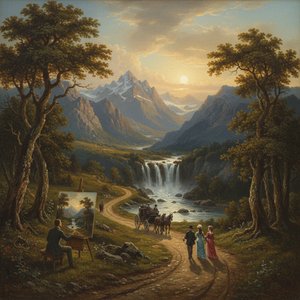
Kyriak Kostandi: A Soul Captured in Light and Shadow
Born in the coastal town of Dofinovka, near Odesa, in 1852, Kyriak Kostiantynovych Kostandi’s life was inextricably linked to the vibrant artistic heart of southern Russia. His early years, steeped in Greek heritage and surrounded by the burgeoning cultural scene of Odesa, laid the foundation for a career that would ultimately blend realism with the evocative sensibilities of Impressionism. Kostandi wasn't merely a painter; he was an observer, meticulously documenting the lives and landscapes of his time – a chronicler of everyday existence imbued with profound emotional depth.
His formal artistic training began at the Odesa Drawing School in 1874, followed by studies at the prestigious Saint Petersburg Academy of Arts in 1882. This rigorous education provided him with technical mastery and exposure to the prevailing artistic currents of the era. However, Kostandi’s true calling lay not in slavishly adhering to academic conventions but in forging his own distinct voice – a voice that would soon be recognized for its poignant realism and subtle emotional resonance.
Early Works and the Influence of the Wanderers
Returning to Odesa, Kostandi quickly established himself as a significant figure within the city’s artistic community. He joined the Peredvizhniki (the Wanderers), a prominent group of realist artists dedicated to depicting Russian life outside the confines of the Imperial court. This association profoundly shaped his artistic trajectory, exposing him to new ideas about social commentary and the importance of portraying the lives of ordinary people. His early works, such as “A Visit to a Sick Friend” (1884), demonstrate this influence – capturing scenes of domesticity with a quiet dignity and an underlying sense of melancholy.
The painting "Out Into the World" (1885), often referred to as “Among the People,” stands as perhaps his most enduring masterpiece. It’s a deceptively simple image: a young Ukrainian woman, her face etched with both hope and apprehension, gazes out from a window at an uncertain future. The painting's power lies not in grand gestures but in its subtle portrayal of human vulnerability and resilience – a theme that would recur throughout Kostandi’s oeuvre.
The Impressionistic Shift and the Pursuit of Light
As the late 1880s unfolded, Kostandi underwent a significant artistic transformation. While remaining committed to his core realist principles, he increasingly embraced the techniques and philosophies of Impressionism. He began to prioritize capturing fleeting moments of light and atmosphere, experimenting with *plein air* painting – working directly outdoors. This shift is evident in works like “Landscape with a Meadow” (1897), where the vibrant colors and loose brushstrokes convey a sense of immediacy and sensory experience.
Kostandi’s contemporaries noted his philosophical approach to art, recognizing that he sought not merely to depict reality but to distill it into its purest emotional essence. He was fascinated by the interplay of light and shadow, using these elements to evoke mood and atmosphere with remarkable subtlety. His paintings are imbued with a quiet poetry – a testament to his ability to capture the intangible qualities of human experience.
Later Years and Legacy
In 1907, Kostandi was elected a full member of the Saint Petersburg Academy of Arts, a prestigious recognition of his artistic achievements. He continued to teach at the Odesa Art School and served as director of the Odesa City Museum from 1917 until his death in 1921. His dedication to art extended beyond his own practice; he was instrumental in establishing the Society of South Russian Artists, fostering a vibrant artistic community in Odesa.
Kyriak Kostandi’s legacy endures as one of Ukraine's most significant artists of the late 19th and early 20th centuries. His paintings – characterized by their quiet dignity, emotional depth, and masterful use of light and shadow – offer a poignant glimpse into the lives and landscapes of his time. His work continues to resonate with viewers today, reminding us of the power of art to capture the complexities of human experience and the enduring beauty of the natural world.
კითხვები და პასუხები
როგორ განვითარდა Kiriak Kostandi-ის შემოქმედება დროთა განმავლობაში?
Kiriak Kostandi-ის შემოქმედების ქრონოლოგიური მიმოხილვა ხელოვანის ქრონიკა გვერდზეა ხელმისაწვდომი, სადაც ნამუშევრები შექმნის თანმიმდევრობით, თავების მიხედვით წარმოდგენილია.
რამდენი ნამუშევარია ხელოვან Kiriak Kostandi-ის ხელსმოწმენე, რომლის ნახვაც შესაძლებელია?
თქვენ შეგიძლიათ ნახოთ 10 ნამუშევარი ნამუშევარი ხელოვან Kiriak Kostandi-ისგან ყველა ნამუშევარი გვერდზე.
როგორ ვიპოვო Kiriak Kostandi-ის ნამუშევრები კონკრეტულ თემაზე?
Kiriak Kostandi-ის საკვანძო სიტყვებით გვერდი ხელოვანის ნამუშევრებს საკვანძო სიტყვების მიხედვით აჯგუფებს.