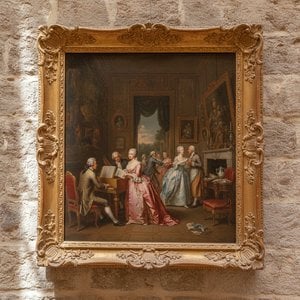
A Life Rooted in Danish Soil: The World of Christen Dalsgaard
Christen Dalsgaard, born October 30, 1824, at Krabbesholm Manor in Jutland, Denmark, wasn’t destined for the grand tours and classical imitations that characterized many artists of his era. His path was one of deliberate grounding—a conscious embrace of Danish identity forged within the landscapes and lives surrounding his privileged upbringing. The son of an estate owner, Dalsgaard initially received training as a craft painter, but it was a chance encounter with landscape artist Niels Rademacher in 1841 that truly ignited his artistic aspirations. Rademacher’s encouragement proved pivotal, convincing Dalsgaard's parents to support his enrollment at the Royal Danish Academy of Art later that same year. This wasn’t merely a shift in career; it was the beginning of a lifelong dedication to capturing the essence of Denmark itself.Formative Years and the Rise of National Romanticism
Dalsgaard's academic training at the Royal Danish Academy, encompassing studies with Martinus Rørbye, Christoffer Wilhelm Eckersberg, J. L. Lund, and further refinement in freehand drawing and plaster modeling, provided a solid foundation. However, his true artistic awakening occurred through exposure to the ideas of Niels Lauritz Høyen. Høyen’s influential lecture on “the conditions for the development of a Scandinavian national art” resonated deeply with Dalsgaard, advocating for artists to draw inspiration from their own cultural heritage rather than blindly emulating foreign models—particularly those of Italy. This concept became a guiding principle in Dalsgaard's work. He eschewed the traditional artist’s pilgrimage to Italy and instead immersed himself in documenting Danish life, meticulously sketching the Jutland landscape, local costumes, and everyday scenes during his summers. Even early on, he began collecting folk costumes, demonstrating a commitment to preserving and portraying Denmark’s cultural identity. This dedication positioned him at the forefront of the burgeoning National Romantic movement within Danish art.Genre Painting as Cultural Documentation
Dalsgaard's artistic style was a unique synthesis of influences. He absorbed Eckersberg’s meticulous realism and Rørbye’s romantic sensibilities, yet he forged his own path through genre painting—scenes from everyday life. His breakthrough arrived in 1856 with Mormons Visiting a Country Carpenter, a work that immediately established him as a significant voice in Danish art. The painting isn't simply a depiction of a contemporary event; it’s a carefully observed snapshot of rural life, capturing the curiosity and apprehension surrounding the arrival of Mormon missionaries. The detailed rendering of the interior, the expressions on the faces of the figures, and the play of light all contribute to a powerful narrative. This commitment to realism and storytelling continued in works like I Wonder When He Will Come Home (1879), where a young woman’s quiet anticipation is palpable against the backdrop of a sunlit landscape. The contrast between interior shadow and exterior brightness isn't merely aesthetic; it speaks to the emotional weight of waiting and longing. Later in life, Dalsgaard undertook an ambitious project creating twenty-one small Bible pictures, showcasing his versatility while remaining firmly rooted in a Danish artistic context.Legacy and Lasting Impact
Alongside contemporaries like Julius Exner and Frederik Vermehren, Christen Dalsgaard played a vital role in establishing realistic genre painting as a dominant force in 19th-century Denmark. His meticulous attention to detail—the accurate depiction of folk costumes, architectural nuances, and the subtle rhythms of rural life—provided an invaluable visual record of Danish culture. He wasn’t merely *representing* Denmark; he was actively contributing to its artistic self-definition. Dalsgaard's dedication to portraying scenes from his native Jutland, coupled with his embrace of Høyen’s nationalistic ideals, cemented his place as a significant figure in Danish art history. His paintings continue to resonate today, admired for their realism, narrative depth, and insightful portrayal of a society undergoing change. He died on February 11, 1907, leaving behind a body of work that remains a testament to the power of artistic dedication and the enduring beauty of everyday life.კითხვები და პასუხები
სად შემიძლია ვიპოვო სტატისტიკა Christen Dalsgaard-ის ნამუშევრების შესახებ?
Christen Dalsgaard-ის ნამუშევრების შესახებ სტატისტიკა ხელოვანის სტატისტიკა გვერდზეა ხელმისაწვდომი.
რა ქვეყანაში დაიბადა Christen Dalsgaard?
Christen Dalsgaard დაიბადა Denmark-ში.
რამდენი ნამუშევარია ხელოვან Christen Dalsgaard-ის ხელსმოწმენე, რომლის ნახვაც შესაძლებელია?
თქვენ შეგიძლიათ ნახოთ 25 ნამუშევარი ნამუშევარი ხელოვან Christen Dalsgaard-ისგან ყველა ნამუშევარი გვერდზე.