Vincenzo Jerace: Sculptor of Neapolitan Echoes and Sardinian Heights
Born in Naples, Italy, in 1862, Vincenzo Jerace emerged from a city steeped in artistic tradition – a crucible where the echoes of classical antiquity mingled with the vibrant spirit of the Italian Risorgimento. His life’s work, spanning nearly eight decades, is a testament to this rich heritage, manifesting primarily through his sculptures that capture both the intimate beauty of human form and the grandeur of the landscapes he called home: the sun-drenched streets of Naples and the rugged majesty of Sardinia.
Jerace's early artistic training took place within the esteemed Istituto di Belle Arti in Naples. This institution, a cornerstone of Italian art education during his era, provided him with a solid foundation in classical techniques while simultaneously exposing him to the burgeoning currents of modern sculpture. His initial works demonstrated an immediate aptitude for capturing nuanced emotion and anatomical accuracy – qualities that would become hallmarks of his style.
The Neapolitan Legacy: Busto di Giovane Donna and Beyond
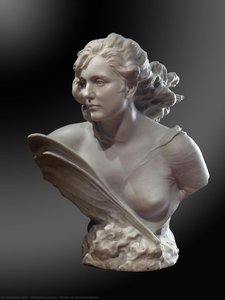
Jerace’s early career was deeply rooted in Naples, a city renowned for its prolific sculptural output. He quickly gained recognition for his ability to imbue stone with life, evident in pieces like the ‘Busto di giovane donna,’ a remarkably sensitive portrayal of youthful beauty that showcases his mastery of capturing delicate features and subtle expressions. This work, now meticulously preserved and available as a WahooArt reproduction, exemplifies his commitment to realism and emotional depth.
Beyond this iconic bust, Jerace produced a diverse range of sculptures reflecting the spirit of Neapolitan life – scenes of everyday activity, portraits of local figures, and allegorical representations that spoke to the city’s cultural identity. His work often incorporated elements of Neapolitan folklore and popular traditions, providing a visual narrative of his native land.
A Monumental Achievement: The Christ Redeemer of Mount Ortobene
Jerace's artistic ambitions extended beyond the confines of Naples, culminating in one of his most ambitious projects: the ‘Statue of Christ the Redeemer’ atop Mount Ortobene in Sardinia. Completed in 1901, this monumental sculpture stands as a powerful symbol of faith and resilience against the dramatic backdrop of the Sardinian landscape. The scale of the undertaking – transporting the massive statue to such an elevated location – speaks volumes about Jerace's technical skill and his willingness to embrace challenging commissions.
The choice of Sardinia itself is significant, reflecting a growing interest in exploring Italy’s diverse regional identities. This monumental work cemented Jerace’s reputation as a sculptor capable of tackling large-scale projects with both artistic vision and engineering prowess.
Influence and Style
While firmly rooted in the Neapolitan tradition, Jerace's style was not simply derivative. He absorbed influences from various sources – classical sculpture, Renaissance art, and the emerging trends of late 19th-century European sculpture. However, he skillfully synthesized these influences into a distinctly personal aesthetic characterized by realistic detail, expressive gestures, and a sensitivity to the human form. His works often possess a quiet dignity and emotional resonance that transcends mere technical skill.
His work is frequently compared to that of Vincenzo Vela, another prominent Italian sculptor who shared a similar artistic vision and worked in both Naples and Sardinia. While their careers overlapped, they developed distinct styles, with Jerace generally favoring a more restrained and classical approach compared to Vela’s often more dramatic and expressive works.
A Lasting Legacy
Vincenzo Jerace passed away in 1947, leaving behind a substantial body of work that continues to be appreciated for its technical skill, emotional depth, and evocative portrayal of Italian life. His sculptures offer a valuable window into the cultural landscape of late 19th and early 20th-century Italy – a period of profound social and political change marked by both artistic innovation and enduring traditions. Reproductions of his key works, such as the ‘Busto di giovane donna,’ are now available through WahooArt, allowing enthusiasts worldwide to experience the beauty and artistry of this often-overlooked Italian sculptor.