

William Robertsを有名にした作品はThe Boxing Match (1890)です。 コレクターや美術館の来場者の心には、The First German Gas Attack at Ypres (1918)、そしてThe Cinema (1920)が続いています。 当カタログに含まれるWilliam Robertsの全59作品のうち、特に高く評価されている59作品をご紹介します。各作品には制作年、所蔵美術館、そしてその作品ならではの特徴が添えられています。
各作品の検索数、閲覧数、および注文数を組み合わせた当サイトの人気スコアに基づきランキングを作成しています。最終更新:10月 2026


The Munitions Factory painting by William Patrick Roberts is a remarkable artwork that showcases the artist's ability to capture the essence of industrialization and its impact on society.…

The painting Sarah by William Patrick Roberts is a remarkable example of 20th-century portraiture. Created in 1925, this oil on canvas piece measures 61 x 51 cm and…

The painting Les Routiers by William Patrick Roberts is a remarkable artwork that showcases the artist's unique style and technique. Created in 1931, this oil on canvas painting…

William Roberts is a British painter of figure compositions and portraits. He was a pioneer of abstract art before the First World War. Roberts worked outside the mainstream.…
これらの傑作の中で最も頻繁に描かれる4つの主題と、それぞれの最高傑作をご紹介します。
このページに掲載されている絵画を最も多く所蔵している 8 の美術館
| 美術館 | 都市 | William Robertsの作品 | このリストの絵画 |
|---|---|---|---|
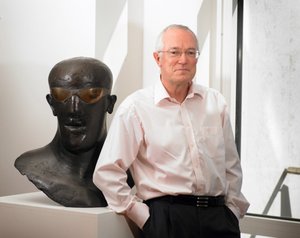 The Ingram Collection of Modern British And Contemporary Art |
London | 3 | The Garden of Eden, The Artist's Son Playing the Recorder, The Rhododendron |
 Nottingham Castle Museum And Art Gallery |
ノッティンガム | 2 | The Return of Ulysses, Professor Janko Lavrin (1885–1986) |
 サルフォード博物館・美術館 |
グレートマンチェスター | 2 | The Control Room, Munitions Factory |
 Guildhall Art Gallery |
ロンドン | 2 | The Demolition Squad, Sidney James Barton (1909–1986), Chairman of London County Council (1959–1960) |
 カナダ国立美術館 |
オタワ | 1 | The First German Gas Attack at Ypres |
 Wolverhampton Art Gallery |
ウルヴァーハンプトン | 1 | Kit (Katie Bissett Smith née Knewstub, 1907–2008) |
 Oxford Brookes University |
オックスフォード | 1 | The Crucifixion |
 British Council Collection |
ロンドン | 1 | The Stockbroker's Clerk |


William Roberts is a British painter of figure compositions and portraits. He was a pioneer of abstract art before the First World War. Roberts worked outside the mainstream.…
The Boxing Match (1890)。続いてThe First German Gas Attack at Ypres (1918)、そしてThe Cinema (1920)が続きます。
The Boxing Match, The First German Gas Attack at Ypres, The Cinema, The Garden of Eden, John Maynard Keynes, Baron Keynes Lydia Lopokova, Kit (Katie Bissett Smith née Knewstub, 1907–2008), The Port of London, The Return of Ulysses, The Red Turban と Portrait of a Young Woman。上記のランキングには、それぞれの制作年と所蔵美術館が記載されています。
当カタログには、1913年から1966年にかけて制作されたWilliam Robertsによる59点の作品が掲載されています。
その多くはThe Ingram Collection of Modern British And Contemporary Art (London), Nottingham Castle Museum And Art Gallery (ノッティンガム) と サルフォード博物館・美術館 (グレートマンチェスター)に所蔵されています。上記の表に各美術館を一覧で記載しています。
1920sにおける作品は、このページにある全59点のうち21点にのぼり、その中にはThe Cinemaが含まれます。
このページで最も古い作品はThe Return of Ulysses (1913)、最新の作品はStudy for Kites (1966)です。
このページに掲載されている59作品のうち、British art (3), Victorian (2) と Crowd (2)
このページに掲載されている絵画が示す通り、Cubism
The Garden of Eden, The Artist's Son Playing the Recorder と The Rhododendronは、The Ingram Collection of Modern British And Contemporary Art, Londonが所蔵するこのページ内の3点の作品のうちの一つです。
In the turbulent landscape of early twentieth-century British art, few figures navigated the tension between tradition and the avant-garde as uniquely as William Patrick Roberts. Born in London in 1895, Roberts emerged during a period of profound aesthetic upheaval, where the stability of Victorian realism was being dismantled by the rapid pulse of modernity. As an artist often categorized as an English Cubist, he did not merely adopt a style; he forged a visual language that captured the fractured, energetic essence of a world in transition. His journey was one of constant movement, reflecting the very dynamism he sought to portray on canvas.
Roberts’ formative years were deeply shaped by his time at the Slade School of Fine Art, an institution that provided him with a rigorous foundation even as he began to push against academic constraints. It was here that he encountered the burgeoning influences of Vorticism and Futurism—movements characterized by their obsession with machine-age energy, geometric precision, and the violent beauty of motion. Through his association with the Vorticist circle, particularly under the influence of figures like Wyndham Lewis, Roberts learned to utilize sharp angles and interlocking planes to deconstruct his subjects, transforming ordinary scenes into rhythmic, structural compositions.
The evolution of Roberts’ work is inextricably linked to the historical tremors of his era. The experience of war left an indelible mark on his psyche and his palette, leading him to document the industrial grit and human endurance of the period. His paintings often serve as windows into the mechanical heart of the twentieth century, where the boundaries between man and machine begin to blur. In works such as Munitions Factory, one can witness his mastery of the Cubist technique applied to the heavy, rhythmic atmosphere of wartime production, using geometric forms to convey the relentless momentum of industry.
Beyond the industrial, Roberts possessed a profound ability to find poetic resonance in the everyday. His explorations of human connection and social landscapes are marked by an unflinching honesty. Whether depicting the quiet intimacy of a portrait, such as Sarah, or the bustling, structured chaos of street scenes like Les Routiers, he maintained a commitment to emotional depth. He utilized color not just for descriptive accuracy, but as a symbolic tool to evoke the psychological weight of his subjects, often bathing his compositions in a light that felt both modern and strangely primordial.
The significance of William Patrick Roberts lies in his ability to synthesize the radical abstractions of Continental Europe with a distinctly British sensibility. While he embraced the fractured perspectives of Cubism, he never abandoned the figurative essence that allowed him to communicate the human condition. His work stands as a bridge between the classical traditions of the past and the experimental fervor of the modern age.
Throughout his long career, which spanned until 1980, Roberts earned prestigious recognition, including frequent exhibitions at the Royal Academy. His ability to capture the "vortex" of modern life ensured that his work remained relevant even as art movements shifted toward total abstraction. Today, he is remembered not just as a follower of a movement, but as a pioneer who helped define the visual identity of a generation caught between the old world and the new.
