テオドール・ジェリコー, 1791 – 1824

The 100 Most Famous Paintings by テオドール・ジェリコー

The painting that made テオドール・ジェリコー famous is ジャン=ルイ=アンドレ=テオドール・ジェリコー ルーアン フランス 1791 1824 1818 人間の苦難と回復力への賛歌 491 x 716 cm メデュサ号の救命ボート メデュサ号の救命ボート (1818); it hangs in the ルーブル美術館, パリ. Nymph and Satyr (Jupiter and Antiope) (1820) and The Oath of Brutus after the Death of Lucretia (1815) follow it in the hearts of collectors and museum visitors. Of the 183 works by テオドール・ジェリコー in our catalogue, these 100 are the most admired, each presented with its date, its museum and what sets it apart.

各作品の検索数、閲覧数、および注文数を組み合わせた当サイトの人気スコアに基づきランキングを作成しています。最終更新:10月 2026 Every masterpiece on this page can be ordered as a museum-quality, hand-painted oil reproduction or a fine art print, at the size you choose.

テオドール・ジェリコーの肖像画
テオドール・ジェリコー · 1791 – 1824
生没年
1791 – 1824, ルーアン
ムーブメント
ロマン主義
カタログ掲載作品
183
最も有名な
ジャン=ルイ=アンドレ=テオドール・ジェリコー ルーアン フランス 1791 1824 1818 人間の苦難と回復力への賛歌 491 x 716 cm メデュサ号の救命ボート メデュサ号の救命ボート (1818)
最多収蔵館
ルーブル美術館

テオドール・ジェリコー: the ten masterpieces

ジャン=ルイ=アンドレ=テオドール・ジェリコー

ルーアン

フランス

1791

1824

1818

人間の苦難と回復力への賛歌

491 x 716 cm

メデュサ号の救命ボート

メデュサ号の救命ボート (1818) による テオドール・ジェリコー
1

ジャン=ルイ=アンドレ=テオドール・ジェリコー ルーアン フランス 1791 1824 1818 人間の苦難と回復力への賛歌 491 x 716 cm メデュサ号の救命ボート メデュサ号の救命ボート

1818 · 油彩 キャンバス · ルーブル美術館, パリ

ジャン=ルイ・アンドレ=テオドール・ジェリコーによるこの記念碑的な傑作は、単なる海難事故の描写に留まりません。それは、人間の絶望、政治的スキャンダル、そして自然の崇高な力が織りなすドラマを、魂に訴えかけるように探求した作品です。1819年に完成したこの実物大を超える巨大なキャンバス(491 x 716 cm)は、1816年に発生したフランス軍艦メドゥーサ号の沈没という、凄惨な結末を永遠に刻み込んでいます。無能と腐敗が生んだこの悲劇は、当時のフランス社会に大きな衝撃を与えました。

Nymph and Satyr (Jupiter and Antiope) (1820) による テオドール・ジェリコー
2

Nymph and Satyr (Jupiter and Antiope)

1820 · Acrylic On Canvas · Musée des Beaux-Arts et de la Céramique, ルーアン

The Allure of the Divine Encounter: Géricault’s *Nymph and Satyr* Jean-Louis André Théodore Géricault's *Nymph and Satyr*, painted in 1819, isn’t merely a depiction of a mythological scene; it’s a profound exploration of desire, transgression, and the inherent tension between innocence and primal instinct. Born amidst the tumultuous backdrop of post-revolutionary France, Géricault, already recognized for his dramatic intensity, sought to capture not just a narrative but an emotional truth—a…

Lions in a Mountainous Landscape (1818) による テオドール・ジェリコー
4

Lions in a Mountainous Landscape

1818 · Acrylic On Canvas · メトロポリタン美術館, ニューヨーク

This vigorous painting of six lions in a remote, spectrally illuminated lair—possibly intended to evoke the Atlas Mountains of Morocco—is an extraordinary example of Gericault’s spontaneous handling of paint. Rather than applying finishing touches to make a polished cabinet picture, the artist left the painting in a state known as an esquisse, or sketch, a work prized by fellow artists for its strength of directly capturing a subject or effect.…

The Kiss (1822) による テオドール・ジェリコー
5

The Kiss

1822 · Acrylic On Canvas · ティッセン・ボルネミッサ美術館, マドリード

Théodore Géricault's "The Kiss," painted in 1816, isn’t merely a depiction of lovers entwined; it’s a visceral embodiment of the burgeoning Romantic movement’s fascination with raw emotion, dramatic intensity, and the sublime. This arresting work, housed within the Thyssen-Bornemisza Museum in Madrid, transcends simple representation to become a profound meditation on passion, vulnerability, and the very essence of human connection. Géricault, already a figure known for his unflinching portrayals of…

Wounded Soldiers Retrating from Russia (1814) による テオドール・ジェリコー
6

Wounded Soldiers Retrating from Russia

1814 · Acrylic On Canvas · ルーアン美術館, ルーアン

A Symphony of Suffering: Géricault’s “Wounded Soldiers Retrating from Russia” Jean-Louis André Théodore Géricault's "Wounded Soldiers Retrating from Russia" is not merely a painting; it’s a visceral embodiment of the horrors and human cost of war, rendered with an unprecedented level of realism and emotional intensity for its time. Completed in 1814, this monumental canvas—measuring a commanding 250 x 206 cm—captures a pivotal moment during Napoleon's disastrous invasion of Russia,…

Study of Feet and Hands (1818) による テオドール・ジェリコー
7

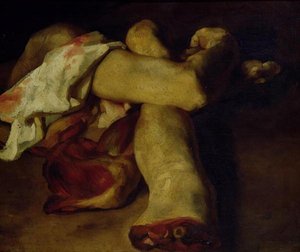
Study of Feet and Hands

1818 · Oil On Canvas · ミュゼ・ファーブル, モンペリエ

Jean-Louis André Théodore Géricault's "Study of Feet and Hands," painted in 1818, isn’t a grand statement of Romantic drama like his monumental “The Raft of the Medusa.” Instead, it offers a profoundly intimate glimpse into the artist’s meticulous process and a poignant meditation on the human form. This unassuming oil painting—measuring a modest 52 x 64 cm—is far more than just a preparatory sketch; it's a concentrated distillation of Géricault’s…

The Raft of the Medusa (detail) (1818) による テオドール・ジェリコー
8

The Raft of the Medusa (detail)

1818 · Oil On Canvas · ルーブル美術館, パリ

Jean-Louis André Théodore Géricault's "The Raft of the Medusa," a monumental detail from his 1818 painting, isn’t merely a depiction of shipwreck; it’s a visceral plunge into the depths of human suffering and political indictment. The scene, rendered with a dramatic intensity characteristic of Romanticism, captures the harrowing aftermath of the French frigate *Medusa*'s wreck off the coast of Mauritania in 1816. This disaster, largely attributed to the incompetence and…

The Wreck (1821) による テオドール・ジェリコー
10

The Wreck

1821 · Oil On Canvas · ルーブル美術館, パリ

Théodore Géricault's "The Wreck," painted in 1821, isn’t merely a seascape; it’s a visceral confrontation with the sublime—a raw depiction of humanity’s vulnerability against the overwhelming force of nature. Born amidst the turbulent currents of post-revolutionary France, Géricault, a figure both lauded and controversial within the burgeoning Romantic movement, channeled his own anxieties and the era's fascination with dramatic events into this monumental canvas. The painting immediately commands attention not…

More テオドール・ジェリコー masterpieces, 11 to 100

The Horse Race (1816) による テオドール・ジェリコー
#11

The Horse Race

1816 · ティッセン・ボルネミッサ美術館

Jean-Louis André Théodore Géricault's "The Horse Race," painted in 1816, isn’t merely a depiction of a sporting event; it’s a visceral embodiment of Romanticism’s core tenets – passion,…

Bring it home →
Swiss Guard and Wounded Veteran (1819) による テオドール・ジェリコー
#12

Swiss Guard and Wounded Veteran

1819 · ルーブル美術館

Jean-Louis André Théodore Géricault's "Swiss Guard and Wounded Veteran," painted in 1819, is not merely a historical depiction; it’s a profound meditation on duty, sacrifice, and the lingering…

Order a reproduction →
Mazeppa (1823) による テオドール・ジェリコー
#13

Mazeppa

1823 · シャトー・ド・シャンティイ

Théodore Géricault's "Mazeppa," painted in 1823, isn’t merely a depiction of a dramatic legend; it’s a visceral embodiment of Romantic turmoil—a raw exploration of suffering, resilience, and the…

Bring it home →
Two Horses (1809) による テオドール・ジェリコー
#14

Two Horses

1809 · フィリップス・コレクション

Jean-Louis André Théodore Géricault's "Two Horses," painted in 1808-1809, isn’t merely a depiction of two magnificent animals; it’s a visceral exploration of movement, power, and the fleeting nature…

Bring it home →
A Turk (Mustapha) (1820) による テオドール・ジェリコー
#15

A Turk (Mustapha)

1820 · ルーブル美術館

Jean-Louis André Théodore Géricault's "A Turk (Mustapha)," painted in 1820, is not merely a portrait; it’s a carefully constructed tableau of exoticism, melancholy, and the burgeoning Romantic sensibility…

Order a reproduction →
A Carabinier with his Horse (1814) による テオドール・ジェリコー
#16

A Carabinier with his Horse

1814 · ルーアン美術館

In the quiet intensity of Jean-Louis André Théodore Géricault’s 1814 masterpiece, "A Carabinier with His Horse," we encounter more than a mere military portrait; we witness a profound…

Order a reproduction →
騎手なき馬のレース(細部) (1817) による テオドール・ジェリコー
#17

騎手なき馬のレース(細部)

1817 · ルーブル美術館

時の中に凍りついた瞬間:ジェリコー『騎手なき馬のレース(細部)』 ジャン=ルイ・アンドレ・テオドール・ジェリコーによる『騎手なき馬のレース(細部)』は、単なるスポーツイベントの描写に留まりません。それは、人間のドラマ、野心、そして生命そのものの危うさを、剥き出しの感覚で探求した作品なのです。1817年に描かれたこの力強い傑作は、ローマの古き伝統から切り取られた、刹那的な瞬間を捉えています。ヴィア・デル・コルソを、騎手のいない馬たちが轟音とともに駆け抜ける年次レース――それは、スリルに満ちていながらも、どこか不安をかき立てる光景でした。勃興するロマン主義運動の重要人物であるジェリコーは、新古典主義の洗練された理想主義を退け、代わりに生々しい感情と容赦のないリアリズムを抱き込み、切迫感と迫りくる破滅の予兆を表現しようと試みました。この絵画が放つ即時的な衝撃は、そのダイナミックな構図にあります。馬たちは強靭で優雅な理想化された存在としてではなく、残酷なまでの誠実さをもって描かれています。力に抗い、筋肉を震わせ、まるで敗北や諦念を表すかのように頭を垂れたその姿。これは勝利の祝祭ではありません。それは、疲弊、脆弱性、そして到達不可能な目標を追い求め続けることの過酷さを描いた研究なのです。 ローマのルーツ:伝統とスペクタクル ジェリコーが描いたこの伝統は、古代ローマに深く根ざしています。何世紀にもわたり、騎手なき馬のレースはローマの春のカーニバルの要であり、富、権力、そして馬術の技術を誇示する豪華絢爛な催しでした。このスペクタクルは帝国全土から群衆を呼び寄せ、興奮と社会的な批評が混ざり合う強力な舞台となりました。この行事はローマの軍事力の象徴でもありました。北アフリカから輸入された馬たちは、征服と支配のシンボルだったのです。同時に、こうした権力の誇示に内在するリスクをも浮き彫りにしていました。ジェリコーはこの歴史的な慣習を綿密に調査し、考古学的な証拠や当時の記録に基づき、驚くべき正確さでこの情景を再現しました。画面中央に立ち、どこか冷めた関心で観察している人物と、右側に位置するもう一人の観衆の存在は、社会的な批評の層を加えています。それは、この古の儀式に魅了されながらも、同時に批判的な眼差しを向けていたであろう観客の姿を示唆しているのです。 <模範的なロマン主義的ヴィジョン:感情と死生観 ジェリコーの『騎手なき馬のレース』は、理性や秩序よりも感情、個人主義、そして「崇高(サブライム)」を優先したロマン主義の教義によって深く形作られています。新古典主義芸術の抑制された優雅さとは対照的に、ジェリコーは鑑賞者の心に強烈な感情的反応を呼び起こそうとしました。光と影の鮮明なコントラストによる劇的なライティングは、緊張感とドラマを増幅させます。馬たちの姿勢には、目に見えるほどの葛藤が宿っており、それは当時の時代精神であった不安や不確実性を鏡のように映し出しています。さらに、潜在的な災厄と人間の脆弱性が入り混じる主題そのものが、死の不可避性や人間による制御の限界といったロマン主義的なテーマと深く共鳴しています。勝利の凱旋ではなく、敗北寸前の瞬間を描くというジェリコーの選択は、彼の芸術哲学を雄弁に物語っています。彼は英雄主義を美化することよりも、人間という存在のより暗い側面を探求することに情熱を注いでいたのです。 技法と細部:リアリズムの極致 ジェリコーの卓越した技術は、この絵画のあらゆる細部に宿っています。彼は驚異的なリアリズムを実現するために、解剖学、特に馬の筋肉構造を緻たかに研究しました。明暗の劇的な相互作用である「キアロスクーロ(明暗法)」の使用は、奥行きと立体感を生み出し、鑑賞者を情景の中へと引き込みます。荒々しい絵具の質感とジェリコーの自由な筆致は、作品に生々しく直接的な質を与えています。特筆すべきは、彼が「グリザイユ」という技法を用い、彩色する前にモノクロームで作業を行ったことです。これにより、構図とトーンの値を精密に確立することができました。一瞬の出来事を捉えようとする画家の献身――馬たちの張り詰めた姿勢、蹄によって巻き上げられた埃、観衆の表情――は、比類なき真正性をもって情景を描き出そうとする彼の決意の現れなのです。 象徴と遺産:人間の野心への反映 ローマのスペクタクルを描いたという表面的な意味を超えて、『騎手なき馬のレース』はより深い象徴的な重みを湛えています。騎手のいない馬たちは、人間の野心のメタファーとして解釈することができます。それは、最終的には疲弊や失望、あるいは破滅へと繋がるかもしれない追求の象徴です。レースそのものが、運命に対する絶え間ない闘争と、目標を追い求めることに伴う固有のリスクを表しています。ジェリコーのこの絵画は、ナポレオン後のフランスにおける社会的・政治的な情勢に対する強力な批評として機能し、権力への不安、不安定さ、そして人間存在の脆さを反映していました。本作は、今なお心を揺さぶる美しさと深い感動を放ち続ける芸術作品であり、ロマン主義時代において最も重要な芸術家の一人としてのジェリコーの地位を不動のものにしています。

Bring it home →
Boxers (1818) による テオドール・ジェリコー
#18

Boxers

1818 · シャトー・ド・シャンティイ

A Tempestuous Vision: Géricault’s “Boxers” Jean-Louis André Théodore Géricault's "Boxers," completed in 1818, isn’t merely a depiction of a boxing match; it’s a visceral embodiment of Romanticism’s fascination…

Order a reproduction →
The Epsom Derby (1821) による テオドール・ジェリコー
#20

The Epsom Derby

1821 · ルーブル美術館

Jean-Louis André Théodore Géricault's "The Epsom Derby," painted in 1821, isn’t merely a depiction of horse racing; it’s a visceral embodiment of Romanticism’s fascination with drama, movement, and…

Bring it home →
Three Lovers (1817) による テオドール・ジェリコー
#22

Three Lovers

1817 · J・ポール・ゲティ美術館

Théodore Géricault captured a private, feverish moment in Three Lovers. This small oil sketch, created about 1817–1820, offers a rare glimpse into the artist's more intimate preoccupations. It…

Order a reproduction →
Lion devouring a horse による テオドール・ジェリコー
#26

Lion devouring a horse

シャトー・ド・シャンティイ

Théodore Géricault's "Lion Devouring a Horse," painted in 1819, isn’t merely a depiction of predatory action; it’s a visceral exploration of power, mortality, and the primal instincts that…

Bring it home →
Untitled (ARJCHM) による テオドール・ジェリコー
#28

Untitled (ARJCHM)

ルーブル美術館

In the annals of art history, few works command the room with such visceral intensity as Théodore Géricault’s The Raft of the Medusa. This monumental oil on canvas…

Bring it home →
Portrait of a Young Man (1818) による テオドール・ジェリコー
#32

Portrait of a Young Man

1818 · Minneapolis Institute of Art

A young man emerges from a deep, indistinct darkness, his presence felt through the sudden, sharp clarity of light hitting his features. He sits in a quiet, intimate…

Order a reproduction →
A study for a nude. (1801) による テオドール・ジェリコー
#33

A study for a nude.

1801 · ワルシャワ国立博物館

A study for a nude. emerges from the shadows as a powerful presence by Théodore Géricault. Created about 1801, this oil on canvas captures a singular moment of…

Bring it home →
Study of a Model (1818) による テオドール・ジェリコー
#34

Study of a Model

1818 · J・ポール・ゲティ美術館

This oil on canvas portrait study presents a close-up, three-quarter view of a Black man's head and shoulders. The subject is positioned slightly off-center, looking toward the viewer…

Commission a hand-painted copy →
The Martyrdom of Saint Peter (1814) による テオドール・ジェリコー
#35

The Martyrdom of Saint Peter

1814 · バーゼル美術館

The Martyrdom of Saint Peter is an oil on canvas by Théodore Géricault. Created about 1814, the work captures a moment of profound tension. The physical presence of…

Bring it home →
The Wreck (1824) による テオドール・ジェリコー
#36

The Wreck

1824 · ルーブル美術館

In the annals of French Romanticism, few works command the visceral attention of Théodore Géricault’s The Wreck as profoundly as this haunting seascape. Painted in 1824, a year…

Commission a hand-painted copy →
Mater dolorosa, Copy after Ribera (1811) による テオドール・ジェリコー
#38

Mater dolorosa, Copy after Ribera

1811 · バーゼル美術館

Mater dolorosa, Copy after Ribera is a religious oil painting by the French artist Théodore Géricault. Created about 1811–1815, the work reflects the artist's engagement with the traditions…

Bring it home →
Lion in Repose による テオドール・ジェリコー
#39

Lion in Repose

Walters Art Museum

Jean-Louis André Théodore Géricault’s “Lion in Repose,” painted circa 1820-1823, isn’t merely a depiction of an animal; it’s a profound meditation on power, vulnerability, and the very nature…

Order a reproduction →
Portrait of a Negro (1800) による テオドール・ジェリコー
#71

Portrait of a Negro

1800 · アジュダ宮殿

Dating from 1800, Jean-Louis André Théodore Géricault’s “Portrait of a Negro” is more than just a depiction of an individual; it’s a poignant statement born from the turbulent…

Bring it home →
Portrait d'homme (1825) による テオドール・ジェリコー
#73

Portrait d'homme

1825 · ミュゼ・ファーブル

Portrait d'homme is an oil on canvas work attributed to the French Romantic painter Théodore Géricault. While historically categorized under various titles, including a mistaken identification as a…

Commission a hand-painted copy →
Horses of the Auvergne (1822) による テオドール・ジェリコー
#76

Horses of the Auvergne

1822 · University of Michigan Museum of Art

In the quiet, monochromatic depths of Théodore Géricault’s 1822 lithograph, Horses of the Auvergne, we are transported to a rugged, mist-shrouded corner of France. This evocative work serves…

Commission a hand-painted copy →
A Prancing Grey Horse (1812) による テオドール・ジェリコー
#77

A Prancing Grey Horse

1812 · バーレル・コレクション

A single light grey horse occupies the center of this oil painting, captured in a rearing pose. The animal's body is angled vertically, its muscular flanks and neck…

Bring it home →
Sheet of Figure Studies (1818) による テオドール・ジェリコー
#78

Sheet of Figure Studies

1818 · コートールド・ギャラリー

To gaze upon Jean-Louis André Théodore Géricault’s "Sheet of Figure Studies" is not merely to look at painted forms; it is to witness the very act of human…

Bring it home →
Portrait of an Artist in His Studio (1820) による テオドール・ジェリコー
#79

Portrait of an Artist in His Studio

1820 · ルーブル美術館

Jean-Louis André Théodore Géricault's “Portrait of an Artist in His Studio,” completed in 1820, is more than a simple depiction of a young man seated before his easel;…

Bring it home →
The Plaster Kiln (1823) による テオドール・ジェリコー
#82

The Plaster Kiln

1823 · ルーブル美術館

In the quiet, brooding landscapes of nineteenth-century France, few works capture the raw, unvarnished essence of pastoral life as poignantly as Théodore Géricault’s “The Plaster Kiln.” Completed in…

Order a reproduction →

テオドール・ジェリコー's paintings by period

The subjects テオドール・ジェリコー painted most

The four subjects that return most often among these masterpieces, with the finest example of each.

Where to see テオドール・ジェリコー's paintings

このページに掲載されている絵画を最も多く所蔵している 8 の美術館

美術館 都市 テオドール・ジェリコーの作品 このリストの絵画
ルーブル美術館, パリルーブル美術館 パリ 20 ジャン=ルイ=アンドレ=テオドール・ジェリコー ルーアン フランス 1791 1824 1818 人間の苦難と回復力への賛歌 491 x 716 cm メデュサ号の救命ボート メデュサ号の救命ボート, The Raft of the Medusa (detail), Leda and the Swan
シャトー・ド・シャンティイ, シャンティイシャトー・ド・シャンティイ シャンティイ 6 Mazeppa, Boxers, Lion devouring a horse
J・ポール・ゲティ美術館, ロサンゼルスJ・ポール・ゲティ美術館 ロサンゼルス 3 Three Lovers, Study of a Model, The Race of the Riderless Horses
ワルシャワ国立博物館, Warsawワルシャワ国立博物館 Warsaw 3 Equestrian portrait of Wincenty Krasiński., A study for a nude., Study of a nude man
バーレル・コレクション, グラスゴーバーレル・コレクション グラスゴー 8 The Trumpeter of the Lancers of the Guard, A Prancing Grey Horse
ミュゼ・ファーブル, モンペリエミュゼ・ファーブル モンペリエ 4 Study of Feet and Hands, Portrait d'homme
プチ・パレ, パリプチ・パレ パリ 3 The Scotsman, Italian Landscape with Tomb
ティッセン・ボルネミッサ美術館, マドリードティッセン・ボルネミッサ美術館 マドリード 2 The Kiss, The Horse Race

テオドール・ジェリコー, decade by decade: the defining painting of each

  1. 1800s
    Two Horses (1809) による テオドール・ジェリコー
    Rank 14 / 100

    Two Horses

    年齢 9歳 – 18歳 · フィリップス・コレクション

    Jean-Louis André Théodore Géricault's "Two Horses," painted in 1808-1809, isn’t merely a depiction of two magnificent animals; it’s a visceral exploration of movement, power, and the fleeting nature…

  2. 1810s
    ジャン=ルイ=アンドレ=テオドール・ジェリコー

ルーアン

フランス

1791

1824

1818

人間の苦難と回復力への賛歌

491 x 716 cm

メデュサ号の救命ボート

メデュサ号の救命ボート (1818) による テオドール・ジェリコー
    No. 1 of 100

    ジャン=ルイ=アンドレ=テオドール・ジェリコー ルーアン フランス 1791 1824 1818 人間の苦難と回復力への賛歌 491 x 716 cm メデュサ号の救命ボート メデュサ号の救命ボート

    年齢 19歳 – 28歳 · ルーブル美術館

    ジャン=ルイ・アンドレ=テオドール・ジェリコーによるこの記念碑的な傑作は、単なる海難事故の描写に留まりません。それは、人間の絶望、政治的スキャンダル、そして自然の崇高な力が織りなすドラマを、魂に訴えかけるように探求した作品です。1819年に完成したこの実物大を超える巨大なキャンバス(491 x 716 cm)は、1816年に発生したフランス軍艦メドゥーサ号の沈没という、凄惨な結末を永遠に刻み込んでいます。無能と腐敗が生んだこの悲劇は、当時のフランス社会に大きな衝撃を与えました。

  3. 1820s
    Nymph and Satyr (Jupiter and Antiope) (1820) による テオドール・ジェリコー
    #2 of 100

    Nymph and Satyr (Jupiter and Antiope)

    年齢 29歳 – 33歳 · Musée des Beaux-Arts et de la Céramique

    The Allure of the Divine Encounter: Géricault’s *Nymph and Satyr* Jean-Louis André Théodore Géricault's *Nymph and Satyr*, painted in 1819, isn’t merely a depiction of a mythological scene;…

テオドール・ジェリコー's masterpieces: questions and answers

Which painting is テオドール・ジェリコー best known for?Show the answer

ジャン=ルイ=アンドレ=テオドール・ジェリコー ルーアン フランス 1791 1824 1818 人間の苦難と回復力への賛歌 491 x 716 cm メデュサ号の救命ボート メデュサ号の救命ボート (1818), ルーブル美術館, パリ. Next come Nymph and Satyr (Jupiter and Antiope) (1820) and The Oath of Brutus after the Death of Lucretia (1815).

How old was テオドール・ジェリコー when painting ジャン=ルイ=アンドレ=テオドール・ジェリコー ルーアン フランス 1791 1824 1818 人間の苦難と回復力への賛歌 491 x 716 cm メデュサ号の救命ボート メデュサ号の救命ボート?Show the answer

27 years old: ジャン=ルイ=アンドレ=テオドール・ジェリコー ルーアン フランス 1791 1824 1818 人間の苦難と回復力への賛歌 491 x 716 cm メデュサ号の救命ボート メデュサ号の救命ボート dates from 1818 and テオドール・ジェリコー was born in 1791.

What are テオドール・ジェリコー's ten greatest paintings?Show the answer

ジャン=ルイ=アンドレ=テオドール・ジェリコー ルーアン フランス 1791 1824 1818 人間の苦難と回復力への賛歌 491 x 716 cm メデュサ号の救命ボート メデュサ号の救命ボート, Nymph and Satyr (Jupiter and Antiope), The Oath of Brutus after the Death of Lucretia, Lions in a Mountainous Landscape, The Kiss, Wounded Soldiers Retrating from Russia, Study of Feet and Hands, The Raft of the Medusa (detail), Leda and the Swan と The Wreck. The ranking above gives the year and the museum of each.

How many works did テオドール・ジェリコー paint?Show the answer

Our catalogue lists 183 works by テオドール・ジェリコー, dated from 1800 to 1824.

In which museums can I see テオドール・ジェリコー's masterpieces?Show the answer

Most of them are in ルーブル美術館 (パリ), シャトー・ド・シャンティイ (シャンティイ) と J・ポール・ゲティ美術館 (ロサンゼルス). The table above lists the museums one by one.

When did テオドール・ジェリコー paint the masterpieces?Show the answer

In 1810s: 67 of the 100 works on this page date from then, among them ジャン=ルイ=アンドレ=テオドール・ジェリコー ルーアン フランス 1791 1824 1818 人間の苦難と回復力への賛歌 491 x 716 cm メデュサ号の救命ボート メデュサ号の救命ボート.

What are the first and last famous paintings of テオドール・ジェリコー?Show the answer

The earliest on this page is Portrait of a Negro (1800), the latest The Wreck (1824).

What were テオドール・ジェリコー's favourite subjects?Show the answer

Man (12), Portrait (9) と Horse (8), among the 100 works on this page.

Which technique did テオドール・ジェリコー favour?Show the answer

Oil On Canvas: 25 of the 100 works on this page.

What art movement is テオドール・ジェリコー part of?Show the answer

ロマン主義, as the paintings on this page show.

Which masterpieces by テオドール・ジェリコー hang at the ルーブル美術館?Show the answer

ジャン=ルイ=アンドレ=テオドール・ジェリコー ルーアン フランス 1791 1824 1818 人間の苦難と回復力への賛歌 491 x 716 cm メデュサ号の救命ボート メデュサ号の救命ボート, The Raft of the Medusa (detail) と Leda and the Swan are among the 14 works on this page held by the ルーブル美術館, パリ.

Can I own a reproduction of a テオドール・ジェリコー masterpiece?Show the answer

Yes. Every painting on this page can be ordered as a museum-quality, hand-painted oil reproduction or a fine art print, in the size you choose, from the painting's own page.

The life of テオドール・ジェリコー

ロマン主義の炎に鍛えられた生涯

ジャン=ルイ・アンドレ・テオドール・ジェリコー。その名は、フランス・ロマン主義の胎動とともに響き渡るものです。彼は、劇的な変化の淵にあった世界に生を受けました。1791年、フランスのルーアンに誕生した彼の幼少期は、革命の残響とナポレオンの野望が膨らむ時代のうねりの中で展開されました。家族の法律・ビジネス事業(タバコ産業を含む)を通じて裕福な生活を継承していたものの、ジェリコーの運命は法や商売ではなく、芸術的表現の世界にありました。英国風スポーツ画の巨匠カール・ヴェルネの下で行われた初期の修行は、解剖学的な正確さと動きへの鋭い眼差しを彼に授け、それは後の馬の描写において顕著に現れることとなります。しかし、古典的な構図の基礎を与えたのはピエール=ナルシス・ゲランとの学びであり、それでもなお、ジェリソの抑えがたい精神は、ルーヴル美術館の神聖な回廊の中で独学による探求へと彼を駆り立てていったのです。

アカデミーとしてのルーヴル:巨匠たちとの対話

1810年から1815年にかけて、ルーヴルはジェリコーにとって真のアカデミーとなりました。彼はルーベンス、ティツィアーノ、ベラスケス、レンブラントといったオールド・マスターたちの作品に没頭しました。それは単なる技法の模倣ではなく、彼らの芸術哲学との深い対話でした。この時期は、劇的な明暗法(キアロスクーロ)、ダイナミックな構図、そして同時代人とは一線を画す強烈な感情性を特徴とする、彼独自のスタイルを形成する上で極めて重要な期間となりました。彼は単に再現していたのではありません。巨匠たちの本質を吸収し、光と影、そして人体へのアプローチを自らのものとして内面化していたのです。この独学による教育が、当時の主流であった新古典主義の規範に挑む、唯一無二の芸術的声を育みました。突撃する猟師(1812年)のような初期作品には、すでにこの萌芽的な感性が兆しており、ルーベンスの力強いキャンバスを彷彿とさせる大胆な筆致と動きへの執着が見て取れます。彼はその後も騎馬主題を探求し続け、馬の持つ力強さと優雅さを描き出す技術を磨き上げました。この主題は、彼のキャリアを通じて繰り返されるモチーフとなりました。

への

メデュサの筏:人間の苦悩の記念碑

ジェリコーの名は、《メデュサの筏》(1818-1819年)と分かちがたく結びついています。この記念碑的なキャンバスは、単なる歴史的描写を超越し、人間の過失と社会的不正を告発する痛烈な糾弾へと昇華されています。1816年に起きたフランス軍艦《メデュサ号》の難破という、あまりにも凄惨な実話に触発されたこの作品は、過失と無能さが乗船者たちに想像を絶する苦しみをもたらした出来事を、絶望、希望、そして悲哀として生々しく描き出しています。ジェリコーは徹底的な調査を行い、生存者へのインタビュー、病院での遺体の観察、さらには正確を期すために筏の模型まで製作しました。完成した作品は、単なる悲劇の描写ではありません。それは、観る者を人間の苦悩という剥き出しの現実へと引きずり込む、没入型の体験なのです。絶望と死を象徴する構造と、希望と救助の可能性を象徴する構造という、二つのピラミッド型の構成がキャンバス全体にダイナミックな緊張感を生み出しています。1819年のサロン展での展示当時、《メデュサの筏》は物議を醸し、政治的な論争を巻き起こすと同時に、大胆で型破りな芸術家としてのジェリコーの名声を不動のものとしました。その衝撃は美術界に留まらず、政府の無能さと、想像を絶する困難に立ち向かう人間の強靭さの象徴となったのです。

悲劇を超えて:軍事的主題と芸術的遺産

《メデュサの筏》が彼の最も輝かしい業績であり続けている一方で、ジェリコーの芸術的成果は、この単一の傑作に留まるものではありません。彼は絶えず軍事的な主題へと立ち返り、《負傷したキュイラシエ》(1814年)や《エプソム・ダービー》(1821年)といった作品に見られるように、ドラマと表現力豊かな力強さへの執着を示しました。これらの絵画は、極限状態における人間の感情の探求を続けており、しばしば紛争がもたらす肉体的・心理的な代償に焦点を当てています。また、彼は肖像画やリトグラフにも進出し、その芸術的レパートリーをさらに広げました。悲しいことに、ジェリコーの生涯は、乗馬事故による負傷と慢性的な結核の苦しみを経て、1824年に32歳という若さで断たれてしまいました。彼の早すぎる死は、美術界から類まれな才能を奪いましたが、後世の芸術家たち、特にウジェーヌ・ドラクロワに与えた影響は計り知れないものでした。彼はロマン主義の先駆者として、困難な真実に向き合い、作品に強力な感情的共鳴を吹き込んだ芸術家として記憶されています。パリのペール・ラシェーズ墓地にある彼の墓には、筆を手に横たわるブロンズ像があり、その足元には《メデュサの筏》の凄惨な場面を描いた低浮彫が施されています。それは、人間の条件の複雑さと矛盾を捉えることに生涯を捧げた芸術家への、ふさわしい献辞といえるでしょう。

主な特徴と影響

  • ロマン主義: ジェリコーはフランス・ロマン主義の最初の画家の一人と見なされており、新古典主義の理想から脱却し、感情的な強烈さと劇的な表現へと向かいました。
  • 劇的な構図: 彼の絵画はダイナミックな構図で知られ、対角線や光と影のコントラストを駆使して、動きと緊張感を生み出しています。
  • リアリズムと調査: ジェリコーはリアリズムに献身し、作品の正確さと感情的なインパクトを確かなものにするため、遺体の観察や生存者への取材を含む広範な調査を行いました。
  • 巨匠たちからの影響: ルーベンス、ティツィアーノ、ベラスケスといったバロック期の巨匠からインスピレーションを得て、劇的な照明や表現力豊かな筆致の技法を取り入れました。
  • 人間の苦悩への焦点: 彼の芸術はしばしば悲劇、絶望、そして人間体験の暗部を描き出し、強烈な感情に対するロマン主義的な魅惑を反映しています。

テオドール・ジェリコーによる全 183点の作品 →