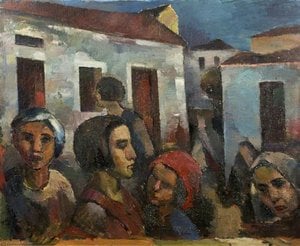
Theodor Kern, 1900 – 1969

Theodor Kernの名画:最も有名な作品88選、ランキング形式で紹介

Theodor Kernの最も有名な作品はStreet Scene, Sicily (1930)です。 Nude in Landscape (1926)とBeach Scene, Italy (1930)を合わせ、誰もが知る3つの名作が揃いました。 当カタログにはTheodor Kernによる88点の作品が掲載されています。以下の88点は、世界で最も注目されている作品であり、制作年、所蔵美術館、そしてその重要性についてまとめています。

各作品の検索数、閲覧数、および注文数を組み合わせた当サイトの人気スコアに基づきランキングを作成しています。最終更新:10月 2026

Theodor Kernの肖像画
Theodor Kern · 1900 – 1969
生没年
1900 – 1969, Salzburg
ムーブメント
Post-impressionism
カタログ掲載作品
88
最も有名な
Street Scene, Sicily (1930)
最多収蔵館
Bolton Museum And Art Gallery

Theodor Kernによる最も有名な10作品

Theodor Kernの絵画 11〜88

Landscape (1960) による Theodor Kern
#33

Landscape

1960 · Bolton Museum And Art Gallery
Wood, Hungary (1936) による Theodor Kern
#87

Wood, Hungary

1936

The painting Wood, Hungary by Theodor Kern is a beautiful representation of a forest scene in Hungary. Created in 1936 using oil on canvas, this artwork measures 61…

Draped Nude (1932) による Theodor Kern
#88

Draped Nude

1932 · Bolton Museum And Art Gallery

The painting Draped Nude by Theodor Kern is a stunning example of 20th-century art, showcasing the artist's unique style and technique. Created in 1932, this oil on canvas…

Theodor Kern が最も多く描いた主題

これらの傑作の中で最も頻繁に描かれる4つの主題と、それぞれの最高傑作をご紹介します。

Theodor Kernの作品を見るには

このページに掲載されている絵画を最も多く所蔵している 2 の美術館

美術館 都市 Theodor Kernの作品 このリストの絵画
Bolton Museum And Art Gallery, BoltonBolton Museum And Art Gallery Bolton 5 Self Portrait, Continental Landscape, Self Portrait
Stockwood Discovery Centre, LutonStockwood Discovery Centre Luton 2 Building with a Wooded Hill Beyond and a Tree Lined Path in front, Portrait of a Youth with a Yellow Coat

Theodor Kernの各年代における代表作

  1. 1920s
  2. 1930s
  3. 1940s
  4. 1950s
    Self Portrait (1950) による Theodor Kern
    第32/88位

    Self Portrait

    年齢 50歳 – 59歳 · Bolton Museum And Art Gallery
  5. 1960s
    Landscape (1960) による Theodor Kern
    第33/88位

    Landscape

    年齢 60歳 – 69歳 · Bolton Museum And Art Gallery

Theodor Kernの絵画に関する質問

Theodor Kernの最も有名な絵画は何ですか?回答を表示

Street Scene, Sicily (1930)。続いてNude in Landscape (1926)、そしてBeach Scene, Italy (1930)が続きます。

Street Scene, Sicilyが描かれたとき、Theodor Kernは何歳でしたか?回答を表示

30歳:Street Scene, Sicilyは1930年の作品で、Theodor Kernは1900生まれです。

Theodor Kernによるトップ10の名画とは?回答を表示

Street Scene, Sicily, Nude in Landscape, Beach Scene, Italy, Portrait of a Young Man, Miss Maureen Bently, Landscape with a Tree by a River and Hills in the Distance, Christ in the House of Martha and Mary, Floral Study, Untitled と Female Portrait。上記のランキングには、それぞれの制作年と所蔵美術館が記載されています。

Theodor Kernの作品数は?回答を表示

当カタログには、1926年から1960年にかけて制作されたTheodor Kernによる88点の作品が掲載されています。

Theodor Kernの最も有名な絵画はどこにありますか?回答を表示

その多くはBolton Museum And Art Gallery (Bolton) と Stockwood Discovery Centre (Luton)に所蔵されています。上記の表に各美術館を一覧で記載しています。

Theodor Kernが最も有名な作品を描いたのはいつですか?回答を表示

1930sにおける作品は、このページにある全88点のうち18点にのぼり、その中にはStreet Scene, Sicilyが含まれます。

Theodor Kernの初期および後期の代表作は何ですか?回答を表示

このページで最も古い作品はNude in Landscape (1926)、最新の作品はLandscape (1960)です。

Theodor Kernが最も多く描いたモチーフは何ですか?回答を表示

このページに掲載されている88作品のうち、Portrait (5), Reflection (3) と Architectural art (2)

Theodor Kernはどの芸術運動に属していますか?回答を表示

このページに掲載されている絵画が示す通り、Post-impressionism

Bolton Museum And Art Galleryでは、どのTheodor Kernの絵画を見ることができますか?回答を表示

Self Portrait, Continental Landscape と Self Portraitは、Bolton Museum And Art Gallery, Boltonが所蔵するこのページ内の5点の作品のうちの一つです。

Theodor Kernについて

The Formative Spirit and the Jugendstil Legacy

The dawn of the twentieth century brought with it a profound shift in the artistic consciousness of Europe, and Theodor Kern stood at the very heart of this transformation. Born in 1900, Kern’s early life was steeped in the rich, academic traditions that would eventually serve as the foundation for his more radical explorations. His journey through the prestigious Kunstakiente Düsseldorf allowed him to immerse himself in the flowing, organic rhythms of Jugendstil, where he studied under masters such as Wilhelm Trübschenne and Hugo Steiner-Samuels. This period was not merely about technical acquisition; it was an era of learning how to breathe life into decorative forms and how to use line and color to evoke deep, underlying emotions. As his training progressed through the Fine Art Academy in Vienna, Kern began to develop a command over draftsmanship that would later allow him to transition seamlessly between the delicate precision of religious frescoes and the expansive, sweeping vistas of the natural world.

Ascending the Heavens: The Aerial Revolution

While many of his contemporaries remained tethered to the earth, Kern possessed an unquenchable thirst for a new perspective—literally. He became a pioneer in the burgeoning field of aerial photography, a pursuit that required as much courage as it did artistic vision. Collaborating with the legendary Nicola Perscheid, Kern utilized the nascent technology of aircraft to document landscapes that had never before been seen by the human eye from such heights. This was more than mere documentation; it was an act of visual discovery. Together, they captured the breathtaking geometry of the Egyptian pyramids and the rugged, mist-shrouded peaks of the Alps. These photographic endeavors were deeply influenced by the graphic sensibilities of Henri de Toulouse-Lautrec and the intricate beauty of Japanese woodcuts, imbuing his aerial captures with a sense of stylized grandeur. Through the lens, Kern did not just photograph scenery; he translated the vastness of the world into a structured, expressive language of light and shadow.

A Multifaceted Mastery of the Canvas

Despite his groundbreaking work in the skies, Kern’s heart remained profoundly connected to the tactile reality of the canvas. His repertoire as a painter was remarkably diverse, ranging from the intimate to the monumental. In his portraiture, one finds a striking ability to capture quiet introspection, seen in works like his Head and Should::Portrait of a Woman in a Blue and Purple Dress, where visible brushstrokes and subtle shading create a sense of living presence. His landscapes, too, were legendary, capturing the very essence of Swiss heritage through an Impressionistic lens that celebrated the vibrant light of the Alpine regions. Kern was never one to be confined by a single movement; he moved with ease from the soft, atmospheric qualities of Post-Impressionism to the fragmented, geometric explorations of Cubism.
  • Portraiture: An exploration of human emotion through evocative color and light.
  • Landscape: A tribute to the enduring majesty of the European terrain.
  • Innovation: The seamless integration of photographic perspective with classical painting techniques.
Through this unique blend of scientific curiosity and artistic passion, Theodor Kern left an indelible mark on the history of Swiss and European art, reminding us that true visionaries can find beauty both in the smallest human detail and the widest horizon.

Theodor Kernによる全 88点の作品 →