

ベネヴェント・チェリーニの最も有名な作品は、ウィーンの美術史美術館に所蔵されているソルト・セラー (1540)です。 Jupiter (1545)とCrucifix (detail) (1562)を合わせ、誰もが知る3つの名作が揃いました。 当カタログにはベネヴェント・チェリーニによる80点の作品が掲載されています。以下の80点は、世界で最も注目されている作品であり、制作年、所蔵美術館、そしてその重要性についてまとめています。
各作品の検索数、閲覧数、および注文数を組み合わせた当サイトの人気スコアに基づきランキングを作成しています。最終更新:10月 2026 このページに掲載されているすべての名作は、ご希望のサイズで、美術館品質の手描き油彩複製画、またはファインアートプリントとしてご注文いただけます。


To stand before this magnificent depiction of Jupiter is to confront raw, untamed power rendered in the enduring majesty of bronze. This sculpture does not merely represent a god; it embodies the very force of nature—the thunderous authority that commands the skies. The figure dominates the space with an undeniable gravitas, his musculature meticulously articulated as if carved by the passing winds themselves. Observe the dynamic tension captured in his…

Benvenuto Cellini’s 1562 marble sculpture, “Crucifix (detail),” is not merely a depiction of Christ’s suffering; it’s an immersive experience. Within the dimly lit confines of El Escorial, this intimate piece draws you into a world of profound emotion and technical mastery – a testament to Cellini's genius as both goldsmith and sculptor. The sculpture immediately commands attention with its stark realism and the palpable sense of agony radiating from the…

In the grand tapestry of the Italian Renaissance, few objects capture the intersection of martial prestige and artistic virtuosity as profoundly as the Morion for Francesco I de' Medici. Created in 1570 by the legendary polymath Benvenuto Cellini, this is far more than a mere piece of protective headgear; it is a sculptural triumph rendered in metal. As a quintessential example of Mannerism, the Morion rejects the tranquil equilibrium of…

The bronze sculpture Danae and her Son Perseus by Benvenuto Cellini captures a moment of divine intersection. Created between 1545 and 1553 for Cosimo I de' Medici, the work depicts the mythological event where Zeus visits Danae in the form of golden rain. This Renaissance Mannerist piece resides within the Museo Nazionale del Bargello in Florence, Italy.

To stand before the Nymph of Fontainebleau is to step directly into the languid, sun-dappled world of the Italian Renaissance. This magnificent bronze sculpture by Benvenuto Cellini does more than merely depict a figure; it captures an ephemeral moment—a breath held between slumber and awakening. The central subject, the reclining nymph, embodies a timeless confluence of nature’s grace and mythological mystery. Her pose is one of exquisite repose, her body…

In the heart of Florence’s Piazza della Signoria, amidst the architectural grandeur of the Loggia dei Lanzi, stands a masterpiece that captures the very essence of Mannerist tension and heroic triumph. Benvenuto Cellini’s Perseus is not merely a sculpture; it is a dramatic performance frozen in bronze. Created between 1545 and 1554, this monumental work depicts the legendary hero Perseus at the climactic moment of his mythic journey. He stands…

In the heart of the Italian Renaissance, where the pursuit of beauty met the raw ambition of political power, Benvenuto Cellini forged a masterpiece that transcends mere portraiture. The Bust of Cosimo I is not simply a likeness of the Grand Duke of Tuscany; it is a profound meditation on authority, captured in the enduring medium of bronze. To gaze upon this work is to step into the vibrant, often…

Benvenuto Cellini's “Bust of Bindo Altoviti,” crafted in 1549, isn’t merely a sculpted likeness; it’s a meticulously constructed window into the heart of Renaissance Florence. This bronze masterpiece, now residing within the Isabella Stewart Gardner Museum in Boston, transcends simple portraiture to become a profound meditation on wealth, power, and the very essence of human representation. The subject, Bindo Altoviti, a prominent Florentine banker and astute political player, is rendered…

In the heart of Florence, amidst the architectural grandeur of the Loggia dei Lanzi, stands a masterpiece that captures the very essence of human struggle and divine victory. Benvenuto Cellini’s Perseus is not merely a sculpture; it is a breathtaking moment frozen in bronze, a dramatic climax of Greek mythology brought to life through the virtuosity of the Mannerist style. As the light dances across its aged patina, the figure…

Benvenuto Cellini's 1562 bronze sculpture, “Crucifix,” stands as a profoundly moving testament to the Renaissance spirit—a collision of technical mastery, religious fervor, and deeply personal emotion. More than…

To encounter a detail of Benvenuto Cellini’s Nymph of Fontainebleau is to step directly into the languid, sun-dappled world of the High Renaissance. This exquisite bronze sculpture, cast…

Benvenuto Cellini's "Minerva," crafted in 1545 during the twilight of the High Renaissance, isn't merely a bronze sculpture; it’s a meticulously constructed embodiment of Roman virtue and strategic…

In the quiet presence of this bronze, one senses the shifting tides of the sixteenth century. Completed in 1545, Benvenuto Cellini’s Mercury marks a departure from the balanced…

The bronze surface holds a quiet tension, as if the figure might stir at any moment. In this close view, we find ourselves pressed against the smooth, cool…

To stand before Benvenuto Cellini's monumental bronze, Perseus with the Head of Medusa, is to be arrested by a moment of sublime, violent apotheosis. This sculpture does not…

To behold Benvenuto Cellini’s Saliera is to step into the opulent heart of the Italian Renaissance, where the boundaries between functional object and profound sculpture dissolve entirely. This…

In the hallowed halls of the Kunsthistorisches Museum in Vienna, there exists a treasure that transcends the boundaries of mere functional objecthood to become a profound meditation on…

To stand before Benvenuto Cellini's bronze depiction of Ganymede is to encounter a moment suspended between divine beauty and youthful vulnerability. This masterful sculpture, executed in the vibrant…

In the grand tapestry of the Italian Renaissance, few objects capture the audacious spirit of Mannerism as vibrantly as Benvenuto Cellini’s Salt Cellar. Created around 1543 for the…

To gaze upon this detail from Benvenuto Cellini's Bust of Cosimo I is to encounter not merely a portrait, but a monumental declaration of power and Renaissance ambition.…


Benvenuto Cellini's Salt Cellar, a shimmering testament to the heights of Renaissance goldsmithing, isn’t merely a container for salt; it’s a miniature cosmos, a meticulously crafted allegory brimming…

In the heart of Florence’s sun-drenched Loggia dei Lanzi, where the shadows of history dance against classical stone, stands one of the most arresting spectacles of the Mannerist…

In the delicate, shimmering expanse of Benvenuto Cellini’s Medallion with Leda and the Swan, we find a moment suspended in the amber of the Italian Renaissance. Created around…

Benvenuto Cellini's "Cope Pin (Front and Back)," crafted in 1520 for Pope Clement VII, transcends the boundaries of a mere decorative object. It’s a potent emblem of Renaissance…

In the heart of Florence, within the sun-drenched, open-air majesty of the Loggia dei Lanzi, stands a masterpiece that captures the very essence of human struggle and divine…

Benvenuto Cellini's “Salt Cellar” (Saliera), completed in 1543 for King Francis I of France, isn’t merely a container for seasoning; it’s a shimmering embodiment of the Renaissance spirit—a…

The Kunsthistorisches Museum in Vienna holds within its walls not merely a container for salt, but a miniature drama sculpted in gold and enamel—Benvenuto Cellini’s celebrated “Salt Cellar,”…
お部屋に飾る →
Benvenuto Cellini’s “Apollo and Hyacinth,” a meticulously rendered marble sculpture from the 1540s, isn’t merely a depiction of a tragic myth; it’s a profound meditation on loss, divine…

Benvenuto Cellini's “Perseus (detail) (12)” isn’t merely a depiction of the legendary hero; it’s a visceral embodiment of Renaissance ambition, technical prowess, and a profound engagement with classical…

In the sun-drenched, open-air majesty of Florence’s Loggia dei Lanzi, a breathtaking moment remains frozen in bronze. Benvenuto Cellini’s Perseus with the Head of Medusa is far more…

The bronze sculpture of Perseus holding aloft the severed head of Medusa, attributed to Benvenuto Cellini and crafted in 1545, stands as a monumental achievement within the Italian…

Benvenuto Cellini’s “Shield,” completed in 1572, stands as a captivating emblem of the High Renaissance's waning influence and the burgeoning Mannerist style. Currently residing within the Louvre Museum’s…

The bronze sculpture titled Perseus was created by the artist Benvenuto Cellini. This work depicts the mythological figure Perseus holding the severed head of the Gorgon Medusa. The…

Commissioned in 1540 by Cardinal Ippolito d'Este, this relief sculpture embodies the stylistic shifts of the Florentine Renaissance. Moving away from the balanced ideals of the High Renaissance,…

The drawing titled Cope pin (profile) was executed by the goldsmith and sculptor Benvenuto Cellini. Created around 1520, the work represents a detailed design for a liturgical accessory.…
お部屋に飾る →
In the grand tapestry of the Italian Renaissance, few names resonate with as much dramatic flair and technical virtuosity as Benvenuto Cellini. His Gunpowder Case, crafted around 1570,…

In the heart of the Italian Renaissance, where the shadows of political intrigue met the brilliance of humanistic discovery, Benvenuto Cellini breathed life into metal. His Portrait Bust…

To gaze upon the Shield for Francesco I de' Medici is to step directly into the heart of the Italian Renaissance, where metalwork transcends utility to become high…

Two silver coins rest against a pale surface, their edges softened by the slow hunger of oxidation. They are small, circular fragments of a lost era, carrying the…
複製画を注文する →


To behold the detail of Benvenuto Cellini’s Shield for Francesco I de' Medici is to step directly into the shimmering heart of the late Renaissance. Crafted around 1570,…

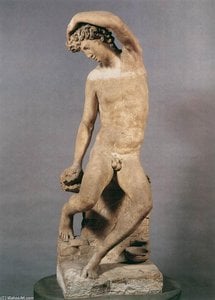
The bronze surface catches the light in a way that mimics the warmth of skin. In this 1548 sculpture, a youth stands caught in a sudden, muscular tension.…

In the heart of the sixteenth century, amidst the vibrant intellectual ferment of Florence, Benvenuto Cellini breathed life into a vision that would serve as a cornerstone for…
お部屋に飾る →
To behold Benvenuto Cellini’s Shield for Francesco I de' Medici is to step directly into the shimmering heart of the High Renaissance. Crafted around 1570, this extraordinary metalwork…

Benvenuto Cellini’s “Bust of Cosimo I” is more than just a sculpted likeness; it's a meticulously crafted embodiment of power, ambition, and the very spirit of the Florentine…

Benvenuto Cellini’s “Medal of Alessandro de’ Medici,” a small yet profoundly resonant bronze piece from 1530, isn’t merely a commemorative coin; it’s a meticulously crafted microcosm of Renaissance…
お部屋に飾る →
Benvenuto Cellini’s “The Rescue of Andromeda” is more than just a bronze sculpture; it's a vibrant tableau of myth, heroism, and the burgeoning spirit of Mannerism that defined…

A Glimpse Into Renaissance Power: Examining Cellini’s ‘Giulio’ of Alessandro de' Medici Coin The coin before us—a diminutive yet powerfully resonant testament to the Florentine Renaissance—represents more than…

The Kunsthistorisches Museum in Vienna holds within its walls an object that transcends mere tableware – it is a miniature world, a shimmering testament to the ambition and…
手描き複製画をオーダーする →
In the delicate interplay of light and shadow upon a polished bronze surface, one encounters more than just a portrait; one meets the very essence of Renaissance sovereignty.…

In the delicate, shimmering expanse of a mere four centimeters, Benvenuto Cellini managed to capture the weight of an entire era. The Medal of Clement VII is not…


The Shield for Francesco I de' Medici (detail), created around 1570, stands as a mesmerizing testament to the extraordinary skill of Benvenuto Cellini. This intricately crafted metalwork piece…

The bronze figure of Cosimo I de' Medici, ruler of Florence and Tuscany, stands as more than just a portrait; it is a meticulously crafted embodiment of Renaissance…
お部屋に飾る →
In the heart of the late Renaissance, where the boundaries between craftsmanship and fine art dissolved into pure brilliance, Benvenuto Cellini forged a legacy that transcends mere metalwork.…

The Salt Cellar of Francis I, crafted by the Florentine master Benvenuto Cellini between 1540 and 1543, is more than just a container for salt and pepper; it's…
お部屋に飾る →
In the hallowed halls of the Galleria Nazionale di Palazzo Barberini in Rome, there exists a profound meditation on loss and divine grace captured in stone. Benvenuto Cellini’s…

Within the hallowed halls of the Kunsthistorisches Museum in Vienna resides a treasure that transcends its humble function as a salt cellar – Benvenuto Cellini’s 1543 masterpiece, “Salt…
手描き複製画をオーダーする →
The world of 16th-century Florence pulsed with artistic fervor, a crucible where innovation and tradition intertwined to forge masterpieces that continue to captivate us centuries later. Among the…
お部屋に飾る →

Benvenuto Cellini's "The Rescue of Andromeda" – specifically this exquisite detail depicting the confrontation between Perseus and Medusa – is more than just a bronze sculpture; it’s a…

Benvenuto Cellini’s “Helmet,” created around 1570, stands as a testament to the zenith of Renaissance artistry and the flamboyant spirit of Mannerism. More than just armor—though exquisitely crafted—it…
複製画を注文する →
Benvenuto Cellini's bronze sculpture of Perseus with the Head of Medusa, completed around 1545-1554 for Duke Cosimo I de’ Medici in Florence, is far more than a mere…
複製画を注文する →
Benvenuto Cellini's "The Rescue of Andromeda," completed around 1550, is more than just a bronze sculpture; it’s a vibrant distillation of Renaissance mythology, a testament to the artist’s…

The parure consists of a necklace, two pendants, and a brooch, supplemented by a pair of lobe earrings with clips. The metalwork is composed of red gold, worked…

Benvenuto Cellini’s sculpture of Ganymede stands as a testament to the artistic fervor of the Mannerist period, capturing a moment of profound beauty and spiritual contemplation. Executed in…

Benvenuto Cellini’s *Medal of François I*, created in 1543 for the French King, stands as a pinnacle of Renaissance sculpture and embodies the stylistic fervor of Mannerism. More…

In the realm of Renaissance craftsmanship, few objects capture the ethereal intersection of power and poetic beauty quite like this exquisite detail of the gold and amethyst parure.…


The original set consists of a necklace, two pendants and a brooch, for a total of twelve table-cut and fourteen drop-shaped amethysts. Another pair of lobe earrings with…
複製画を注文する →
The original set consists of a necklace, two pendants and a brooch, for a total of twelve table-cut and fourteen drop-shaped amethysts. Another pair of lobe earrings with…
お部屋に飾る →
The original set consists of a necklace, two pendants and a brooch, for a total of twelve table-cut and fourteen drop-shaped amethysts. Another pair of lobe earrings with…
複製画を注文する →
In the quiet halls of the Museo Nazionale del Bargello in Florence, there exists a small yet profound masterpiece that commands attention through its sheer vitality. Benvenuto Cellini’s…

これらの傑作の中で最も頻繁に描かれる4つの主題と、それぞれの最高傑作をご紹介します。
このページに掲載されている絵画を最も多く所蔵している 8 の美術館
| 美術館 | 都市 | ベネヴェント・チェリーニの作品 | このリストの絵画 |
|---|---|---|---|
 バルディーニ国立美術館 |
フィレンツェ | 30 | Jupiter, Danae and her Son Perseus, Perseus |
 美術史美術館 |
ウィーン | 10 | ソルト・セラー, Salt Cellar, Salt Cellar (detail) |
 ルーブル美術館 |
パリ | 7 | Nymph of Fontainebleau, Nymph of Fontainebleau (detail), Nymph of Fontainebleau (detail) |
 ランツィのロッジア |
フィレンツェ | 7 | Perseus (15), Perseus, Perseus |
 国立美術館ツヴィンガー宮殿 |
ドレスデン | 6 | Morion for Francesco I de' Medici, Shield for Francesco I de' Medici (detail) (11), Shield for Francesco I de' Medici (detail) |
 Museo Glauco Lombardi |
Parma | 5 | Gold and amethyst parure donated by Maria Luigia to one of her palace ladies, Detail of the gold and amethyst parure donated by Maria Luigia to one of her palace ladies, Gold and amethyst parure donated by Maria Luigia to one of her palace ladies |
 大英博物館 |
ロンドン | 3 | Cope pin (front and back), Cope pin (profile), Project for a seal |
 サン・ロレンソ修道院 |
エル・エスコリアル | 2 | Crucifix (detail), Crucifix |
In the delicate, shimmering expanse of Benvenuto Cellini’s Medallion with Leda and the Swan, we find a moment suspended in the amber of the Italian Renaissance. Created around…

金箔を施したロールド・ゴールド(延べ金)で作られた「サリエラ(塩入れ)」は、1540年から1543年にかけて、ベンヴェント・チェリーニがフランス国王フランソワ1世のために制作した至宝です。この作品は、彼の末裔であるシャルル9世を経て、大公フェルディナンド2世へと受け継がれてきました。この塩入れには、大地と海、そしてその相互作用を描いた寓意が込められています。右側には三叉槍を持つ男と船が配され「水」を象徴し、左側には「大地」を象徴する女性が佇んでいます。さらにその台座部分には、風や一日の時間の移ろい、そして人々の営みが細やかに描写されています。
Benvenuto Cellini’s “The Rescue of Andromeda” is more than just a bronze sculpture; it's a vibrant tableau of myth, heroism, and the burgeoning spirit of Mannerism that defined…

Benvenuto Cellini’s 1562 marble sculpture, “Crucifix (detail),” is not merely a depiction of Christ’s suffering; it’s an immersive experience. Within the dimly lit confines of El Escorial, this…

In the grand tapestry of the Italian Renaissance, few objects capture the intersection of martial prestige and artistic virtuosity as profoundly as the Morion for Francesco I de'…
ソルト・セラー (1540)(美術史美術館, ウィーン)。続いてJupiter (1545)、そしてCrucifix (detail) (1562)が続きます。
40歳:ソルト・セラーは1540年の作品で、ベネヴェント・チェリーニは1500生まれです。
ソルト・セラー, Jupiter, Crucifix (detail), Morion for Francesco I de' Medici, Danae and her Son Perseus, Nymph of Fontainebleau, Perseus, Bust of Cosimo I (detail), Bust of Bindo Altoviti と Perseus。上記のランキングには、それぞれの制作年と所蔵美術館が記載されています。
当カタログには、1520年から1570年にかけて制作されたベネヴェント・チェリーニによる80点の作品が掲載されています。
その多くはバルディーニ国立美術館 (フィレンツェ), 美術史美術館 (ウィーン) と ルーブル美術館 (パリ)に所蔵されています。上記の表に各美術館を一覧で記載しています。
1540sにおける作品は、このページにある全80点のうち42点にのぼり、その中にはソルト・セラーが含まれます。
このページで最も古い作品はMedallion with Leda and the Swan (1520)、最新の作品はMorion for Francesco I de' Medici (1570)です。
このページに掲載されている80作品のうち、Renaissance (37), Mythology (34) と Cellini (25)
Bronze: このページには全80作品中30件の作品があります。
このページに掲載されている絵画が示す通り、マニエリスム
Jupiter, Danae and her Son Perseus と Perseusは、バルディーニ国立美術館, フィレンツェが所蔵するこのページ内の30点の作品のうちの一つです。
はい。このページに掲載されているすべての絵画は、各作品の個別ページから、ご希望のサイズで、美術館品質の手描き油彩複製画、またはファインアートプリントとしてご注文いただけます。
16世紀イタリア・フィレンツェに生まれたベンヴェヌート・チェリーニは、単なる芸術家という枠を超え、金細工師、彫刻家、画家、軍人、そして作家として輝かしい足跡を残した稀有な人物です。彼の波乱万丈な生涯と、その才能が凝縮された作品群は、ルネサンス文化の華やかさと同時に、人間の情熱と葛藤を鮮やかに物語っています。チェリーニ自身が綴った自伝は、芸術史における貴重な一次資料であるだけでなく、一人の人間としての生き様を描いた文学作品としても高く評価されています。
チェリーニの生家は音楽一家であり、父は楽器職人でした。幼い頃から音楽的な素質を見せましたが、15歳の時、金細工師としての道を志し、アントニオ・ディ・サンドロ(マルコーネ)に弟子入りします。しかし、その若き日のチェリーニは決して平穏な日々を送っていたわけではありません。同年代の仲間との乱闘事件を起こし、フィレンツェから追放されるという苦い経験も経ています。その後、シエナで金細工師フラカストロのもとで修行を重ね、技術を磨き上げていきます。
チェリーニの作品は、その技巧の高さはもちろんのこと、ダイナミックな構図と写実的な表現が特徴です。特にフランソワ1世のために制作された銀製の塩壺は、彼の代表作として知られています。精緻を極めた装飾と躍動感あふれる人物像は、見る者を圧倒します。また、「ペルセウスとメデューサ」のブロンズ彫刻も、チェリーニの卓越した才能を示す傑作です。古典古代美術やミケランジェロの影響を受けながらも、彼独自の様式を確立し、マニエリスムという時代精神を体現しています。「レーダと白鳥」の金製メダルは、神話の世界を繊細な技術で表現した美しい作品です。
チェリーニの活動は芸術だけに留まりません。彼は軍人として要塞防衛戦に参加し、ローマを守るために活躍しました。また、宮廷ではコルネットやフルートを演奏するなど、音楽家としての顔も持ち合わせていました。しかし、彼が後世に名を残すことになったのは、やはり自伝の存在です。
自伝は単なる事実の羅列ではなく、チェリーニ自身が自身の才能を誇示し、行動を正当化するために書き上げられた自己像です。その信憑性には疑問も残りますが、ルネサンス期の生活を知る上で欠かせない一次資料として、現在でも多くの研究者に読まれています。
1571年にフィレンツェで亡くなったベンヴェヌート・チェリーニは、マニエリスムを代表する芸術家の一人として、その名を歴史に刻みました。彼の技術的な卓越性、芸術的な革新性、そして魅力あふれる自伝は、後世の芸術家たちに多大な影響を与え続けています。彼は、多様な分野で才能を発揮し、野心に燃えて個性を追求したルネサンス人の理想を体現しています。彼の作品は、その美しさ、技巧、そしてドラマティックな表現力によって、西洋美術史における重要な位置を占めています。


