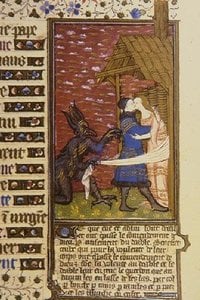
The Enigmatic Rohan Master: A Window into Medieval Emotion
The world of 15th-century illuminated manuscripts offers glimpses into the hearts and minds of a bygone era, and few works capture this intimacy as powerfully as the “Grandes Heures de Rohan,” also known as “Illuminated Lovers.” Attributed to an anonymous artist – the enigmatic Rohan Master – this extraordinary book of hours is more than just a collection of prayers; it’s a profound exploration of human emotion, rendered with breathtaking skill and a startlingly modern sensibility for its time. The manuscript, currently housed in the Bibliothèque Nationale de France, Paris, stands as a testament to the artist's unique vision and technical mastery, inviting us to contemplate the complexities of faith, love, and mortality.
The origins of the Rohan Master remain shrouded in mystery, adding to the work’s allure. Scholars debate his precise location and influences, suggesting he may have honed his craft in Champagne, Paris, or Anjou – regions known for their artistic vibrancy during this period. While direct lineage is elusive, stylistic analysis points towards a connection with the celebrated Limbourg brothers, whose “Très Riches Heures du Duc de Berry” exemplify the pinnacle of Gothic illumination. The Rohan Master clearly absorbed and adapted these techniques, but infused them with a distinctly personal voice – one characterized by an unprecedented focus on portraying psychological states.
A Symphony of Color and Emotion
What immediately distinguishes the “Grandes Heures de Rohan” is its intensely expressive style. Unlike many contemporary illuminated manuscripts that prioritized meticulous detail and adherence to established conventions, the Rohan Master embraced a looser, more painterly approach. The colors are vibrant yet nuanced, conveying not just visual beauty but also emotional depth. Deep blues evoke sorrow, fiery reds ignite passion, and delicate golds shimmer with reverence. The artist’s use of perspective is deliberately skewed, creating dramatic spatial relationships that heighten the impact of each scene.
The miniatures themselves are remarkable for their dynamism and psychological acuity. The scenes from the Old Testament – particularly the Crucifixion and depictions of the Virgin Mary mourning her son – are not rendered as static events but as moments of intense suffering and profound grief. Faces are contorted in anguish, bodies are writhing in pain, and gestures convey a raw, unfiltered emotional response. This departure from the more restrained representations common in earlier medieval art marks a significant shift towards a more humanistic approach to storytelling.
The Secrets Within: Symbolism and Narrative
Beyond their emotional power, the miniatures are laden with symbolism. The “Illicit Lovers” scene, which gives the book its alternate name, is perhaps the most famous – and controversial – element of the manuscript. It depicts a clandestine meeting between a young man and woman, rendered in exquisite detail but imbued with an undeniable sense of illicit desire. While interpretations vary, many scholars believe this scene represents the dangers of earthly temptation and the importance of spiritual devotion. The inclusion of Adam and Eve working is another example of this symbolism.
The book’s structure itself contributes to its narrative complexity. The “Grandes Heures” follows the traditional format of a book of hours, containing prayers for each hour of the day, as well as liturgical texts and biblical scenes. However, the Rohan Master deviates from the norm by incorporating numerous smaller vignettes – often depicting episodes from the life of Christ or scenes from Old Testament stories – that are scattered throughout the margins. These miniature illustrations add layers of meaning and create a rich tapestry of interconnected narratives.
Legacy and Influence
Despite the anonymity surrounding its creator, the “Grandes Heures de Rohan” has had a profound impact on the history of illuminated manuscripts. Its expressive style paved the way for later artists to explore more emotionally charged representations of religious subjects. The Rohan Master’s emphasis on psychological realism foreshadowed developments in Renaissance art, where human emotion and individual experience became increasingly central themes.
The manuscript continues to fascinate scholars and art lovers alike. Its beauty, its mystery, and its profound emotional resonance ensure that the work of the Rohan Master will remain a source of wonder and inspiration for generations to come. The “Grandes Heures de Rohan” is not merely a beautiful object; it’s a window into the soul of a medieval artist – a testament to his skill, his vision, and his remarkable ability to capture the complexities of human experience on parchment.