A Spirit of National Romanticism
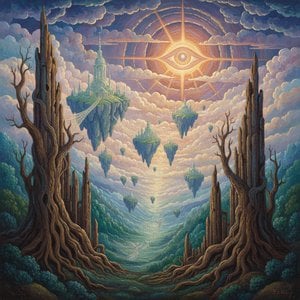
In the quiet corners of Tallinn, a young man named Oskar Kallis began to shape a vision that would eventually breathe life into the very soul of Estonia. His early years were marked by a deep connection to the land and its legends, a passion that led him to seek guidance under the watchful eye of Ants Laikmaa. Between 1907 and the middle of the following decade, Kallis moved through various studios, refining his hand and his eye. He did not merely seek to paint; he sought to capture the essence of a people. This drive brought him to the Estonian Artist Society, where he studied design, learning how to weave the threads of tradition into the fabric of everyday objects.
His heart beat in rhythm with the movement of national romanticism. He looked toward the Finnish painter Akseli Gallen-Kallela for inspiration, finding in that style a way to translate ancient myths into visual form. Kallis was not content with the canvas alone; he extended his creative reach to furniture and textiles, imbuing domestic life with ethnographic beauty. In 1917, he joined fellow creators to establish the Vikerla association, a gathering of minds dedicated to a shared artistic purpose.
The Epic of Kalevipoeg
Perhaps the most profound chapter of his brief career was his devotion to the Estonian national epic, Kalevipoeg. Kallis took up the task of illustrating these ancient tales, producing approximately forty works that brought the legendary hero to life. Through his brush, the struggles and triumphs of the epic were rendered with a sense of mythic weight. His compositions often explored the darker, more mysterious realms of folklore, such as:
- Lennuk (1914)
- Sulevipoja kalm (1914)
- Kalevipoeg kasvatab tamme (1914/1915)
- Kalevipoeg kellukest helistamas (1914/1915)
- Kalevipoeg allmaailmas (1915)
- Manala uks (1915)
A Life Cut Short
The light of his creativity was extinguished far too soon. While the world was embroiled in the upheavals of 1918, Kallis faced a much more intimate struggle against tuberculosis. He traveled to the Crimea, seeking relief in Yalta, but the illness claimed him on the first day of that year. Though his time spent creating was short, the marks he left upon Estonian art remained. His works, now held within the Art Museum of Estonia, continue to speak of a man who sought to find the eternal within the local, and the mythic within the mundane.