John Heaviside Clark (1771 – 1863): A Romantic Vision of the British Landscape
John Heaviside Clark, born in Alloa, Clackmannanshire, Scotland, in 1771, emerged as a prominent landscape painter during the Romantic era—a period characterized by an intense fascination with nature and emotion. His artistic journey began modestly, studying under William Nisbet Payne at Edinburgh Academy before embarking on independent explorations of Scottish scenery and later venturing into Europe to absorb influences from artists like Claude Lorrain and Nicolas Poussin. Clark’s distinctive style blended meticulous observation with idealized representation, resulting in canvases that captured the grandeur and tranquility of the British countryside.
- Early Life & Training: Clark's formative years instilled a deep appreciation for the natural world, shaping his artistic sensibilities from an early age.
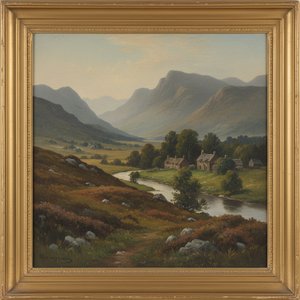
- Scottish Landscapes: He achieved considerable renown for his depictions of Scottish landscapes—particularly those surrounding Fountains Abbey and Alloa—where he skillfully employed atmospheric perspective to convey depth and luminosity.
Clark’s technique was rooted in classical principles but infused with Romantic sensibilities. He meticulously studied the effects of light and shadow, utilizing watercolor pigments with remarkable precision to achieve subtle tonal gradations. His compositions often featured dramatic vistas punctuated by carefully placed figures—typically shepherds or farmers—who served as focal points within the expansive landscapes. These figures weren’t merely decorative elements; they symbolized humanity's harmonious relationship with nature, a core theme of Romantic art.
- Watercolor Mastery: Clark perfected watercolor painting, mastering techniques that allowed for nuanced color blending and textural detail.
- Influence of Classical Artists: Lorrain and Poussin’s compositions profoundly impacted Clark's artistic vision, inspiring him to emulate their masterful use of light and dramatic landscapes.
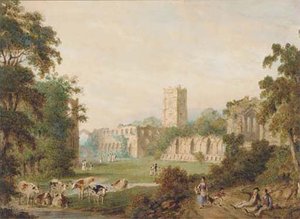
His most celebrated works include “Fountains Abbey,” a breathtaking watercolor capturing the ruined abbey in Yorkshire bathed in soft sunlight—a testament to his ability to evoke emotion through visual imagery. Similarly, "A Prospect Of Alloa, Clackmannanshire From The North Looking Towards The River Forth" exemplifies his dedication to portraying Scottish rural life with remarkable accuracy and beauty. These paintings solidified Clark’s reputation as one of the foremost landscape artists of his time and contributed significantly to establishing Romanticism's aesthetic standards.
- Notable Achievements: Clark’s landscapes became iconic representations of the Romantic ideal—a celebration of sublime beauty and spiritual contemplation.
- Legacy: His influence extended beyond his own lifetime, inspiring subsequent generations of artists to explore the expressive potential of watercolor and to embrace the grandeur of the natural world.
Clark died in London in 1863, leaving behind a legacy as a pivotal figure in British art history. His paintings continue to resonate with viewers today, offering glimpses into a bygone era—a time when artists sought inspiration in nature and endeavored to capture its essence on canvas with unwavering dedication.