A Life Etched in Urban Reality
Jerome Myers, born in Petersburg, Virginia, in 1867, was more than just a painter; he was a chronicler of the American urban experience at a pivotal moment in its history. His life story, marked by early hardship and constant relocation due to his father’s absences, deeply informed his artistic vision. This itinerant upbringing instilled within him an acute sensitivity to the struggles and resilience of those living on the margins – a theme that would become central to his oeuvre. His brother, Gustavus Myers, forged a path as a journalist and activist, further cementing a family commitment to social observation and reform. Before fully dedicating himself to art, Myers tasted life as an actor and scene painter, experiences which undoubtedly honed his understanding of visual storytelling and dramatic composition. This practical foundation served him well when he formally pursued artistic training at Cooper Union for a year, followed by eight years at the Art Students League under the tutelage of George de Forest Brush. However, it wasn’t the established art centers of Europe that truly captured Myers' imagination; rather, it was the teeming streets and vibrant life of New York City’s Lower East Side that became his enduring muse. A brief sojourn to Paris in 1896 paled in comparison to the raw energy and compelling narratives unfolding within his own city.The Ashcan School and a Unique Artistic Voice
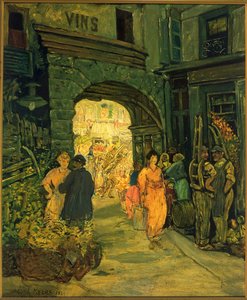
Myers emerged as a key figure associated with the Ashcan School, a group of artists who bravely turned their attention away from traditional academic subjects and towards the gritty realities of urban life. However, Myers wasn’t simply replicating what he saw; he was interpreting it through a deeply empathetic lens. He deliberately chose to depict the everyday lives of new immigrants – not as objects of pity or sociological study, but as individuals possessing inherent dignity and beauty. Over a thousand drawings, paintings, etchings, and watercolors bear witness to his dedication, documenting their routines, struggles, and moments of joy outside the confines of tenement walls. He famously articulated his artistic philosophy by stating that where others saw ugliness and degradation, he perceived “poetry and beauty.” This wasn’t mere romanticism; it was a profound belief in the inherent worth of every human experience, regardless of circumstance. His work stands apart within the Ashcan School not for its shock value – though it certainly challenged conventional artistic norms – but for its quiet compassion and unwavering focus on the humanity of his subjects. He wasn’t interested in grand narratives or sweeping statements; he was captivated by the small moments that revealed the essence of a life lived fully, even amidst hardship.A Catalyst for Modernism: The 1913 Armory Show
Beyond his artistic contributions, Jerome Myers played a crucial role in shaping the trajectory of American art through his involvement in organizing the landmark 1913 Armory Show. This exhibition was a watershed moment, introducing European modern movements – Cubism, Fauvism, and Expressionism – to an American public largely unfamiliar with such radical departures from tradition. Myers’ commitment to showcasing these new artistic voices demonstrated a willingness to challenge established norms and embrace innovation. While his own work didn't fully align with the abstract tendencies of some of the European artists on display, his participation signaled a broader openness to experimentation and a rejection of conservative aesthetic values. The Armory Show irrevocably altered the landscape of American art, paving the way for future generations of modernist painters and sculptors. His painting “Backyard” (1888) is considered one of the earliest examples of Ashcan School subject matter in America, solidifying his place within this influential movement and foreshadowing the artistic revolution that was about to unfold.Legacy and Lasting Influence
Throughout his career, Myers continued to explore themes of urban life, capturing scenes of street celebrations, immigrant communities, and fleeting moments of everyday existence in New York City. He received early support from art dealer William Macbeth, which helped launch his career and secure exhibitions that solidified his reputation. However, as the city rapidly changed in later years, he expressed a growing concern about the erosion of human connection and warmth. He lamented the decline of open-air social interaction, observing how modern life seemed to isolate individuals rather than foster community. This sense of loss is subtly woven into his later works, adding another layer of complexity to his already nuanced portrayals of urban existence. Jerome Myers’ legacy rests on his unwavering commitment to portraying the lives of ordinary people with dignity and compassion. He didn't seek to sensationalize or exploit; he sought to understand and represent their experiences with honesty and empathy. His work continues to resonate today, reminding us of the importance of seeing – and valuing – the humanity in everyone, regardless of their background or circumstances. He remains a pivotal figure in American realism and the Ashcan School, an artist whose vision continues to inspire those who seek to capture the truth and beauty of the human condition.Selected Works
- Recreation Pier: This oil painting beautifully captures urban life and childhood innocence with Impressionistic brushstrokes and warm tones, offering a unique glimpse into American art history.
- Street Shrine: A vibrant 1931 oil painting depicting a nighttime religious procession, showcasing dynamic composition, impasto texture, and an evocative style.
- The Italian Procession: A Post-Impressionist scene of a bustling parade, capturing the energy of NYC life with thick impasto and expressive color.