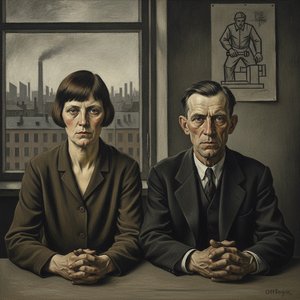
Georg Fritzsche the Elder: A Postwar Visionary of German Art
Born in Bochum, Germany, in 1903, Georg Fritzsche the Elder emerged as a significant figure in postwar and contemporary art. His career spanned several decades, marked by a consistent exploration of themes rooted in German history, folklore, and the evolving landscape of his nation. While not always achieving widespread fame during his lifetime, Fritzsche’s work has gained increasing recognition for its evocative imagery, meticulous detail, and subtle commentary on cultural identity.
Fritzsche's early life remains somewhat shrouded in historical detail, though it is known he honed his artistic skills through traditional training. Following World War II, like many German artists, Fritzsche navigated a complex artistic landscape shaped by the devastation of the war and the rise of new ideologies. He initially focused on landscapes and genre scenes, often depicting rural life and incorporating elements of regional folklore – a deliberate choice reflecting a desire to reconnect with Germany’s historical roots.
Thematic Explorations: Folklore, History, and German Identity
A defining characteristic of Fritzsche's oeuvre is his deep engagement with German folklore and history. His paintings frequently feature scenes drawn from traditional tales, myths, and legends – often imbued with a melancholic beauty. He wasn’t simply recreating these stories; he was actively interpreting them through a distinctly modern lens. Figures like St. George, prominent in many of his works, became symbols not just of chivalry but also of resilience and the enduring spirit of German culture.
Furthermore, Fritzsche's work frequently references specific historical events and figures. His depictions of Martin Luther, for example, are notable for their quiet contemplation rather than overt political statements – suggesting a nuanced understanding of the complexities surrounding this pivotal figure in German history. The artist’s meticulous attention to detail—from the textures of clothing to the atmospheric lighting—creates a palpable sense of authenticity and invites viewers to contemplate the past.
Technique and Style: Precision and Atmospheric Depth
Fritzsche was renowned for his technical mastery, particularly in his use of oil paint. He employed a highly detailed, almost photographic realism, meticulously rendering textures, light, and shadow. This precision wasn't merely decorative; it served to heighten the emotional impact of his scenes, drawing the viewer into the depicted world.
His compositions often feature a strong sense of atmospheric depth, achieved through careful use of perspective and color. He skillfully manipulated light and shade to create mood and drama, evoking a feeling of both nostalgia and quiet contemplation. The influence of earlier German Romantic painters is evident in his approach to landscape, but Fritzsche’s work possesses a unique sensibility—a blend of realism and emotional resonance.
Recognition and Legacy
Throughout his career, Georg Fritzsche the Elder's paintings were offered at auction, with prices ranging from $100 to $10,000, demonstrating an increasing appreciation for his work. His art is now held in collections worldwide, a testament to its enduring appeal. While he may not be as widely celebrated as some of his contemporaries, Fritzsche’s contribution to German art—particularly his exploration of folklore, history, and the evolving identity of his nation—is increasingly recognized.
His work stands as a poignant reminder of the challenges and transformations faced by Germany in the aftermath of World War II, offering a thoughtful reflection on the past while simultaneously embracing the possibilities of the future. WahooArt continues to offer high-quality reproductions of his paintings, ensuring that this important artist’s vision remains accessible to a wider audience.
- Born:** Bochum, Germany (1903)
- Died:** 1986
- Key Themes:* German Folklore, History, Landscape, Cultural Identity
- Mediums:* Oil on Canvas, Drawings