A Steadfast Vision: The Life and Art of Émile Chambon
Émile François Chambon, born in Geneva in 1905, was a Swiss painter who dedicated his life to the enduring power of figurative art. In an era increasingly dominated by abstraction, Chambon remained steadfastly committed to representing the world around him—and within him—with meticulous skill and quiet contemplation. His journey wasn’t one of revolutionary breaks or flamboyant manifestos; rather, it was a deeply personal exploration of form, light, and emotion, guided by a reverence for artistic masters and an unwavering belief in the expressive potential of traditional techniques. Chambon's path began with formal training at the École des Beaux-Arts in Geneva, but his true education unfolded during two pivotal journeys to Paris in 1921 and 1928. These sojourns weren’t merely about acquiring skill; they were immersions into a world of artistic heritage. He spent countless hours studying the works of Rembrandt, Rubens, and Géricault at the Louvre, absorbing their mastery of composition, chiaroscuro, and narrative power. Beyond the Louvre, he explored the Musée Guimet and Petit-Palais, broadening his understanding of art’s diverse expressions. These experiences solidified a commitment to realism tempered by a distinctly modern sensibility.Early Influences and Artistic Development
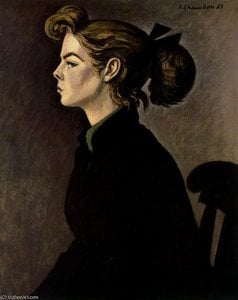
The formative years also included a valuable apprenticeship with Jean-Louis Gampert from 1925 to 1928. This period provided practical experience in an artist’s studio, contributing to decorative projects like the Corsier church decor, honing his skills while observing a working professional. However, Chambon wasn't simply mimicking his predecessors or contemporaries; he was forging his own path. The influence of Gustave Courbet is particularly evident in his work—a shared dedication to depicting everyday subjects with honesty and without idealization. Yet, Chambon infused this realism with a dreamlike quality, hinting at hidden depths beneath the surface of ordinary life. His palette remained subtle, favoring muted tones that enhanced the emotional resonance of his scenes. He wasn’t interested in bold statements or dramatic gestures; instead, he sought to capture fleeting moments of beauty and introspection through expressive lines and carefully considered compositions. This unique blend of tradition and modernity defined his artistic signature.Themes and Artistic Output
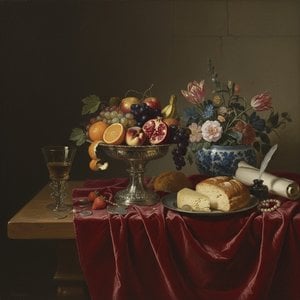
Throughout his prolific career—particularly during the 1930s and 1940s, when his output significantly increased—Chambon consistently returned to certain themes. Mythological scenes offered a canvas for exploring universal human experiences, while genre paintings provided glimpses into the lives of ordinary people. Still lifes, often featuring flowers, fruit, or everyday objects, became vehicles for examining form, texture, and light. These weren’t merely exercises in technical skill; they were meditations on mortality, beauty, and the passage of time. In 1957, a monograph by Edouard Muller-Moor helped to establish Chambon's reputation within Switzerland, bringing wider recognition to his quiet yet powerful body of work. He participated in numerous collective exhibitions across Switzerland and abroad, including a showing at the Galerie Motte in Paris in 1962 and the Künstler, Sammler exhibition at the Aargauer Kunsthaus.Legacy and Lasting Impact
Chambon’s commitment to figurative painting positioned him as something of a counterpoint to the prevailing artistic trends of the 20th century. While abstraction gained prominence, he remained dedicated to representing the visible world—and the inner landscape of human emotion—with skill and sensitivity. In his later years, Chambon demonstrated remarkable generosity, donating paintings to the Carouge museum and a significant collection of African and Oceanic art to the Geneva Ethnographic Museum. This act speaks to a broader appreciation for artistic expression beyond the confines of Western tradition. The establishment of the Fondation Émile Chambon after his death in 1993 ensures that his work continues to be studied and appreciated by future generations. Though not widely known internationally during his lifetime, Chambon’s dedication to craftsmanship, his unique blend of realism and dreamlike imagery, and his unwavering commitment to figurative art continue to inspire contemporary artists seeking a path beyond the dictates of fleeting trends. He stands as a testament to the enduring power of artistic vision—a quiet voice that continues to resonate with those who seek beauty, meaning, and truth in the world around them. His work is a reminder that true artistry lies not in following the crowd, but in staying true to one’s own unique perspective.アーティストへのQ&A
Émile Chambonには、他にどのような別名や通称がありますか?
Émile Chambonは、Émile François Chambonという別名でも表記されます。
Émile Chambonの全作品を通じた色彩の使い方を詳しく知ることはできますか?
Émile Chambonのパレット・ゲノムでは、そのアーティストの作品群を構成するカラープロファイルをご覧いただけます。
Émile Chambonの作品は、どのようなムードを表現していますか?
アーティストのムードで探すページでは、Émile Chambonの作品をその雰囲気に合わせてご紹介しています。