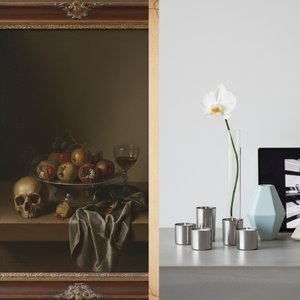
Antonio da Crevalcore: Bridging Ferrarese Elegance and Bolognese Spirituality
Antonio Leonelli, commonly known as Antonio da Crevalcore (c. 1438–1515 or 1525), stands as a fascinating figure within the artistic landscape of Renaissance Italy—a painter whose career unfolded primarily in Bologna but whose stylistic roots firmly anchored him to the vibrant Ferrarese tradition. While biographical details remain somewhat elusive, scholarly consensus points to Crevalcore’s formative years spent under the tutelage of Giovanni Battista Ravelli and Andrea del Sarto in Ferrara, a crucible where he absorbed the refined aesthetic principles that would subsequently permeate his oeuvre.
- Early Life & Training:
- Ferrara Influence: The Ferrarese Style
- Bolognese Career & Patronage
- Notable Works & Artistic Technique
- Legacy & Historical Significance
Ferrara Influence: The Ferrarese Style
Crevalcore’s artistic journey began in Crevalcore, Italy—a region renowned for its burgeoning artistic activity during the Quattrocento. However, it was Ferrara, under the patronage of Ercole I d'Este and his successors, that truly cemented his stylistic identity. The Ferrarese court fostered an environment characterized by meticulous observation of nature and a dedication to idealized beauty—traits evident in artists like Andrea del Sarto and Piero della Francesca. Crevalcore’s paintings demonstrate a masterful command of chiaroscuro, employing subtle gradations of light and shadow to imbue his subjects with palpable realism while simultaneously elevating them to a realm of spiritual contemplation. This technique—particularly noticeable in works depicting religious scenes—reflects the humanist ideals prevalent at the time, prioritizing human emotion and intellect alongside divine grace.
Bolognese Career & Patronage
By 1461, Crevalcore was officially registered as a painter in Bologna, signaling his establishment within the city’s artistic community. He quickly gained recognition for his ability to capture fleeting moments of beauty and emotion—a skill particularly suited to the depiction of still lifes. These compositions weren't merely exercises in botanical illustration; they were imbued with symbolic meaning, reflecting humanist concerns about mortality and the contemplation of God’s creation. Crevalcore’s commissions included works for prominent Bolognese churches, notably San Petronio, where he contributed to a monumental fresco cycle—a testament to his ambition and artistic prowess. The patronage of influential families further propelled his career, allowing him to produce ambitious projects that showcased both technical skill and imaginative vision.
Notable Works & Artistic Technique
Among Crevalcore’s surviving paintings is “A Holy Family” (1493), a masterpiece executed in tempera on wood panel—a medium favored by Ferrarese artists during the period. Tragically, this artwork perished during the devastating bombing of Berlin in 1945, representing an irreplaceable loss to art history. However, reproductions and scholarly analyses continue to illuminate Crevalcore’s distinctive artistic approach. His meticulous attention to detail—evident in the rendering of drapery folds and botanical specimens—underscores his commitment to realism. Yet, beneath this surface observation lies a profound spiritual sensibility, conveyed through carefully considered compositions and harmonious color palettes.
Legacy & Historical Significance
Antonio da Crevalcore’s contribution to Renaissance art extends beyond individual paintings; he embodies the broader artistic currents flowing between Ferrara and Bologna during the late fifteenth and early sixteenth centuries. He represents a crucial link in the transmission of Ferrarese stylistic ideals—characterized by elegance, refinement, and humanist contemplation—to Bolognese artists grappling with new intellectual and spiritual challenges. His work serves as an enduring reminder of the transformative power of artistic training and patronage, demonstrating how creative endeavors can flourish within supportive cultural environments. Crevalcore’s legacy resides not only in his surviving artworks but also in his influence on subsequent generations of painters who sought to emulate his masterful technique and profound aesthetic vision—a testament to his enduring place within the annals of Italian Renaissance art.