

Adam Pendletonの名作として知られるのはHistory (Lab 1964 Grey) (2005)で、ピッツバーグのカーネギー美術館 (Carnegie Museum of Art)に所蔵されています。 当カタログに含まれるAdam Pendletonの全1作品のうち、特に高く評価されている1作品をご紹介します。各作品には制作年、所蔵美術館、そしてその作品ならではの特徴が添えられています。
各作品の検索数、閲覧数、および注文数を組み合わせた当サイトの人気スコアに基づきランキングを作成しています。最終更新:11月 2026

このページに掲載されている絵画を最も多く所蔵している 1 の美術館
| 美術館 | 都市 | Adam Pendletonの作品 | このリストの絵画 |
|---|---|---|---|
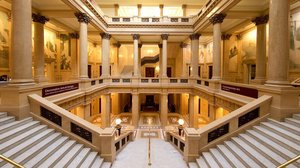 カーネギー美術館 (Carnegie Museum of Art) |
ピッツバーグ | 1 | History (Lab 1964 Grey) |
このページに掲載されているAdam Pendletonによる年代別の傑作はすべて2005年の作品です。一覧はこちら。
History (Lab 1964 Grey) (2005)
21歳:History (Lab 1964 Grey)は2005年の作品で、Adam Pendletonは1984生まれです。
Adam Pendletonによる1点の作品を掲載しています。
その多くはカーネギー美術館 (Carnegie Museum of Art) (ピッツバーグ)に所蔵されています。上記の表に各美術館を一覧で記載しています。
Adam Pendleton is an American conceptual artist whose diverse practice encompasses painting, silkscreen, collage, video, performance, and word art. Born in Richmond, United States, he began writing poetry at an early age and later transitioned into painting. His academic journey included studying at the Artspace Independent Study Program in Peitrasanta, Italy, before moving to New York in 2002. Currently, he divides his time between New York City and Germantown, New York.
His work often involves the investigation of language and the recontextualization of history through appropriated imagery. Pendleton's artistic output has been featured in various international exhibitions, including shows at the Museum of Modern Art, the Whitney, the New Museum, and La Triennale at the Palais de Tokyo in Paris. In 2024, he was honored with the Rosenthal Family Foundation Award for Painting from the American Academy of Arts and Letters.
A central concept in Pendleton's work is "Black Dada," a term he uses to discuss the present moment by addressing both the future and the past. This concept is exemplified in his Black Dada series of paintings, which feature partial views of Sol LeWitt's cube sculptures alongside letters derived from the phrase "Black Dada." This phrase itself originates from the 1964 poem "Black Dada Nihilismus" by Amiri Baraka.
His various series and installations explore different visual and linguistic systems: