


x


Artificial intelligence visual art, or AI art, is visual artwork generated (or enhanced) through the use of artificial intelligence (AI) programs, most commonly using text-to-image models (T2I or TTI). Automated art has been created since ancient tim...
The impulse to automate creation is surprisingly ancient, predating the digital age by millennia. From the intricate automata crafted by Hero of Alexandria – mechanical marvels capable of rudimentary storytelling through movement and sound – to Ada Lovelace’s visionary speculation on Charles Babbage’s Analytical Engine composing music, humanity has long dreamt of imbuing machines with creative capacity. Yet, these early endeavors were limited by technological constraints; it wasn't until the mid-20th century, with the birth of artificial intelligence as a formal discipline, that the possibility truly began to take shape. The initial focus lay not on *producing* art, but on understanding the very nature of intelligence itself – could machines mimic human thought processes, and if so, what would be the implications? Early AI artists like Harold Cohen, with his program AARON beginning in the 1960s, represented a pivotal moment. AARON wasn’t simply generating random patterns; it was built upon symbolic rules designed to emulate the act of drawing itself, a fascinating attempt to codify artistic intention. These early experiments, though often abstract and idiosyncratic, laid the groundwork for the explosion of AI art we are witnessing today.
Neural style transfer (NST) software algorithms are able to manipulate digital images, or videos, in order to adopt the appearance or visual style of another image. NST algorithms are characterized by their use of deep neural networks for the sake of...
The landscape shifted dramatically in the 2010s with advancements in machine learning, particularly the rise of neural networks. While AARON relied on pre-defined rules, these new systems learned from vast datasets of images, identifying patterns and stylistic elements without explicit programming. Neural Style Transfer (NST), developed by Gatys, Ecker, and Bethge in 2016, proved a watershed moment. NST allowed for the application of one image’s aesthetic qualities – Van Gogh's swirling brushstrokes, Monet’s impressionistic dabs – to the content of another, creating captivating hybrid artworks. However, NST was just the beginning. Generative Adversarial Networks (GANs) soon followed, enabling the creation of entirely new images from scratch, albeit often with a degree of instability and requiring significant computational power. The real revolution arrived in the 2020s with text-to-image models like DALL-E, Midjourney, and Stable Diffusion. These systems, fueled by diffusion models, unlocked unprecedented creative potential, allowing users to generate remarkably detailed and coherent imagery simply by describing their vision in natural language. The core principle lies in a process of iterative refinement: the AI begins with random noise and gradually sculpts it into an image that aligns with the provided text prompt, guided by its vast training data.
The proliferation of these models has opened up a breathtaking array of possibilities for personalized art. While many users are drawn to replicating iconic styles – transforming their photos into scenes reminiscent of Impressionism, Renaissance portraiture, or Pop Art – the true power lies in the nuanced exploration of artistic expression. Consider the subtle differences between various Impressionist painters: Monet’s focus on light and atmosphere versus Renoir’s emphasis on figures and social scenes. Or delve deeper into the intricacies of Cubism, from Picasso's analytical approach to Braque's later synthetic phases. WahooArt offers a curated selection of 91 distinct artistic styles, each meticulously modeled to capture not just the visual characteristics but also the underlying *feeling* of the original movement. This isn’t simply about applying a filter; it’s about reimagining your photos through the lens of art history. Beyond established movements, these models allow for experimentation with lesser-known styles and even the creation of entirely new aesthetic combinations – blending Art Nouveau with Surrealism, or fusing Japanese Ukiyo-e prints with contemporary digital art techniques.
The process of transforming a personal photograph into an AI-generated artwork is surprisingly intuitive. It begins with selecting the source image – ideally, one with good lighting and clear composition. The quality of the input photo significantly impacts the final result; higher resolution images generally yield more detailed and nuanced outputs. Next comes the crucial step of choosing the desired artistic style. This is where experimentation truly shines. Consider the mood you wish to evoke: a vibrant, energetic scene might benefit from a Pop Art treatment, while a portrait seeking timeless elegance could be reimagined in the style of Renaissance masters. Once the style is selected, the AI algorithms take over, analyzing the photo and applying the chosen aesthetic qualities. The process isn’t instantaneous; it requires computational power and iterative refinement. Many platforms offer options for adjusting parameters such as intensity, detail level, and color palette, allowing users to fine-tune the results to their exact preferences. Some services even provide digital mockups before finalizing the artwork, ensuring complete satisfaction.
The rise of AI art inevitably raises profound philosophical questions about creativity, authorship, and the very definition of art itself. If an algorithm generates an image based on a user’s prompt, who is the artist – the programmer, the AI model, or the individual providing the input? This debate echoes historical discussions surrounding photography's emergence as an artistic medium in the 19th century. Initially dismissed by some as mere mechanical reproduction, photography eventually gained acceptance as a legitimate art form, recognized for its unique aesthetic qualities and expressive potential. Similarly, AI art challenges traditional notions of skill and originality. While the AI model doesn’t possess consciousness or intentionality, it *does* require human guidance – selecting prompts, adjusting parameters, and curating the final results. Perhaps the most fruitful way to view AI art is not as a replacement for human creativity but as a powerful new tool for artistic expression, a collaborative partnership between human imagination and artificial intelligence.
 Photo of the presentation of the artist Childo Tomas in 2016
Witness vibrant Mozambique music through Ouri Pota’s 2016 photo! Dynamic lighting & expressive performance capture a live concert scene. A striking documentary photography piece.
Ultimately, the greatest impact of AI art may lie in its democratization of creative expression. Historically, creating art required years of training, specialized skills, and access to expensive materials. AI tools lower these barriers significantly, allowing anyone – regardless of artistic background – to transform their ideas into visual form. This accessibility empowers individuals to explore their creativity, personalize their surroundings, and connect with art in a more meaningful way. The ability to customize artwork to precise specifications – size, framing, style, even incorporating personal photos – further enhances this sense of ownership and connection. Looking ahead, we can expect even greater advancements in AI art technology, including more sophisticated models capable of generating increasingly realistic and nuanced imagery. At WahooArt, we are committed to providing access to these cutting-edge tools while upholding the highest standards of quality and artistic integrity. From hand-painted reproductions created by skilled artists to museum-quality prints and personalized art consultations, our goal is to empower you to create a timeless heirloom that reflects your unique vision. Explore our collection today and discover the transformative power of AI-driven artistry – turning cherished memories into stunning works of art.

AIによる写真の芸術的変容を徹底解説。スタイル転送技術の基礎から応用、最新ツールまで、専門家が厳選した情報をお届けします。WahooArt.comであなただけのオリジナルアート作品を手軽に。
Explore the revolutionary world of AI art! Discover how neural style transfer transforms photos into stunning masterpieces. Learn about customization options, copyright considerations & bringing personalized artistry to your home.
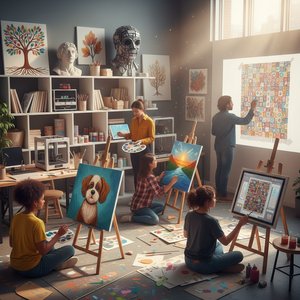
WahooArtは、個人の記憶を芸術化するオーダーメイド絵画のスペシャリスト。高品質な油絵制作と豊富なスタイルで、お客様だけのオリジナルアートをご提供します。信頼と実績で選ばれるカスタムアートサービス。

AI技術でモネ、ゴッホ、ピカソの名画スタイルを写真に。WahooArt.comでは熟練アーティストが手作業で仕上げた高品質なカスタムアートを提供します。思い出の写真を特別な一枚へ。信頼と実績の美術品専門店。


最新の美術ニュース、限定オファー、そしてインテリアのアイデアをいち早くお届けします。
お客様のプロジェクトについてお聞かせください。当社の美術専門家が、お客様に合わせた3つのパーソナライズされた芸術提案をご提供いたします。
あなたにぴったりの3作品を無料で厳選いたします


