Early Life & Religious Calling: The Foundations of Lippi’s Art
 Wikipedia: Filippo Lippi
Filippo Lippi (c. 1406 – 8 October 1469), also known as Lippo Lippi, was an Italian Renaissance painter of the Quattrocento (fifteenth century) and a Carmelite priest. He was an early Renaissance master of a painting workshop, who taught many painte...
Filippo Lippi, born around 1406 in Florence, represents a fascinating paradox within the Early Renaissance. Unlike many artists of his era who hailed from established workshops and families steeped in artistic tradition, Lippi's origins were remarkably humble – his father was a butcher, and he was orphaned at a tender age. This early loss propelled him into the cloistered world of the Carmelite monastery at Santa Maria del Carmine, an environment that would profoundly shape not only his spiritual life but also the very essence of his artistic vision. While initially destined for religious service, Lippi’s innate talent quickly became apparent; he didn't merely fulfill his monastic duties, he transformed them, adorning his surroundings with drawings and nascent paintings even on the pages of his theological texts. This early dedication wasn’t simply a diversion but a testament to an artistic impulse that couldn’t be contained by religious constraints. The monastery provided him access to Masaccio’s groundbreaking frescoes in the Brancacci Chapel – a pivotal influence, igniting within Lippi a passion for naturalism and dramatic storytelling that would become hallmarks of his style.
A Revolutionary Style: Naturalism, Emotion, and Compositional Innovation
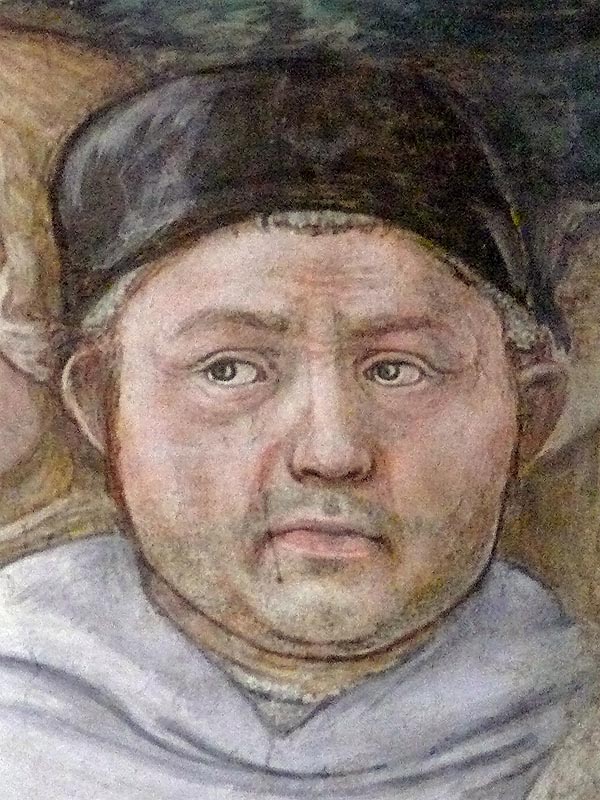
 Filippo di Tommaso Lippi
Filippo Lippi (1406-1469): Renaissance painter celebrated for lyrical Madonnas, naturalism & innovative compositions. Influenced Botticelli & shaped Quattrocento art. Explore his life & work!
Lippi's artistic breakthrough lay in his ability to infuse religious iconography with an unprecedented sense of humanity. Prior to the Renaissance, depictions of sacred figures often prioritized symbolic representation over realistic portrayal. Lippi, however, sought to bridge this divide. His Madonnas weren’t ethereal icons but tender mothers, imbued with a gentle grace and earthly beauty that resonated deeply with contemporary audiences. This wasn't merely aesthetic preference; it reflected a broader humanist shift emphasizing the dignity of human experience. He masterfully employed oil painting techniques – still relatively new to Florence at the time – to achieve remarkable subtlety in skin tones, drapery folds, and facial expressions. His compositions, while often complex, were never chaotic. Instead, they possessed a lyrical quality, guided by carefully considered perspective (though not always mathematically precise) and an intuitive understanding of spatial relationships. The figures within his paintings weren’t static; they interacted with each other and the viewer, creating a sense of emotional intimacy that was revolutionary for its time. He moved away from the stylized forms of the Gothic period, embracing a naturalism that prioritized observation and anatomical accuracy.
Patronage, Scandal, and the Medici Influence on Lippi's Career
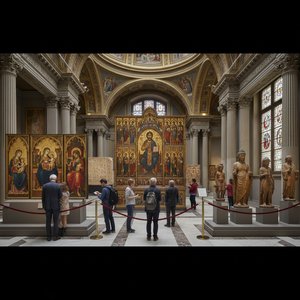
 Sant'Eustorgio
Explore Sant'Eustorgio Museum in Milan! Discover Lombard Renaissance art, ancient Christian burial grounds & Dominican treasures within this historic basilica – featuring masterpieces like Filippo Lippi’s Madonna Enthroned.
Lippi’s talent inevitably attracted patronage, most notably from the powerful Medici family. Cosimo de’ Medici recognized his exceptional skill and commissioned several important works, including the *Annunciation* and the *Seven Saints*. However, Lippi’s relationship with his patrons was often fraught with complications. His independent spirit and unconventional lifestyle – he repeatedly broke monastic vows and engaged in romantic entanglements – led to frequent disputes and even imprisonment. The stories surrounding his life are rife with scandal; Vasari recounts tales of escapes from confinement using ropes fashioned from sheets, and accusations of forgery. These episodes, while potentially embellished, reveal a man who defied societal norms and prioritized personal freedom above all else. The Medici’s support was crucial to Lippi's career, but it came at a price – he was often compelled to work under duress, balancing artistic integrity with the demands of his powerful benefactors. This dynamic tension undoubtedly shaped his creative output, adding layers of complexity to his already captivating works.
Key Masterpieces: Exploring 'Penitent St Jerome' and Florentine Altarpieces
 The Penitent St Jerome with a Young Monk
Discover Fra Filippo Lippi’s ‘Penitent St Jerome,’ a stunning Early Renaissance masterpiece. Explore its symbolism, oil painting technique & dramatic style – a unique art investment.
Among Lippi’s most celebrated paintings is *The Penitent St Jerome with a Young Monk*. This work exemplifies his mastery of narrative storytelling and psychological depth. The scene depicts the aged Saint Jerome, lost in contemplation amidst a rugged landscape, accompanied by a youthful companion – often interpreted as a self-portrait or a representation of a favored apprentice. The painting’s dramatic lighting, expressive gestures, and intimate composition create a powerful sense of emotional resonance. Lippi's altarpieces, such as the *Coronation of the Virgin* for Sant’Ambrogio, showcase his skill in depicting complex theological scenes with grace and elegance. These works weren’t merely devotional images; they were carefully constructed narratives designed to inspire piety and reverence. The meticulous detail – from the intricate patterns on the angels' robes to the realistic rendering of facial features – reflects Lippi’s dedication to craftsmanship and artistic excellence. His use of color was particularly noteworthy, employing rich hues and subtle gradations to create a sense of luminosity and depth.
Lippi’s Legacy: The Workshop, Filippino, and Lasting Impact on Renaissance Painting
Filippo Lippi established a thriving workshop that played a crucial role in disseminating his artistic style throughout Florence and beyond. He trained numerous apprentices, including his own son, Filippino Lippi, who would carry on his legacy into the High Renaissance. Filippino, while developing his own distinct voice, inherited his father’s talent for naturalism, expressive composition, and lyrical beauty. The influence of Lippi can be seen in the works of Sandro Botticelli, whose early paintings bear striking similarities to those of his mentor. Beyond his direct pupils, Lippi's innovations profoundly impacted the course of Renaissance painting. His emphasis on human emotion, realistic portrayal, and dynamic compositions paved the way for artists like Leonardo da Vinci and Michelangelo. He demonstrated that religious art could be both deeply spiritual and intensely personal, a legacy that continues to resonate with audiences today.
Collecting Filippo Lippi Today: Investment & Appreciation of a Quattrocento Master
Today, paintings by Filippo Lippi are highly sought after by collectors and institutions worldwide. His works represent not only artistic masterpieces but also invaluable historical artifacts, offering insights into the cultural and religious landscape of fifteenth-century Florence. Investing in a Lippi painting is an opportunity to acquire a piece of art history – a testament to the enduring power of human creativity and spiritual expression. While prices vary depending on size, condition, and provenance, even smaller works can command significant values. WahooArt
offers high-quality reproductions of Lippi’s masterpieces, allowing art enthusiasts to experience his brilliance firsthand. Whether you are a seasoned collector or simply an admirer of Renaissance art, exploring the world of Filippo Lippi is a journey into a realm of beauty, innovation, and enduring artistic legacy. His lyrical style and profound emotional depth continue to captivate audiences centuries after their creation.