迅速な制作と多彩な仕上げオプションを備えた、ミュージアムクオリティのジークレーまたはキャンバスプリント。 ( 手描き画への切り替え 画像に切り替え)





























作品のオリジナル比率に合わせた、当店の規定サイズからお選びください。

特定のフレームやスペースに合わせて、ご自身でサイズを指定することも可能です。選択されたサイズが元の画像の比率と一致しない場合、作品をトリミングするか、鏡面反射または単色での塗りつぶしによって画像を拡張いたします。制作を開始する前に、ご確認用のデジタルモックアップをお送りいたします。
画面上のプレビューには、実際のトリミングや拡張は反映されませんのでご注意ください。最終的な構図を正確に確認できるのは、モックアップのみとなります。
カスタムサイズも承っておりますが、元の比率を維持するためには、あらかじめ用意されたリストからサイズを選択することをお勧めいたします。

Snowy Landscape
複製画のサイズ
In the vast canon of Impressionism, where sunlight often dances upon skin and vibrant gardens overflow with color, Pierre-Auguste Renoir’s Snowy Landscape (1875) emerges as a rare and poignant departure. While his contemporaries like Monet frequently sought the ephemeral glow of sunlit haystacks or water lilies, Renoir turned his gaze toward a more hushed, monochromatic world. This masterpiece, currently held in the prestigious Musée de l'Orangerie, captures a moment of profound stillness, inviting the viewer to step into a realm where the biting chill of winter is softened by the artist’s tender touch. It is not merely a depiction of frost and ice, but an exploration of how light breathes life into even the most dormant seasons.
The composition unfolds with a delicate balance of depth and atmosphere. In the foreground, a cluster of bare, skeletal trees anchors the scene, their dark, textured branches rendered through Renoir’s signature broken brushstrokes. These limbs do not merely exist; they interact with the light, catching subtle glints of winter brightness. As the eye wanders toward the midground, a vast expanse of snow-covered earth stretches toward the horizon, punctuated by the distant, ghostly silhouettes of buildings. Through the masterful use of aerial perspective, Renoir allows the colors to recede and soften, creating an illusion of infinite space that pulls the observer into the quietude of the French countryside.
To look closely at this canvas is to witness a revolution in perception. Renoir famously challenged the notion that snow is simply white. Through his experimental Impressionist technique, he demonstrates that a snowscape is actually a mirror, reflecting the entire spectrum of the environment. Within the drifts, one can discern cool blues borrowed from the winter sky and muted, earthy tones absorbed from the surrounding hedges and trees. This refusal to rely on pure white allows the painting to vibrate with a hidden energy; the shadows are not merely dark, but are infused with greenish and rust-colored hues that suggest the presence of life beneath the frozen surface.
This technical brilliance serves a deeper emotional purpose. The painting captures the tension between the harshness of nature and the serenity of the moment. There is a palpable sense of tranquility—a quietude so deep one can almost hear the muffled silence that follows a heavy snowfall. For the collector or the interior designer, this piece offers more than just aesthetic beauty; it provides an emotional anchor. Its muted palette of browns, whites, and soft blues makes it a versatile and sophisticated addition to any curated space, offering a sense of calm and contemplative grace that complements both modern minimalist settings and classic, traditional interiors.
Historically, this work represents Renoir during his formative years as an Impressionist, a period marked by a radical break from the rigid academic standards of the Salon. It reflects the movement's core philosophy: the pursuit of the subjective experience over objective reality. While Renoir himself famously remarked on his personal aversion to the cold—once jokingly referring to snow as "Mother Nature's leprosy"—his ability to find beauty in this frozen landscape speaks to his unparalleled empathy as an artist. He does not paint the cold to make us shiver, but to make us feel the profound peace of a world at rest.
Owning a high-quality reproduction of Snowy Landscape is an opportunity to bring a piece of art history into the home—a fragment of a time when artists first learned to see the world not as a collection of objects, but as a symphony of light and emotion. Whether placed in a sunlit gallery or a cozy study, this painting serves as a perennial reminder of the beauty found in stillness and the enduring magic of the Impressionist vision.


1841 - 1919 , フランス
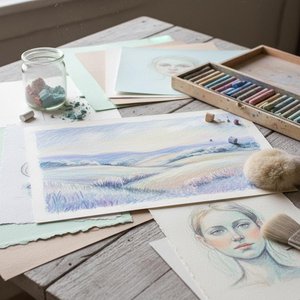
Explore the ethereal beauty of pastel art. Discover how Impressionist masters used soft hues and velvety textures to capture light. A professional guide for art enthusiasts seeking to understand, collect, and appreciate the delicate magic of this timeless medium.

Discover the luminous world of Pierre-Auguste Renoir. Explore an expert guide to his mastery of light, color, and joy through the lens of Impressionist history, perfect for fine art enthusiasts and collectors seeking timeless elegance.


最新の美術ニュース、限定オファー、そしてインテリアのアイデアをいち早くお届けします。
お客様のプロジェクトについてお聞かせください。当社の美術専門家が、お客様に合わせた3つのパーソナライズされた芸術提案をご提供いたします。
あなたにぴったりの3作品を無料で厳選いたします


 プレビュー
プレビュー
 シェアする
シェアする シェアする
シェアする
 詳細を見る
詳細を見る

 ダウンロード
 似ている作品
 X線調査
X線調査 スライドショー


 詳細を見る
詳細を見る









 ガラスオプションは、110cm未満のサイズでのみご利用いただけます。