


x


 Abstract Expressionism
 1992
1992 229.0 x 282.0 cm
オンラインプレビューをはるかに凌ぐ、高解像度で鮮明なデジタル画像をご購入いただけます。
各ファイルは、社内の専門家が高度なツールと熟練した手作業によるレタッチを用いて、細心の注意を払って準備されています。すべての画像において、卓越した鮮明度、正確な色彩再現性、そして繊細なディテールを保証いたします。
最終ファイルは、プロフェッショナルな編集・印刷環境ですぐにご利用いただけるよう最適化された状態で、72時間以内にメールにてお届けいたします。これは、一流のデザインスタジオ、出版社、ギャラリーから信頼されているものと同等の品質です。
WahooArt.com を選ぶことは、単に画像を手に入れることではありません。それは、プロの手によって精密に仕上げられ、満足保証が付いた高品質なデジタルアートワークを受け取ることを意味します。ご注文いただいた際に自動的に付随する内容は、以下の通りです:

ご注文から72時間以内に、高解像度のデジタル画像ファイルがメールでお手元に届きます。すぐにそのままご利用いただけます。

お客様の作品は、高度なAIツールと専門家による手作業の編集を組み合わせてプロフェッショナルに最適化されており、細部のディテール、鮮明さ、そして正確な色再現性を最大限に引き出しています。

ファイルを誤って削除したり、紛失してしまったりしましたか?ご安心ください。いつでも無料で再送いたします。

関税や手数料、配送料を気にすることなく、お気に入りのアートワークをすぐにお楽しみいただけます。デジタルダウンロードは常に免税です。

プロ仕様のツールとカラーマネジメント技術を用いることで、デジタル画像が元の色を最大限に忠実に再現することを保証いたします。

ご購入いただいたデジタル画像にご満足いただけない場合は、60日以内であれば、修正または100%の返金(理由を問う必要はありません)をさせていただきます。

ご満足いただけない場合は、デジタルファイルを受け取ってから60日以内であれば、理由を問わず全額返金いたします。

3枚購入で10%OFF - 5枚購入で15%OFF - 10枚以上購入で20%OFF。クリエイティブなプロジェクト、ギャラリー、エージェンシーに最適です。


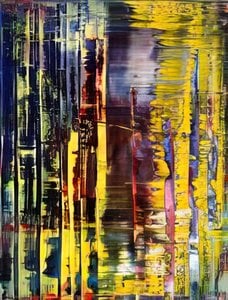


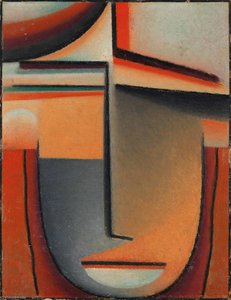

Gary Wragg, born in High Wycombe, Buckinghamshire in 1946, embarked on a journey of artistic exploration that would firmly establish him as a significant figure within British abstract painting. His formative years were steeped in the study of art, beginning at the High Wycombe School of Art from 1962 to 1966. This initial period provided a crucial grounding, but it was his subsequent move to London—and enrollment at both Camberwell School of Arts and Crafts (1966-1969) and the prestigious Slade School of Fine Art (1969-1971)—that truly ignited his artistic development. These institutions fostered a rigorous approach to technique and conceptual thinking, laying the groundwork for the large-scale abstract works that would become his signature.
A pivotal moment in Wragg’s early career came with a 1968 Rotary Travelling Gift to Italy and Lord Carron Prize, followed by the Boise Travelling Scholarship to America and Mexico in 1972. These experiences were transformative, exposing him to diverse cultural landscapes and broadening his artistic horizons. Crucially, these travels facilitated direct engagement with American art, notably through visits to Jack Tworkov in 1970 and 1974, and later, Willem de Kooning in New York in 1985. These encounters proved deeply influential, shaping his understanding of abstraction and its expressive potential.
Wragg’s artistic language evolved through a process of continuous experimentation and refinement. While rooted in the traditions of post-war abstraction, he sought to forge a distinctly personal visual vocabulary. His early works demonstrated a sensitivity to color and form, gradually moving towards larger canvases that prioritized spatial relationships and gestural mark-making. The influence of American Abstract Expressionism is palpable, yet Wragg never simply imitated; instead, he absorbed these lessons and translated them into a uniquely British sensibility.
The 1970s saw Wragg gaining recognition within the London art scene. A major Arts Council grant in 1975, followed by one from the London Arts Association in 1978, provided crucial support for his studio practice. His first solo show at the Acme Gallery in 1979 garnered positive reviews in publications like The Observer and New Statesman, establishing him as a rising talent. Throughout the 1980s and 1990s, he maintained a consistent exhibition schedule with galleries such as Nicola Jacobs and Flowers, solidifying his reputation among collectors and critics.
Beyond the direct impact of American Abstract Expressionists like Tworkov and de Kooning, Wragg’s work reveals a broader engagement with Eastern philosophy. His long-standing practice of Tai Chi Ch'uan—a Chinese martial art—became deeply intertwined with his painting process. The principles of balance, fluidity, and internal energy inherent in Tai Chi found expression in the dynamic compositions and gestural brushwork of his canvases.
As Sarah Kent observed in *Time Out* in 1983, Wragg’s large terracotta canvases possessed a unique quality: “Sketchy areas of black, white and grey create ambiguously transparent readings of space while chalk and paint lines suggest diagrammatic representations – perhaps of Tai Chi movements.” This observation highlights the symbiotic relationship between his artistic practice and his philosophical pursuits. He wasn't merely depicting abstract forms; he was attempting to visualize internal states and energetic flows.
Gary Wragg’s career has been marked by consistent critical acclaim and inclusion in significant group exhibitions, including *British Painting 1952–77* at the Royal Academy (1977) and the Sydney Biennale (1982). His work also appeared in the RA Summer Exhibition and the John Moores Exhibition in Liverpool on multiple occasions. Becoming a member of The London Group in 1990 further cemented his position within the British art establishment.
More recently, solo exhibitions at Clifford Chance, Alan Wheatley Art, and The Nine British Art have demonstrated continued interest in his work. A retrospective exhibition, *Motion & Stillness 1963-2018*, held at the Lanchester Research Gallery in Coventry (2019), offered a comprehensive overview of his artistic journey, tracing the evolution of his abstract language over decades.
Wragg’s historical significance lies in his ability to synthesize diverse influences—from American Abstract Expressionism to Eastern philosophy—into a uniquely personal and compelling body of work. He represents a vital strand within British abstraction, demonstrating a commitment to formal exploration and expressive power. His paintings are held in major public collections worldwide, including the Arts Council Collection and the Pompidou Centre in Paris, ensuring his legacy for generations to come.


最新の美術ニュース、限定オファー、そしてインテリアのアイデアをいち早くお届けします。
お客様のプロジェクトについてお聞かせください。当社の美術専門家が、お客様に合わせた3つのパーソナライズされた芸術提案をご提供いたします。
あなたにぴったりの3作品を無料で厳選いたします
 プリントを購入
 シェアする
シェアする シェアする
シェアする
 詳細を見る
詳細を見る

 ダウンロード
 似ている作品
 X線
X線 スライドショー
 詳細を見る
詳細を見る


