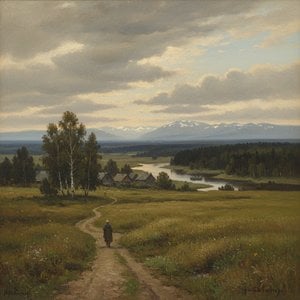
L'Anima dell'Altaia: La Vita e l'Eredità di Grigory Gurkin
Grigory Ivanovich Gurkin (1870–1937) si staglia come una figura singolare e luminosa nel mosaico della storia dell'arte russa. Essendo stato il primo artista professionista nato all'interno della Repubblica dell'Altaia, egli ha rappresentato un ponte vitale tra le antiche tradizioni nomadi del suo popolo e il rigore accademico formale dell'era imperiale. Nato nel villaggio di Ulala—oggi noto come Gorno-Altaysk—la giovinezza di Gurkin fu profondamente intrecciata con i ritmi del paesaggio altajico e l'eredità spirituale del clan Choros. Il suo percorso, da giovane studente in una scuola di iconografia a maestro del paesaggio, è la testimonianza di una vita dedicata a catturare l'essenza profonda della natura selvaggia siberiana.
Le fondamenta della maestria tecnica di Gurkin furono gettate nei prestigiosi corridoi dell'Accademia Imperiale delle Arti di San Pietroburgo. Iniziando i suoi studi formali lì nel 1897, egli percorse le stesse sale di maestri leggendari come Ivan Shishkin e Alexander Kiselyov. Questo periodo fu trasformativo; sotto l'influenza dell'ineguagliabile capacità di Shishkin di rendere la maestosa asprezza della natura russa, Gurkin sviluppò un profondo rispetto per l'accuratezza botanica e la profondità atmosferica. Eppure, sebbene la sua formazione fosse radicata nel disciplinato Realismo dell'accademia, il suo cuore rimase legato alle montagne della sua giovinezza. Al suo ritorno in Altaia, non si limitò a dipingere scenari; cercò di tradurre lo spirito stesso della terra in un linguaggio visivo.
Un Arazzo di Paesaggio e Leggenda
L'opera di Gurkin è un dialogo mozzafiato tra un Realismo meticoloso e i sussurri evocativi del Simbolismo. I suoi paesaggi sono raramente semplici registrazioni topografiche; al contrario, sono intrisi di una risonanza poetica e sottile che suggerisce la presenza del divino all'interno della natura. In opere come Il fiume Katun in primavera o Lago Karakol, si può osservare un comando magistrale della luce e della consistenza. Spesso utilizzava un tocco Impressionista, impiegando un impasto spesso e pennellate atmosferiche per catturare l'energia fuggevole di una cascata o la serena, gelida immobilità di un mattino invernale. Questa dualità gli permise di ritrarre le montagne dell'Altaia non solo come formazioni geologiche, ma come entità vive e pulsanti, dotate di un proprio carattere e della propria sacralità.
Al di là della tela, Gurkin fu un instancabile difensore dell'identità culturale altajica. Il suo impegno verso le proprie radici si manifestò in modi diversi e d'impatmio:
- Preservazione Culturale: Utilizzò il suo talento artistico per illustrare poemi epici e creare manuali educativi, assicurando che le tradizioni orali e il folklore del popolo dell'Altaia fossero preservati per le generazioni future.
- Leadership Politica: Negli anni turbolenti che seguirono la Rivoluzione d'Ottobre, Gurkin emerse come una figura politica significativa, servendo come presidente del Governo di Karakorum, un'iniziativa volta a unire le terre dell'Altaia in uno stato nazionale.
- Connessione Spirituale: Il suo profondo legame con la religione altajica, il Burkhanismo, e la sua formazione giovanile nell'iconografia infonsero i suoi paesaggi profani di un senso di sacralità e riverenza verso il mondo naturale.
Una Fine Tragica e una Significatività Duratura
La traiettoria della vita di Gurkin fu infine oscurata dai violenti mutamenti politici dell'era sovietica iniziale. Dopo periodi di esilio in Mongolia e Tuva, dove continuò a documentare le tradizioni sciamaniche e la vita quotidiana delle popolazioni locali, fece ritorno nell'Unione Sovietica. Tragicamente, la sua notorietà e i suoi legami con il nazionalismo altajico lo resero un bersaglio durante la Grande Purga. Nel 1937, Grigory Gurkin fu arrestato ed giustiziato, una perdita che silenziò una delle voci più importanti dell'arte siberiana per molti anni.
Nonostante questa conclusione tragica, la sua eredità artistica rimane incombente. Oggi, le sue opere sono custodite in istituzioni come il Museo di Belle Arti dello Stato dell'Altaia e il Museo d'Arte Regionale di Tomsk. Egli è ricordato non solo come un pioniere della pittura di paesaggio, ma come un emblema dell'eredità etnica altajica: un uomo che guardava le montagne e vedeva non solo pietra e acqua, ma l'anima stessa di un popolo. La sua capacità di fondere la grandezza della tradizione realista russa con lo spirito intimo e simbolico dell'Altaia continua a ispirare meraviglia in chiunque incontri la sua visione.
Domande e risposte
Quali colori ha usato più spesso Grigory Gurkin?
L'uso del colore di Grigory Gurkin nelle opere elencate su questo sito può essere approfondito consultando la pagina Genoma della Palette dell'artista.
Dove si trovano le opere di Grigory Gurkin raggruppate per parole chiave?
Le opere di Grigory Gurkin possono essere esplorate tramite parole chiave nella pagina Per parole chiave dell'artista. Ogni parola chiave raggruppa le opere correlate.
Come posso trovare tutte le opere di Grigory Gurkin per un determinato medium?
La pagina Tutti i media raggruppa le opere di Grigory Gurkin per tecnica.