Anteprima in scala reale Prova in AR Ordina la riproduzione dipinta a mano Passa all'immagine digitale Condividi
Dettagli Guida stampabile Aggiungi ai preferiti Scarica Articoli simili Radiografia Slideshow Statistiche

Newspaper:

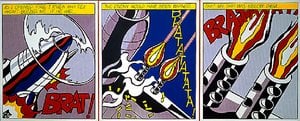
A dynamic 1959 comic strip caricature by Brazilian master Miécio Caffé captures a lively scene of movement and humor, offering a unique glimpse into mid-century graphic satire that you can bring to your collection.

Scopri miécio caffé: artista brasiliano famoso per il fumetto satirico e le caricature di grandi musicisti! Ammira le sue opere uniche su WahooArt.

L'opera d'arte visualizzata in questa pagina è protetta dalle leggi sul diritto d'autore, il che significa che non possiamo legalmente creare o vendere una riproduzione identica. Tale protezione è garantita da accordi internazionali quali la Convenzione di Berna e dalle leggi nazionali, incluse quelle stabilite da Legge sul copyright degli Stati Uniti - Titolo 17. Tutti i diritti riservati. Le immagini presenti su questo sito sono protette da copyright e non possono essere riprodotte o utilizzate senza l'autorizzazione scritta di WahooArt.com o dei rispettivi proprietari del copyright.

Questo metodo è pienamente conforme alle normative sul diritto d'autore poiché non prevede la copia o la duplicazione dell'opera protetta. Si tratta invece di una rielaborazione creativa: un nuovo dipinto che trae ispirazione dall'originale, senza tuttavia esserne identico.

Giclée / Stampe d'arte

Stampa giclée o su tela di qualità museale, con produzione rapida e diverse opzioni di finitura. ( Ordina la riproduzione dipinta a mano Passa all'immagine digitale)

Corner sample of the P118B picture frame: moulded polystyrene, 5 cm wide and 3 cm thick
P118B €10
Corner sample of the P118H picture frame: moulded polystyrene, 5 cm wide and 3 cm thick
P118H €10
Corner sample of the P118W picture frame: moulded polystyrene, 5 cm wide and 3 cm thick
P118W €10
Corner sample of the P438Z picture frame: moulded polystyrene, 5.5 cm wide and 3.5 cm thick
P438Z €10
Corner sample of the P508JH picture frame: moulded polystyrene, 7 cm wide and 3.5 cm thick
P508JH €12
Corner sample of the P508YH picture frame: moulded polystyrene, 7 cm wide and 3.5 cm thick
P508YH €12
Corner sample of the P805H picture frame: moulded polystyrene, 5 cm wide and 3.5 cm thick
P805H €10
Corner sample of the P805Z picture frame: moulded polystyrene, 5 cm wide and 3.5 cm thick
P805Z €10
Corner sample of the P919BZ picture frame: moulded polystyrene, 7 cm wide and 3.5 cm thick
P919BZ €10
Corner sample of the P919G picture frame: moulded polystyrene, 7 cm wide and 3.5 cm thick
P919G €10
Corner sample of the P919XJ picture frame: moulded polystyrene, 7 cm wide and 3.5 cm thick
P919XJ €10
Corner sample of the P959ZH picture frame: moulded polystyrene, 5 cm wide and 3 cm thick
P959ZH €10
Corner sample of the P968JZ picture frame: moulded polystyrene, 6 cm wide and 4 cm thick
P968JZ €12
Corner sample of the W106C picture frame: solid wood, 5 cm wide and 3 cm thick
W106C €8
Corner sample of the W218G picture frame: solid wood, 5 cm wide and 3 cm thick
W218G €10
Corner sample of the W218JH picture frame: solid wood, 5 cm wide and 3 cm thick
W218JH €8
Corner sample of the W218Y picture frame: solid wood, 5 cm wide and 3 cm thick
W218Y €10
Corner sample of the W307PJ picture frame: solid wood, 6 cm wide and 3 cm thick
W307PJ €10
Corner sample of the W316G picture frame: solid wood, 6 cm wide and 3 cm thick
W316G €10
Corner sample of the W316PJ picture frame: solid wood, 6 cm wide and 3 cm thick
W316PJ €8
Corner sample of the W316Y picture frame: solid wood, 6 cm wide and 3 cm thick
W316Y €10
Corner sample of the W398PJ picture frame: solid wood, 5 cm wide and 3 cm thick
W398PJ €8
Corner sample of the W4111J picture frame: solid wood, 6.5 cm wide and 3.5 cm thick
W4111J €10
Corner sample of the W500HY picture frame: solid wood, 7 cm wide and 5 cm thick
W500HY €15
Corner sample of the W500JH picture frame: solid wood, 7 cm wide and 5 cm thick
W500JH €15
Corner sample of the W692G picture frame: solid wood, 8 cm wide and 4 cm thick
W692G €12
Corner sample of the W849H picture frame: solid wood, 5 cm wide and 3 cm thick
W849H €8
Corner sample of the W940BG picture frame: solid wood, 7.5 cm wide and 4.5 cm thick
W940BG €15
Corner sample of the W953PJ picture frame: solid wood, 6 cm wide and 3.5 cm thick
W953PJ €8

Standard
personalizzato
CM
INCH

Scegli tra le nostre dimensioni predefinite, che rispettano le proporzioni originali dell'opera d'arte.

larghezza
altezza

È possibile inserire dimensioni personalizzate per adattare l'opera a una cornice o a uno spazio specifico. Se la dimensione selezionata non corrisponde alle proporzioni dell'immagine originale, procederemo al ritaglio dell'opera o all'estensione dell'immagine con un bordo specchiato o a tinta unita. Un mockup digitale ti verrà inviato per approvazione prima dell'inizio della produzione.
Si prega di notare che l'anteprima a schermo non riflette il ritaglio o l'estensione effettivi. Solo il mockup mostrerà accuratamente la composizione finale.
Sebbene siano disponibili dimensioni personalizzate, si raccomanda di selezionare una dimensione dall'elenco predefinito per preservare le proporzioni originali.

Consegna in tutto il mondo () in 2 settimane invece delle normali 4/5 settimane. (8 Ottobre)

Spedizione espressa gratuita in tutto il mondo
Tela in lino di alta qualità
Assicurazione completa sulla spedizione
Garanzia di rimborso dei dazi doganali
Garanzia di perfetta fedeltà cromatica
Politica di reso entro 100 giorni (solo per difetti di fabbricazione)
Garanzia di rimborso al 100%
Sconto per acquisti multipli

Prezzo totale

€ 59

Newspaper:

Giclée / Stampe d'arte

Dimensioni della riproduzione

-

Prezzo totale

€ 59

Dettagli rapidi

  • Artist: Miécio Caffé
  • Location: Museu Afro Brazil collection
  • Year: 1959
  • Notable elements: Comic strip, caricature, bold lines
  • Subject or theme: Daily life, characters in motion

A Glimpse into Brazilian Graphic Wit

In the vibrant tapestry of mid-century Brazilian visual culture, few voices resonate with as much playful charm and satirical bite as that of Miécio Caffé. His work, specifically this captivating newspaper clipping from 1959, serves as a window into a bygone era of graphic humor that once animated the daily lives of Brazilians. The piece presents a lively comic strip composition, where characters move through a choreographed scene of everyday motion. At its heart, we find a trio of figures: one hurrying with hands tucked behind him, another observing the unfolding drama with a relaxed gaze, and a third poised with an umbrella, adding a touch of whimsical preparation to the narrative. This rhythmic arrangement of bodies, set against the backdrop of a bustling street life complete with bicycles and passing pedestrians, captures the kinetic energy of urban Brazil during a period of profound social transition.

The technique employed by Caffé is a masterclass in the art of the caricature, utilizing bold, decisive lines that command attention even within the small format of a newsprint publication. His style is characterized by an economy of line—where a single stroke can convey a character's entire temperament or the frantic pace of a runner. This graphic simplicity does not diminish the complexity of the emotion; rather, it amplifies it. The interplay between the heavy ink work and the negative space creates a sense of depth and movement that draws the eye across the frame, making the static image feel as though it is caught in a moment of mid-motion. For the collector of vintage graphic arts, this piece offers a profound appreciation for the precision required to translate human character into minimalist, high-impact illustration.

Historical Resonance and Artistic Legacy

To understand this work is to understand the cultural landscape of 20th-century Brazil. Miécio Caffé was not merely an illustrator; he was a chronicler of his time, deeply embedded in the musical and social fabric of his nation. His ability to blend humor with sharp social observation allowed him to bridge the gap between high art and popular media. This specific piece, emerging from the late 1950s, reflects a period when the newspaper was the primary vessel for shared cultural experience. The inclusion of such caricatures in daily publications helped shape the national identity, providing a mirror in which the public could see their own joys, struggles, and eccentricities reflected through a lens of satire.

Beyond its immediate visual appeal, the artwork carries a deep emotional resonance, evoking a sense of nostalgia for the golden age of print media. For interior designers and art enthusiasts looking to curate a space with character, a reproduction of this work offers more than just decoration; it provides a conversation piece that speaks to the history of Brazilian graphic humor. It brings an element of storytelling into a room, inviting viewers to linger on the details of the characters' expressions and the nostalgic charm of the composition. Whether placed in a modern gallery setting or a classic study, Caffé’s work remains a timeless testament to the power of wit and the enduring allure of the hand-drawn line.

Domande e risposte

È disponibile un download ad alta risoluzione di "Newspaper:"?

"Newspaper:" è disponibile come download di un'immagine digitale ad alta risoluzione, acquistabile direttamente su questa pagina.

Come è strutturata la composizione cromatica di "Newspaper:" di Miécio Caffé?

In "Newspaper:", un Gentle contrasto si sposa con una Unified Palette armonia.

Chi ha creato "Newspaper:"?

L'artista che ha creato "Newspaper:" è Miécio Caffé. L'opera è catalogata sotto il nome di Miécio Caffé.

In che modo "Newspaper:" si inserisce nei temi e nello stile di Miécio Caffé?

"Newspaper:" appartiene all'opera Graphic Humor di Miécio Caffé, i cui temi ricorrenti includono graphic humor and satire, brazilian social commentary, part of graphic legacy, illustrative caricature style.

Quanti anni aveva Miécio Caffé quando ha creato "Newspaper:" nel 1959?

Miécio Caffé ha realizzato "Newspaper:" all'età di 39. L'artista è nato nel 1920 e l'opera è datata 1959.

Qual è il formato di "Newspaper:"?

Il formato di "Newspaper:" è Portrait. Questo è utile quando si pianifica dove posizionare una riproduzione.

In che anno è stata creata "Newspaper:" di Miécio Caffé?

"Newspaper:" di Miécio Caffé è stata creata nel 1959.


Biografia dell'artista

early life and career

miécio caffé, a renowned brazilian artist, was born in juazeiro do norte, brazil in 1920. he embarked on his artistic journey with caricatures and illustrations, honing his skills through meticulous observation and playful experimentation. This formative period instilled in him a deep appreciation for visual storytelling and established the foundation for his distinctive style—a blend of humor and satire that would define his oeuvre. Caffé’s passion for art extended beyond mere technique; it fueled an unwavering curiosity about the human condition, particularly as expressed through social commentary.

artistic contributions

caffé's artistic vision centered around capturing the essence of brazilian music culture. His caricatures became celebrated portraits of musical icons like Noel Rosa and Lupicínio Rodrigues, skillfully conveying not only their physical likeness but also their personalities and artistic spirit. Caffé’s approach was revolutionary for its time, prioritizing emotional resonance over literal representation—a hallmark of his oeuvre. He wasn't simply depicting musicians; he was distilling their music into visual metaphors that spoke volumes about brazilian identity and cultural heritage. This dedication to research and meticulous detail resulted in a remarkable collection of Brazilian music records, showcasing his profound understanding of the artistic landscape.

notable works and exhibitions

caffé’s artwork gained international recognition through its inclusion in prestigious collections such as the Museu Middlesbrough Institute of Modern Art (MIMA), which presented a diverse panorama of contemporary art. His caricatures were showcased at the 24° Salão Internacional de Humor de Piracicaba, SP, solidifying his position as a leading figure in brazilian graphic humor. These exhibitions underscored Caffé’s commitment to sharing his artistic vision with a wider audience and engaging in dialogue about important social issues.

influences and stylistic development

caffé's artistic style drew inspiration from masters of impressionism and caricature alike. The delicate brushstrokes and luminous palettes characteristic of Impressionist painters—particularly Renoir—influenced his technique, fostering a sensitivity to light and color that permeated his compositions. Simultaneously, he absorbed the principles of caricature artistry, mastering the art of exaggeration and simplification to convey humor effectively.

legacy and remembrance

miécio caffé passed away peacefully in praia grande, São Paulo, brazil on march 11, 2003, at the age of 82. His enduring legacy resides not only in his captivating artworks but also in his unwavering dedication to preserving brazilian musical heritage—a testament to his profound artistic spirit and intellectual curiosity. Caffé’s contribution to brazilian art remains an inspiration for aspiring artists and researchers alike.
Miécio Caffé

Miécio Caffé

1920 - 2003 , Brasile

Informazioni rapide

  • Artistic Movement Or Style: Graphic Humor
  • Date Of Birth: 1920
  • Full Name: miécio caffé
  • Nationality: Brazilian
  • Notable Artworks: ['Caricatures of musicians']
  • Place Of Birth: Juazeiro do Norte, Brazil
Esplora le opere d'arte organizzate per temi, stili e caratteristiche.