Alapvető információk

  • Works on this site: 1
  • Top 3 works: Shadow Dance
  • Nationality: United States of America
  • Museums on this site: Villa Terrace Decorative Arts Museum
  • Born: 1941, Milwaukee, United States of America

The Genesis of Form and Fluidity

Roy Frank Staab’s artistic odyssey began within the disciplined corridors of Milwaukee’s Layton School of Art, where a profound fascination with the tension between order and chaos first took root. In his early years, Staab explored the unpredictable nature of medium through sprayed watercolors, investigating how water could stain and transform paper in ways that defied rigid control. This period was characterized by an intimate study of fluidity and decay, as he watched the very elements he used to create art act upon his canvas. As his vision matured, he moved toward a more austere aesthetic, stripping away color to focus on the stark, mathematical beauty of geometric line drawings. These monochrome works served as a precursor to his later sculptural endeavors, establishing a foundational language of precision that would eventually meet the wild, unscripted rhythms of the natural world.

A Dialogue with the Earth

The true metamorphosis of Staab’s practice occurred when he stepped beyond the studio and into the landscape itself. Beginning in 1979, his work transitioned from the static confines of paper to the living, breathing theater of the outdoors. This evolution reached a definitive milestone in 1983 with the creation of Ocracoke Cartouche, an inaugural sculptural installation executed on the tidal shores of North Carolina. Utilizing the debris of the sea—driftwood, willow branches, and bamboo—Staab constructed interlocking geometric forms that were never intended to be permanent. Instead, these structures were designed to exist in a constant state of dialogue with the environment, responding to the shifting tides, the warmth of the sun, and the inevitable erosion caused by geological forces. This commitment to Earthworks principles transformed his art into a temporal experience, where the work is as much about the process of disappearance as it is about its initial construction.

Ephemeral Legacies and the Dance of Shadows

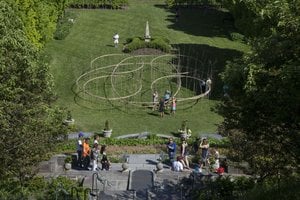
As Staab’s reputation grew, his explorations expanded across the globe, leaving traces of geometric grace in diverse ecosystems ranging from the forests of Japan to the landscapes of Finland and Brazil. His mature works are masterclasses in site-specificity, often utilizing local, renewable materials such as reeds, branches, and jute twine to create installations that appear to grow directly from the earth. A notable example is Shadow Dance, commissioned for the Villa Terrace Decorative Arts Museum, where willow supports reach upward like crooked fingers, casting intricate patterns of light and dark across the garden floor. In these works, the sculpture is not merely a physical object but a performance of light, shadow, and season. Through his mastery of ephemeral landscapes, Staab invites the viewer to witness the beauty of the transient, reminding us that art, much like nature itself, is a fleeting and precious dance between presence and absence.

Tesztelje a szépérzetét

Minden kérdésre csak egy helyes válasz létezik.

Kérdés 1:
Where was Roy Staab born?
Kérdés 2:
What is Staab known for creating?
Kérdés 3:
Which institution awarded Staab the Wisconsin Visual Art Achievement Award?
Kérdés 4:
Where did Roy Staab conduct his initial studies in drawing and painting?

Kérdések és válaszok

Hol találhatók Roy Frank Staab művei kulcsszavakra csoportosítva?

Roy Frank Staab művei kulcsszavakra bontva is felfedezhetők a művész Kulcsszavak szerint oldalán, ahol minden kulcsszó a hozzá tartozó alkotásokat gyűjti össze.

Roy Frank Staab műveit hangulat alapján is böngészhetem?

Roy Frank Staab Hangulatok szobája oldala, amely a művész alkotásait hangulat alapján csoportosítja.

Hol találhatók Roy Frank Staab művei technika szerint csoportosítva?

Roy Frank Staab alkotásainak meghatározott technikában való kereséséhez használja a művész Minden médium oldalát.

Hol és mikor született Roy Frank Staab?

Roy Frank Staab Milwaukee városban született, 1941 évben.

Hol találhatók Roy Frank Staab alkotásai színpaletta szerint csoportosítva?

Roy Frank Staab műveinek keresése egy adott színpalettában a művész Színpaletták alapján oldalán lehetséges.

Hogyan követhetem Roy Frank Staab munkásságát év évre bontva?

A művész Műalkotások időrendje oldala Roy Frank Staab műveit év évre, időrendi sorrendben mutatja be.

Mely történelmi korszakban alkotott Roy Frank Staab?

Roy Frank Staab a Modern korszakban alkotott. Ez az időszak a művész tevékenységét a történelembe helyezi.

Létezik-e összes olyan témáról, amelyet Roy Frank Staab festett, összefoglaló?

Roy Frank Staab Témakörök katalógusa oldala olyan felület, amely a művész alkotásait témák szerint rendszerezi.

Hol tekinthetném meg Roy Frank Staab munkásságának színprofilját?

Roy Frank Staab Paletta Genom egy olyan oldal, amely bemutatja a művész életművének színes profilját.