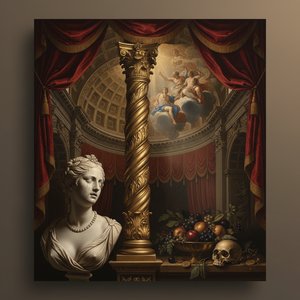
Early Life and Influences
- Born: April 8, 1944, Helsingborg, Sweden
- Parents: Resistance fighters who fled German-occupied Norway during World War II.
- Childhood: Marked by parental divorce and a sense of abandonment, which influenced his later themes of isolation and refuge.
- Education: Attended a Rudolf Steiner school in Oslo, emphasizing spiritual and esoteric practices.
- Art Academy of Oslo: Studied from 1961-1963 but became disillusioned with modern art trends.
- Key Influences: Rembrandt, Caravaggio, Titian – heavily influenced his neo-Baroque style and focus on classical techniques. The painting *The Conspiracy of Claudius Civilis* by Rembrandt was a pivotal moment in his artistic development.
Artistic Development and Style
- Rejection of Modern Art: Actively opposed the prevailing trends in modern art, choosing to master traditional techniques instead.
- Neo-Baroque Style: Developed a distinctive style characterized by dramatic lighting (chiaroscuro), realistic figures, and allegorical narratives.
- Themes: Explores themes of refuge, forbidden longings, apocalyptic scenarios, and the human condition. Often depicts figures dressed in historical or otherworldly attire.
- Kitsch Philosophy: Defines his art as "kitsch" rather than traditional art, emphasizing emotional impact over intellectual critique. This philosophy spawned a movement among his followers.
- Mediums: Primarily paints but also creates etchings and drawings.
Major Works and Achievements
- Monumental Paintings: Known for creating large-scale works that have become iconic within his style.
- Recurring Motifs: Features recurring motifs such as floating figures in space, and scenes evoking a sense of post-apocalyptic desolation.
- Love Divided (1964–2005): A significant work that underwent multiple iterations due to early destruction.
- Museum Acquisitions: His works are held in prestigious museums worldwide including the Metropolitan Museum of Art, Walker Art Center, de Young Museum, and Hirshhorn Museum.
Controversies and Historical Significance
- Criticism: Faced criticism from Norwegian art critics who viewed his work as representing a triumph of popular culture over art.
- Tax Evasion Conviction: In 2012, he was convicted of tax evasion and sentenced to prison, which brought further attention to his controversial persona.
- Rejection of Modernism: Nerdrum's staunch rejection of modern art trends and embrace of classical techniques has made him a significant figure in the ongoing debate about artistic values.
- Influence on Contemporary Art: His "kitsch" philosophy and dedication to traditional painting methods have influenced a generation of artists seeking alternatives to contemporary art practices.
Later Life and Legacy
- Continued Production: Continues to create six to eight paintings annually, including still lifes, portraits, and allegorical works.
- Writing and Philosophy: Author of essays, aphorisms, poems, and plays that articulate his philosophical views on art, culture, and the human condition.
- Recognition as a Classical Painter: Widely recognized as a prominent classical painter in Scandinavia.