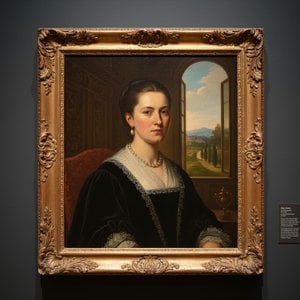
Joan Tuset i Suau, born in L’Arboç, Spain, in 1957, is a figurative artist whose work stands as a compelling testament to the enduring power of human emotion and classical artistic principles. More than simply depicting figures, Tuset delves into the very essence of being – exploring vulnerability, desire, and the quiet dramas that unfold within each individual. His art isn’t merely observed; it's felt, inviting viewers into a world where the familiar is subtly distorted, revealing hidden depths and unspoken narratives. He has meticulously cultivated a distinctive style, blending the rigor of academic training with a distinctly modern sensibility, earning him recognition as a significant voice in contemporary figurative painting. His art speaks to the complexities of the human experience, capturing moments of profound introspection and quiet intensity.
Early Life and Artistic Foundations
Tuset’s artistic journey began in his native Catalonia, an environment deeply rooted in tradition yet open to experimentation. He received formal training, grounding himself in the fundamentals of drawing and composition – skills that would later inform his unique approach. Crucially, he absorbed influences from both the classical masters, particularly those who focused on capturing human emotion through gesture and expression, and the burgeoning avant-garde movements of the 20th century, such as Surrealism and Abstract Expressionism. This dual inheritance is evident throughout his oeuvre: a respect for anatomical accuracy and compositional balance coexists with a willingness to challenge conventional representation and explore psychological complexity. His early works demonstrated an immediate aptitude for capturing nuanced expressions, hinting at the profound emotional range he would later develop. The small town of L’Arboç, where he was born, provided a rich source of inspiration, its landscapes and people subtly shaping his artistic vision – the weathered faces of fishermen, the golden light on the vineyards, the ancient stone buildings all contributed to his developing aesthetic.
The Development of Style: Vanguard & Classicism in Harmony
Tuset's distinctive style is perhaps best described as a harmonious synthesis of vanguard and classicism. He rejects photographic realism, instead favoring a deliberately heightened sense of drama and symbolism. His figures are often presented within carefully constructed spaces – sometimes opulent, sometimes starkly minimal – that serve to amplify their emotional impact. The use of light and shadow is particularly masterful, creating an atmosphere of both vulnerability and strength. He frequently employs a muted color palette, dominated by earthy tones and subtle gradations, which further enhances the sense of intimacy and psychological depth. This deliberate restraint allows the figures themselves – their expressions, gestures, and underlying narratives – to take center stage. His work is not about literal representation; it’s about conveying an *experience*, a feeling that resonates long after the viewer has moved on. He draws inspiration from both Renaissance portraiture, with its emphasis on idealized beauty and psychological insight, and the expressive brushwork of 20th-century masters like Rembrandt and Velázquez.
Key Works and Recurring Themes
Several of Tuset’s paintings have achieved significant recognition, including “The Abduction of Europa” (1999), a powerful depiction of mythic drama rendered with exquisite detail and emotional intensity. This work, along with pieces like "Cupid Asleep," exemplifies his ability to imbue classical themes with contemporary relevance. Recurring motifs in his oeuvre include the human figure – often depicted in moments of quiet contemplation or intense emotion – as well as symbolic elements drawn from mythology, religion, and folklore. He frequently explores themes of love, loss, desire, and mortality, reflecting on the complexities of the human condition. His meticulous attention to detail, combined with a profound understanding of psychology, allows him to create images that are both visually stunning and deeply thought-provoking. His paintings often feature solitary figures bathed in soft light, suggesting introspection and a yearning for connection – a common thread throughout his work.
Legacy and Influence
Joan Tuset i Suau’s work has garnered critical acclaim and is held in numerous private and public collections worldwide. He represents a vital link between the traditions of academic art and the demands of contemporary expression. His commitment to rigorous technique, combined with his willingness to explore profound emotional themes, ensures that his paintings will continue to resonate with audiences for generations to come. His art invites us to contemplate our own humanity and find beauty in the quiet moments of life, solidifying his place as a significant figure in contemporary figurative painting. He is admired not only for his technical skill but also for his ability to evoke powerful emotions through his evocative imagery – a testament to his profound understanding of the human spirit.
A WahooArt.com szerkesztősége által
Művészeti kvíz
Minden kérdésre csak egy helyes válasz létezik.
Kérdés 1:
Melyik városban született Joan Tuset i Suau?
Kérdés 2:
Mi az művészeti ág, amely a legszorosabban kapcsolódik Joan Tuset munkájához?
Kérdés 3:
Milyen jellegzetes stílus jellemzi Joan Tuset festményeit?
Kérdés 4:
Melyik témát ábrázol gyakran Joan Tuset festményein?
Discover the profound beauty of Academic Classicism. Explore the principles of order, anatomical precision, and the enduring legacy of Neoclassical masters through this expert guide to timeless elegance and technical perfection in fine art.
Embark on a sophisticated journey through the history of classical sculpture. From Ancient Greek mastery to Renaissance bronze, discover the profound beauty and enduring legacy of the world's most iconic sculptural masterpieces.
Explore the profound legacy of classical portraiture. From the dramatic chiaroscuro of the Old Masters to exquisite hand-painted oil reproductions, discover how timeless elegance and masterful technique continue to inspire collectors and art enthusiasts worldwide.