Johannes Itten - Swiss Painter & Bauhaus Master
Johannes Itten, born in Südern Linden, Switzerland on November 11, 1888, was more than just a painter; he was a visionary educator who fundamentally reshaped the landscape of modern art instruction. His journey began not within the confines of traditional art academies but as an elementary school teacher—a formative experience that instilled in him a deep understanding of learning processes and the blossoming of creative potential. Itten’s early pedagogical explorations, inspired by Friedrich Fröbel's groundbreaking kindergarten concepts, championed intuitive development over rigid instruction, a philosophy he would carry throughout his career. Though briefly attempting formal training at Geneva’s École des Beaux-Arts, he found its methods stifling, returning to Bern where studies with Ernst Schneider proved pivotal. Schneider championed collective critique over individual assessment, nurturing creative impulses rather than suppressing them—a radical approach that became central to Itten's own teaching methodology. Influences from Eugène Gilliard, who explored abstract forms, and Adolf Hölzel, who utilized basic shapes as the foundation for artistic creation, further shaped his evolving aesthetic. He embraced Hölzel’s belief in lines, planes, circles, and spirals as essential starting points for visual exploration, laying the groundwork for his later theoretical work on color and form.Early Life & Education
Itten's formative years were marked by a profound engagement with pedagogy—a conviction that learning should foster creativity and self-expression. Recognizing the importance of play in child development, he adopted Fröbel’s principles as the basis for his teaching methods. This dedication to holistic education would permeate his artistic endeavors and intellectual pursuits throughout his life. His initial foray into formal art training at Geneva's École des Beaux-Arts proved disappointing; he felt that the academy’s rigid curriculum hindered genuine artistic exploration. Seeking a more stimulating environment, Itten relocated to Bern where he studied with Ernst Schneider—a teacher who prioritized collaborative critique and encouraged students to cultivate their innate creative abilities. Schneider’s approach stood in stark contrast to the prevailing academic dogma of the time, profoundly shaping Itten's own pedagogical philosophy.The Bauhaus Revolution & The Vorkurs
Johannes Itten’s arrival at Walter Gropius’ newly founded Bauhaus in Weimar in 1919 represented a pivotal moment not only in his artistic career but also in the history of art education itself. Appointed as a Master alongside Lyonel Feininger and Gerhard Marcks, he was tasked with developing a groundbreaking foundational course—the *Vorkurs*, or preliminary course—that would become legendary. This wasn’t merely an introductory class; it was a complete reimagining of how artists were trained. Itten believed that true artistic innovation stemmed from stripping away preconceived notions and embracing experimentation with materials, composition, and, crucially, color. He theorized seven distinct types of color contrast – hue, value, temperature, complements (neutralization), simultaneous contrast, saturation, and extension—and devised a series of exercises designed to unlock an intuitive understanding of these principles. His “color sphere,” encompassing twelve fundamental colors, became a cornerstone of Bauhaus curriculum. Itten’s insistence on fostering self-expression and encouraging students to explore their own perceptions challenged the prevailing artistic conventions of the era. He championed collaborative critique over individual assessment—a radical departure from traditional art instruction—and emphasized gymnastic exercises as preparation for creative endeavors.Theoretical Contributions & Artistic Style
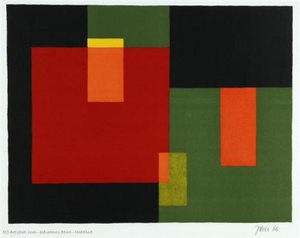
Itten's intellectual explorations extended far beyond pedagogical practice; he developed a comprehensive color theory that drew upon both scientific observation and psychological insight. Influenced by Eugène Gilliard’s exploration of abstract forms and Adolf Hölzel’s use of basic shapes as artistic building blocks, Itten championed the spiral, line, plane, and circle—elements considered essential for visual perception and creative expression. His seminal work *The Art of Color* (1961) articulated these principles with meticulous detail, establishing a framework for understanding color relationships that continues to resonate within contemporary art discourse. Itten’s artistic style embraced abstraction while simultaneously grounding it in observation of natural forms—a characteristic evident in paintings like “The Encounter” and “Study of Contrasts.” These works exemplify his commitment to exploring the interplay between form and color, reflecting a profound engagement with both visual aesthetics and spiritual contemplation.Legacy & Influence
Johannes Itten’s impact on art education endured beyond the Bauhaus era. His *Vorkurs* continues to inspire instructors worldwide, advocating for holistic learning experiences that prioritize intuition and experimentation. Furthermore, his color theory profoundly influenced artists like Josef Albers, Max Bill, and Bridget Riley—whose canvases embody the dynamic interplay of hues and values championed by Itten. Perhaps most notably, Itten’s investigations into color palettes and their association with personality types directly informed the development of seasonal color analysis—a technique widely utilized in the cosmetics industry to harmonize colors with individual complexion tones. Ultimately, Johannes Itten stands as a testament to the transformative power of art education and the enduring legacy of a visionary artist who dared to challenge conventional artistic norms and champion the boundless potential for creative expression.Kérdések és válaszok
Mely történelmi korszakban alkotott Itten?
Itten a Modern kor korszakban alkotott. Ez az időszak a művész tevékenységét a történelembe helyezi.
Melyik városban és melyik országban született Itten?
Itten Südern Linden, Svizzéria városában született.
Megtekinthető Itten művei technikánként csoportosítva?
Itten alkotásainak meghatározott technikában való kereséséhez használja a művész Minden médium oldalát.