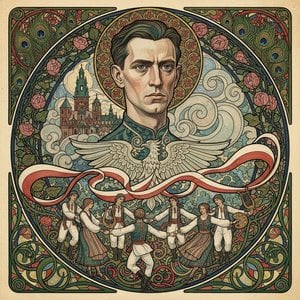
A Life Dedicated to the Sounds of Żywiec: The World of Feliks Jankowski
Feliks Jankowski, born in the Polish village of Żywice in 1926 and passing away in 1994, was more than simply a musician; he was a custodian of tradition, a master craftsman breathing life into the sonic heritage of his homeland. While not widely known outside specialist circles during his lifetime, Jankowski’s dedication to preserving and recreating the folk instruments of Poland, particularly those from the Żywiec region, has secured him a lasting legacy as a vital link to a rich cultural past. He wasn't merely playing instruments; he *was* the soundscape of Żywiec, embodying its history through every note and meticulously crafted piece of wood and reed.
The Multi-Instrumentalist and Instrument Maker
Jankowski’s talent manifested early as a multi-instrumentalist, proficient in a diverse array of traditional Polish instruments. He mastered the róg, a long wooden horn used for signaling and ceremonial purposes; the delicate tones of the ocarina; the resonant power of the trombita, a long trumpet unique to the Tatra Mountains; various types of flutes, each with its own distinct character; and most significantly, the bagpipes. However, his true passion lay in the construction of instruments themselves, becoming particularly renowned for his expertise in building the dudak – the traditional bagpipe specific to the Żywiec region. This wasn’t simply a technical skill; it was an intimate understanding of materials, acoustics, and the cultural significance embedded within each component. He didn't just build instruments, he resurrected them, ensuring their survival in a rapidly changing world.
Preserving a Regional Identity
The Żywiec region, nestled in the foothills of the Carpathian Mountains, possesses a unique musical identity shaped by its geography, history, and the traditions of its people. Jankowski recognized that this heritage was fragile, threatened by modernization and cultural homogenization. He dedicated his life to documenting and recreating these instruments, meticulously studying existing examples and learning from the few remaining masters who still possessed the knowledge of their construction. His work wasn’t simply about replicating forms; it was about understanding the *spirit* of the music they produced – the specific timbres, scales, and playing styles that defined the Żywiec sound.
A Legacy in Museums and Festivals
Jankowski's dedication extended beyond his workshop. He actively participated in numerous folk music festivals and competitions throughout Poland, showcasing not only his instrumental skills but also the instruments he had painstakingly crafted. These performances weren’t just concerts; they were demonstrations of a living tradition, opportunities to share the unique sounds of Żywiec with wider audiences. Today, his instruments are highly valued by musicians and collectors alike, and importantly, many reside in prominent museums such as the Muzeum Ludowych Instrumentów Muzycznych w Szydłowcu (Museum of Folk Musical Instruments in Szydłowiec) and the Muzeum Instrumentów Muzycznych w Poznaniu (Musical Instrument Museum in Poznań). These institutions serve as lasting testaments to his commitment, ensuring that future generations can experience the sounds he so passionately preserved.
Beyond Replication: A Philosophical Connection
It’s worth noting a potential connection – though not directly documented in readily available sources – to another Jankowski family member, Józef Emanuel Jankowski, a 19th-century professor of philosophy at Kraków University. While separated by time and discipline, both men represent a dedication to preserving intellectual or cultural heritage. Józef Emanuel sought to understand the foundations of thought; Feliks Jankowski, the foundations of sound. Both were, in their own ways, guardians of Polish identity, resisting the forces of change through scholarship and craftsmanship. Ultimately, Feliks Jankowski’s life serves as a powerful reminder that preserving culture isn't simply about collecting artifacts—it’s about keeping traditions alive through dedicated practice, passionate sharing, and a deep understanding of the human spirit they embody.