INGYENES MŰVÉSZETI TANÁCSADÁS

x

Charles Demuth

1883 - 1935

Rövid összefoglaló

  • Top 3 works:
    • I saw the figure 5 in gold (Homage to William Carlos Williams)
    • Bathers Viewing the Sea
    • Still Life with Spoon
  • Emotional tone: békés
  • Copyright status: Public domain
  • Creative periods: mature period
  • Room fit: nappali
  • Gift suitability: other-none
  • Color intensity: élénk
  • Top-ranked work: I saw the figure 5 in gold (Homage to William Carlos Williams)
  • Movements: precisionism
  • Nationality: Egyesült Államok
  • Több…
  • Art period: Modern kor
  • Lifespan: 52 years
  • Born: 1883, Lancaster, Egyesült Államok
  • Also known as: Charles Henry Buckius Demuth
  • Vibe: békés
  • Best occasions: akcentus
  • Died: 1935
  • Mediums: olajfestmény vászonon
  • Works on APS: 248

Művészeti kvíz

Minden kérdésre csak egy helyes válasz létezik.

Kérdés 1:
Melyik városban született Charles Demuth?
Kérdés 2:
Mi a Charles Demuth művészeti stílusa?
Kérdés 3:
Kinek volt hosszú ideje szoros barátja Charles Demuthnak, aki nagy hatással volt a művészetére?
Kérdés 4:
Melyik technikát használta főként Charles Demuth későbbi munkáin?
Kérdés 5:
Mi inspirálta a 'The Figure Five in Gold' című legismertebb festményét?

Early Life and Education

Charles Henry Buckius Demuth, born on November 8, 1883, in Lancaster, Pennsylvania, embarked on an artistic journey shaped by both personal challenges and a deep connection to his hometown. His early years were marked by a significant physical ailment – a hip condition that necessitated prolonged bed rest – a circumstance that fostered his initial engagement with art as a means of solace and occupation. His formal education began at Franklin & Marshall Academy, providing him with a foundational understanding of classical studies, before progressing to Drexel University and ultimately culminating in the prestigious Pennsylvania Academy of Fine Arts (PFA) in Philadelphia. It was during his time at PFA that he forged a lasting friendship with William Carlos Williams, a poet whose work would profoundly influence Demuth’s artistic vision and thematic concerns. The rigorous training at PFA exposed him to traditional techniques while simultaneously encouraging experimentation – an approach that would become central to his distinctive style.

Career and Artistic Influences

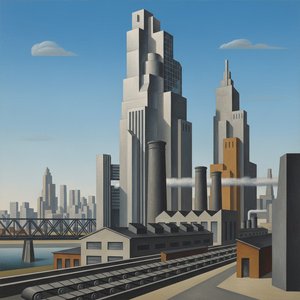
Demuth's professional career gained momentum after completing his studies in the United States, leading him to Paris where he immersed himself in the vibrant avant-garde scene of the early 20th century. He attended Académie Colarossi and Académie Julian, absorbing the innovative ideas circulating within European artistic circles. The acceptance of his homosexuality in Paris provided a crucial space for self-expression and creative exploration, contributing to the development of his unique aesthetic. Returning to America, Demuth retained elements of Cubism – a movement he had encountered during his time abroad – incorporating them into his own distinctive style. However, he didn’t simply mimic European trends; instead, he filtered them through his intensely personal lens, shaped by his deep affection for Lancaster and its industrial landscape. The city's burgeoning factories, bridges, and towering structures became recurring subjects in his paintings, imbued with a sense of both admiration and critical observation.

Precisionism: A Distinctive Style

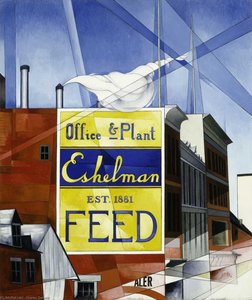
Demuth’s most celebrated contribution to the American art world is undoubtedly his development of Precisionism – a style characterized by its sharp lines, geometric forms, and meticulously rendered details. Inspired, in part, by the work of Cézanne and the Japanese prints he admired, Demuth sought to capture the essence of modern urban and industrial life with remarkable clarity and precision. His paintings often depicted scenes of factories, bridges, and skyscrapers, but not merely as static objects; rather, they were presented as dynamic compositions, imbued with a sense of energy and movement. The most iconic example of this style is undoubtedly “The Figure Five in Gold,” a painting directly inspired by Williams’ poem of the same name – a work that perfectly encapsulates Demuth's ability to synthesize poetry and visual art. Beyond industrial subjects, Demuth also created "Poster Portraits," a series dedicated to honoring fellow artists and writers like Georgia O’Keeffe, Arthur Dove, and Eugene O’Neill, each portrait reflecting the personality and artistic spirit of its subject.

Key Characteristics and Legacy

Precisionism is defined by several key elements: a quasi-Cubist approach emphasizing geometric forms; sharply defined lines that create a sense of structure and order; an interest in urban and rural landscapes, often featuring industrial features; and a deliberate avoidance of figurative representation – figures were rarely present in his compositions. Demuth’s legacy extends far beyond the confines of Precisionism itself. He was a pioneer in American Modernism, pushing the boundaries of artistic expression and challenging conventional notions of beauty and subject matter. His work continues to resonate with viewers today, offering a unique perspective on the complexities of modern life and the power of visual art to capture both its beauty and its inherent contradictions. Museum-quality replicas of his works are available through WahooArt, allowing enthusiasts worldwide to experience the brilliance of this remarkable artist.