Early Life and Artistic Foundations
Ferdinand Andri emerged onto the Austrian art scene in 1871, born in the charming town of Waidhofen an der Ybbs to a family steeped in artistic tradition—his father was a gilder. This early exposure to craftsmanship undoubtedly shaped his aesthetic sensibilities. From a young age, Andri demonstrated a keen aptitude for visual arts, leading him to begin an apprenticeship with woodcarver and altar builder Johann Kepplinger in Ottensheim near Linz at the tender age of thirteen. These formative years spent honing skills in three-dimensional form laid a crucial foundation for his later explorations in painting and sculpture. He continued his artistic education at the Staatsgewerbeschule in Innsbruck, before moving to Vienna’s prestigious Academy of Fine Arts in 1886. There, he studied under luminaries like Julius Victor Berger, Eduard von Lichtenfels, and August Eisenmenger, absorbing both traditional techniques and a burgeoning sense of modern artistic possibility. His education wasn't confined to the studio; Andri embarked on extensive travels throughout Italy, France, England, and North America, broadening his horizons and immersing himself in diverse artistic styles that would subtly influence his own evolving vision. A pivotal moment in his personal life arrived in 1897 with his marriage to Charlotte Hampel, a painter herself—eight years his senior—a union that likely fostered stimulating creative exchange.
Embracing Modernity: The Vienna Secession
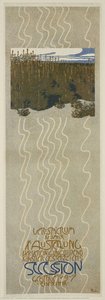
The late 19th and early 20th centuries in Austria were marked by a spirit of artistic rebellion, and Ferdinand Andri found himself at the heart of it as an active member of the Vienna Secession from 1899 to 1909. This group of artists bravely challenged the conservative norms of the established art academies, seeking new forms of expression that reflected the changing times. Andri wasn’t merely a participant; he rose through the ranks, serving as president of the Secession from 1905 to 1906, demonstrating his leadership and commitment to their innovative ideals. His involvement extended beyond exhibitions and meetings—he actively contributed to *Ver Sacrum*, the Secession's influential Art Nouveau magazine, a platform that showcased the group’s groundbreaking work and disseminated their artistic philosophy. During this period, Andri demonstrated remarkable versatility, working across multiple disciplines as a landscape, genre, and portrait painter, while simultaneously gaining recognition for his skill in lithography and sculpture. This multifaceted approach reflected the Secession's holistic vision of art encompassing all aspects of visual culture. He was deeply influenced by the works of Gustav Klimt, Egon Schiele, and Alfred Koller, artists who shared his desire to break free from academic constraints and explore new modes of representation.
War and Remembrance: A Painter of Conflict
The outbreak of World War I dramatically altered Andri’s artistic trajectory. From 1915 onward, he served as a war painter for the Imperial and Royal War Press Headquarters, tasked with documenting the realities of conflict on the front lines. This role took him to some of the most harrowing landscapes of the war—Belgrade, Montenegro, Albania, and the rugged Dolomites—where he captured scenes of both devastation and resilience. His work during this period wasn’t simply propaganda; it was an attempt to bear witness to the human cost of war, blending artistic skill with keen observational detail. He depicted not only battles and military operations but also the everyday lives of soldiers and civilians affected by the conflict—a testament to his empathy and commitment to portraying a nuanced understanding of the war's impact. Beyond his direct depictions of battlefields, Andri channeled his artistic talents into supporting the home front, creating powerful poster designs for the Children’s Relief Fund and wartime exhibitions, utilizing the graphic art skills he had honed during his time with the Vienna Secession. These posters served as poignant appeals to public sentiment, highlighting the suffering caused by the war and urging support for those affected.
Style and Influences
- Art Nouveau’s Embrace: Andri's early work clearly bears the imprint of Art Nouveau principles, evident in its decorative flourishes and emphasis on organic forms—a style that resonated with the Secession’s rejection of academic rigidity.
- Vienna Secession Ideals: As a committed member of the Vienna Secession, Andri wholeheartedly embraced their pursuit of artistic innovation and their challenge to conventional aesthetic norms. This influence is visible in his willingness to experiment with new techniques and subject matter.
- Landscapes and Genre Painting: He became particularly renowned for his landscape and genre paintings that beautifully captured the essence of life and traditions among Lower Austrian farmers, offering a poignant glimpse into rural existence.
- Documenting War’s Reality: His war paintings stand apart as a unique artistic response to conflict, skillfully blending artistic talent with meticulous documentary observation—a testament to his ability to find beauty and meaning even in the midst of devastation.
- An Evolving Style: Throughout his career, Andri’s style underwent subtle but significant transformations. However, he consistently demonstrated a deep commitment to craftsmanship, elegance, and a profound connection to Austrian culture—qualities that define his enduring artistic legacy.
Legacy and Historical Significance
Ferdinand Andri's art serves as a compelling reminder of the power of creativity to reflect, challenge, and ultimately transcend the complexities of its time. His work within the Vienna Secession helped shape the course of modern Austrian art, while his war paintings offer a poignant and enduring record of a tumultuous period in European history. The Ferdinand Andri Museum in St. Pölten stands as a lasting tribute to his artistic legacy, ensuring that his vision continues to inspire and resonate with audiences for generations to come. His commitment to both traditional craftsmanship and innovative artistic expression makes him a significant figure in the transition between the late 19th and early 20th centuries—a bridge between established artistic conventions and the bold experimentation of modern art.