The Architect of Light: The Visionary World of Aitor Antonio Iturrioz Ortiz
In the heart of Bilbao, a city defined by its industrial resilience and architectural metamorphosis, Aitor Antonio Iturrioz Ortiz began a journey that would redefine the boundaries of contemporary photography. Born in 1971, Ortiz emerged from the Basque landscape not merely as a documentarian of reality, but as an architect of perception. His early years were marked by a profound fascination with the interplay between structure and void, a passion that led him to pursue technical studies in image and sound. This foundational understanding of the mechanics of sight would later become the bedrock of his artistic language, allowing him to manipulate the very essence of light and space to create images that feel both tangibly real and hauntingly ethereal.
The trajectory of Ortiz’s career is a testament to a relentless pursuit of the unseen. His ascent within the Spanish photographic community was swift and decorated, marked by prestigious accolades that signaled the arrival of a major talent. In 1994, he captured the attention of critics with the Lux de Oro award in Barcelona, followed by the Grand Prix at the Villa de Madrid Photography Competition in 1996. These early triumphs were not merely personal milestones but indicators of a shifting aesthetic in Spanish photography—one that moved away from traditional narrative toward a more cerebral, spatial exploration. His work even touched the realm of popular culture through his involvement in the television adaptation of Arturo Pérez Reverte’s iconic Captain Alatriste novels, yet he remained steadfastly committed to the quiet, contemplative depths of fine art photography.
Constructing Reality Through Deconstruction
To look upon an Ortiz photograph is to enter a space where the familiar becomes strange. His methodology is a sophisticated dance between construction and deconstruction. While his professional practice often involves the precise documentation of existing architecture, his artistic soul seeks to dismantle it. He utilizes digital retouching and infographic techniques not to falsify, but to reveal a deeper truth about the objects he captures. By intervening in reality, Ortiz creates "imagined architectures"—spaces built from real, often anonymous or deserted fragments of our world, reassembled into compositions that defy conventional coordinates.
This technique is perhaps most breathtakingly realized in his Light Walls series. In works such as Light Walls 011, created from photographs taken in a black marble quarry in Markina, Ortiz achieves a sublime tension. He inserts pristine, square volumes of white light into the heavy, stony mass of the earth, creating a visual metaphor for a mental refuge. Here, the contrast between the geological weight of the marble and the weightless geometry of light serves as an unequivocal symbol of human consciousness interacting with the primordial world. His lens does not merely record; it carves space out of darkness.
A Legacy Written in Stone and Light
The historical significance of Aitor Ortiz lies in his ability to bridge the gap between the architectural and the psychological. His work has found a permanent home in some of the world's most esteemed institutions, ensuring that his vision of space continues to challenge future generations. The presence of his work in the following collections underscores his impact on the contemporary canon:
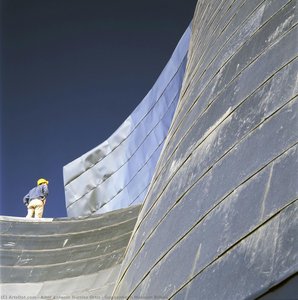
- Guggenheim Museum Bilbao: Where he famously documented the very construction of the museum, capturing the birth of an architectural icon.
- Museo Nacional Centro de Arte Reina Sofía: A testament to his standing within the pinnacle of Spanish modern art.
- Es Baluard Museu d'Art Contemporani de Palma: Highlighting his influence on the Mediterranean contemporary scene.
- Swedish National Museum of Photography: Demonstrating the international reach of his spatial explorations.
As we reflect on his contributions, we see an artist who has mastered the art of the "uncommon gaze." Through his mastery of unconventional angles and nuanced lighting, Ortiz has transformed photography from a medium of memory into a medium of meditation. He remains a vital voice in the photographic landscape, reminding us that even within the most rigid structures of stone and steel, there exists an infinite capacity for light, mystery, and wonder.
Kérdések és válaszok
Milyen más neveken ismert Aitor Antonio Iturrioz Ortiz?
Aitor Antonio Iturrioz Ortiz a következő más néven is ismert: Aitor Ortiz.
Látogathatom Aitor Antonio Iturrioz Ortiz műveinek virtuális múzeumát?
Aitor Antonio Iturrioz Ortiz művei megtekinthetők a művész virtuális, 3D-s galériájában, a 3D Galéria oldalon.
Milyen színeket használt leggyakrabban Aitor Antonio Iturrioz Ortiz?
Aitor Antonio Iturrioz Ortiz Paletta Genom egy olyan oldal, amely bemutatja a művész életművének színes profilját.