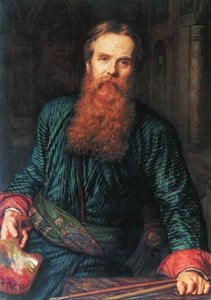
Introduction: The Rise of Aestheticism and Frederick Morgan's Place Within It
Aestheticism (also known as the aesthetic movement) was an art movement in the late 19th century that valued the appearance of literature, music, fonts, and the arts over their functions. According to Aestheticism, art should be produced to be beauti...
The latter half of the 19th century witnessed a profound shift in artistic sensibilities, a rebellion against the perceived ugliness and materialism of the Industrial Age. This movement, known as Aestheticism – or the “art for art’s sake” philosophy – championed beauty above all else, prioritizing sensory experience and refined form over moral instruction or social commentary. Within this vibrant milieu emerged Frederick Morgan (1847-1927), a painter whose idyllic scenes of rural life and captivating depictions of childhood embodied the core tenets of Aestheticism. While perhaps not as widely celebrated as some of his contemporaries like Whistler or Burne-Jones, Morgan’s work offers a particularly poignant reflection of Victorian England's yearning for tranquility and beauty, a delicate balance between realism and romantic idealism.
Early Life and Artistic Training: Foundations of a Victorian Painter
Frederick, Frederic or Fred Morgan may refer to: Frederick Courtenay Morgan (1834–1909), British Army officer and Conservative politician Frederick Augustus Morgan (1837–1894), Australian mining investor, co-discoverer of the Mount Morgan Mine Frede...
Born in Birmingham, England, Frederick Morgan received his artistic training at the South Kensington School of Art, later studying under John Sparkes. This formal education provided him with a solid foundation in traditional techniques, but it was his inherent sensitivity to light, color, and composition that truly distinguished his work. Unlike many artists who sought grand historical or mythological subjects, Morgan found inspiration in the everyday lives of ordinary people – particularly children engaged in simple pleasures within the English countryside. His early works demonstrate a meticulous attention to detail, reminiscent of the Dutch Masters, yet infused with a distinctly Victorian sentimentality and a growing fascination with capturing fleeting moments of beauty.
The Cult of Beauty in Morgan’s Work: Recurring Themes and Symbolism
 the dancing bear
Discover 'The Dancing Bear' by Frederick Morgan – a captivating Victorian oil painting of familial love & idyllic rural life. Explore this realistic masterpiece!
A defining characteristic of Morgan's paintings is his unwavering focus on the “cult of beauty.” This wasn’t merely about depicting aesthetically pleasing scenes; it was a deliberate rejection of Victorian didacticism. His canvases are populated with rosy-cheeked children, often depicted in pastoral settings – apple orchards, sun-dappled meadows, and tranquil streams. “Bob Apple”, for example, perfectly encapsulates this aesthetic ideal: a young girl delicately offering an apple, bathed in warm light, evoking innocence and the simple joys of rural life. Similarly, “The Dancing Bear” presents a heartwarming scene of familial love within a rustic setting, subtly hinting at the importance of connection and harmony with nature. The recurring motif of children suggests a longing for purity and a nostalgic view of childhood as an idyllic state untainted by the complexities of adulthood. Beyond these central figures, Morgan’s landscapes are imbued with symbolic meaning – blossoming flowers representing fleeting beauty, gentle streams signifying the passage of time, and golden light evoking warmth and serenity.
Morgan’s Technique and Style: Realism, Detail, and the Pursuit of Harmony
 untitled (4526)
Admire 'untitled (4526)' by Frederick Morgan – a realistic oil painting of rural life in Victorian England. Explore its warm tones, soft lines & idyllic scene.
While deeply rooted in Aesthetic principles, Morgan's artistic style is characterized by a remarkable degree of realism. He possessed an exceptional ability to capture textures – the softness of skin, the rustling of leaves, the sheen of polished wood. This meticulous attention to detail wasn’t simply about photographic accuracy; it was a means of enhancing the overall sensory experience for the viewer. His brushwork is delicate and refined, creating a sense of harmony and balance within each composition. “untitled (4526)”, exemplifies this approach – a realistic oil painting that invites the viewer to step into the scene and immerse themselves in the tranquility of rural England. Morgan’s use of warm tones and soft lines further contributes to the idyllic atmosphere, creating paintings that are both visually captivating and emotionally resonant. He skillfully blended Pre-Raphaelite influences with his own unique sensibility, resulting in a style that is distinctly Victorian yet remarkably timeless.
Critical Reception and Legacy: A Lasting Impression on Victorian Art
During his lifetime, Frederick Morgan enjoyed considerable success, exhibiting regularly at the Royal Academy and gaining a loyal following among collectors. While he wasn’t necessarily at the forefront of artistic innovation like some of his contemporaries, his paintings resonated with a public yearning for beauty and tranquility in an increasingly industrialized world. His work offered a respite from the harsh realities of Victorian life, providing viewers with glimpses into idyllic scenes filled with innocence and harmony. Although his popularity waned somewhat after his death in 1927, Morgan’s legacy has experienced a resurgence in recent years as scholars and collectors rediscover the beauty and subtlety of his paintings. Today, he is recognized as an important representative of Victorian Aestheticism, a painter who captured the essence of a bygone era with remarkable skill and sensitivity.
Explore the captivating world of Frederick Morgan’s art at WahooArt.com, where you can discover museum-quality reproductions of his masterpieces and bring the beauty of Victorian England into your home. We offer a wide range of customization options, allowing you to choose the perfect size, framing style, and medium for your individual taste. Experience the timeless elegance of Morgan’s paintings – a testament to the enduring power of art and the pursuit of beauty.