Masaccio, 1401 – 1428

Masaccio Paintings: The 97 Most Famous Works, Ranked

Masaccio's most famous painting is Presveto Trojstvo (1428). With Novčana porezna obveza (1425) and Iscjeljenje iz Raja (1426), it completes the three works everyone recognises. Our catalogue lists 97 works by Masaccio; the 97 below are the ones the world looks at most, each with its year, the museum that holds it and why it matters.

Rangirano prema našoj ocjeni popularnosti, koja objedinjuje broj pretraživanja, posjeta i narudžbi za svako djelo. Ažurirano Listopad 2026. Every masterpiece on this page can be ordered as a museum-quality, hand-painted oil reproduction or a fine art print, at the size you choose.

Portret Masaccio
Masaccio · 1401 – 1428
Rođen · umro
1401 – 1428, San Giovanni Valdarno
Pokret
Rana renesansa
Djela u našem katalogu
97
Najpoznatije
Presveto Trojstvo (1428)
Najviše djela u
Santa Maria del Carmine

The 10 most famous Masaccio paintings

Presveto Trojstvo (1428) od Masaccio
1

Presveto Trojstvo

1428 · Freska

Presveto Trojstvo Masaccio stvorio je fresku koja je označila početak Renesanse u Italiji. Ovo djelo, nastalo 1425. godine, smatra se jednim od najvažnijih ostvarenja ranog renesansa. Monumentalno platno čuva crkva Santa Maria Novella u Firenci, u Italiji. Umjetničke inovacije Masaccio je svojim djelom Presveto Trojstvo prenio revoluciju u umjetnosti, uvodeći niz pionirskih inovacija. To je jedna od prvih monumentalnih renesanskih slika koja je koristila linearnu perspektivu, stvarajući nevjerojatan osjećaj dubine…

Novčana porezna obveza (1425) od Masaccio
2

Novčana porezna obveza

1425 · Freska

Scena se odvija unutar kapele Brancacci u bazilici Santa Maria del Carmine u Firenci. Ovdje freska pod naslovom Novčana porezna obveza autora Masaccia oživljava biblijsku naraciju na zidovima kapele. Njegovo djelo, koje je naručio Felice Brancacci, čini značajan dio šireg ciklusa posvećenog životu svetog Petra. Čini se da zrak u kapeli nosi težinu ove svete povijesti dok se figure kreću kroz trenutak od iznimnog značaja.

Iscjeljenje iz Raja (1426) od Masaccio
3

Iscjeljenje iz Raja

1426 · Freska

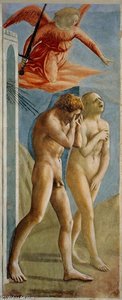
Teška tišina Brankacijske kapele u crkvi Santa Maria del Carmine u Firenci, u Italiji, nosi težinu duboke tragedije. Ovdje zidovi dišu pričom o Iscjeljenje iz Raja, freski koji je Masaccio naslikao oko 1425. godine. Čini se kao da se zrak zgušnjava oko figura dok se one suočavaju sa svojim iznenadnim, nepovratnim odlaskom iz raja. Ova scena označava početak šireg narativa, djelujući kao prva freska u seriji posvećenoj životu svetog Petra.

Izdanak Novčanika (detalj) od Masaccio
4

Izdanak Novčanika (detalj)

Freska

U srcu Brancacci Chapelje u Firenciji, stoji djelo koje je definiralo cijelu eru – Masaccova freska “Dopisni novac” (c. 1426.). Ovo nije samo slika; to je prekretnica u povijesti umjetnosti, trenutak kada se stil i ambicija umjetničkog izražavanja preobrazili u nešto potpuno novo. Masaccio, mlad i talentiran majstor, usudio se pobasati na detalje života, perspektive i ljudskih emocija na način koji je ranije bio neviđen.

Predella panel from the Pisa Altar (1426) od Masaccio
5

Predella panel from the Pisa Altar

1426 · Oil On Panel · Staatliche Museen zu Berlin, Berlin

To stand before this Predella panel from the Pisa Altar is to encounter a moment frozen in time, yet vibrating with raw, undeniable human drama. Dating to 1426, this work captures Masaccio at the zenith of his revolutionary power. It is not merely a depiction of the Crucifixion; it is a profound meditation on sacrifice, community, and the weight of divine narrative rendered with startling immediacy. The composition draws the…

The Madonna of Humility (1424) od Masaccio
6

The Madonna of Humility

1424 · Tempera On Panel

In the quiet, profound stillness of Masaccio’s The Madonna of Humility, we encounter one of the most moving snapshots of the Early Italian Renaissance. Created around 1424, this masterpiece transcends mere religious iconography to offer a window into a moment of raw, maternal intimacy. The scene is set not upon a celestial throne, but on the earth itself, where the Virgin Mary sits upon a blue patterned cushion. This choice…

Trinity (detail) (1425) od Masaccio
7

Trinity (detail)

1425 · Fresco · Santa Maria Novella, Firenca

The image presents a detail from a fresco painting created in 1425 by Masaccio. Within this specific view, a figure is depicted that appears to be Mary Magdalene, identified by the traditional iconography of her long hair and a head covering. She possesses a contemplative expression, directing her gaze slightly downwards toward an object held in her right hand, which may be interpreted as a symbol of faith or devotion.

Two panels from the Pisa Altarpiece (1426) od Masaccio
8

Two panels from the Pisa Altarpiece

1426 · Tempera On Panel · Staatliche Museen zu Berlin, Berlin

In the quiet, hallowed halls of art history, few works capture the dawn of a new era as poignantly as Masaccio’s Two Panels from the Pisa Altarpiece. Completed in 1426, these panels are far more than mere fragments of a lost polyptych; they are windows into a transformative moment when the rigid conventions of the Gothic period began to dissolve, giving way to the profound humanism of the Early Italian…

Trinity (1425) od Masaccio
9

Trinity

1425 · Fresco · Santa Maria Novella, Firenca

To step before Masaccio’s Holy Trinity is to witness the exact moment when the flattened, symbolic world of the Middle Ages dissolved into the profound, breathing reality of the Renaissance. Painted between 1425 and 1427 within the hallowed walls of Santa Maria Novella in Florence, this fresco does not merely depict a religious scene; it carves a hole in the very wall of the chapel, inviting the viewer to step…

Trinity (detail) (1425) od Masaccio
10

Trinity (detail)

1425 · Acrylic On Canvas · Santa Maria Novella, Firenca

Masaccio’s “Trinity (detail),” housed within the magnificent Santa Maria Novella in Florence, isn't merely a fresco; it’s a pivotal moment in art history – a visual manifesto declaring the arrival of the High Renaissance. Painted between 1425 and 1427, this intimate section captures the essence of Masaccio’s revolutionary approach to depicting reality, a departure from the stylized elegance of the preceding Gothic era and a profound influence on generations of…

Masaccio, paintings 11 to 97

Frescoes in the Cappella Brancacci (left view) (1426) od Masaccio
#19

Frescoes in the Cappella Brancacci (left view)

1426 · Santa Maria del Carmine

Masaccio’s Frescoes in the Cappella Brancacci stand as a cornerstone of Renaissance art, representing an unprecedented leap forward in artistic innovation and profoundly influencing subsequent generations. Located within…

Bring it home →
Crucifixion (1426) od Masaccio
#22

Crucifixion

1426 · Museo di Capodimonte

Masaccio’s Crucifixion, painted in 1426 during his tragically brief career, isn’t merely a depiction of a pivotal biblical event; it’s a foundational moment in Western art. Born in…

Order a reproduction →
Distribution of Alms and Death of Ananias (1425) od Masaccio
#48

Distribution of Alms and Death of Ananias

1425

In the quiet, profound depths of Masaccio’s Distribution of Alms and Death of Ananias, we encounter a moment where the divine intersects with the earthly through the simple,…

Plate of Nativity (Berlin Tondo) (1427) od Masaccio
#77

Plate of Nativity (Berlin Tondo)

1427 · Staatliche Museen zu Berlin

In the quiet intimacy of the Plate of Nativity (Berlin Tondo), we witness one of the most profound transformations in the history of Western art. Painted in 1427…

Bring it home →
Adoration of the Magi (1426) od Masaccio
#85

Adoration of the Magi

1426 · Staatliche Museen zu Berlin

To stand before Masaccio’s Adoration of the Magi is not merely to observe a painting; it is to step directly into the revolutionary atmosphere of the early Italian…

Order a reproduction →
Predella panel from the Pisa Altar (1426) od Masaccio
#87

Predella panel from the Pisa Altar

1426 · Staatliche Museen zu Berlin

The world of 15th-century Florentine painting was undergoing a seismic shift, and at the heart of this transformation stood Masaccio – a name that resonates with an almost…

Bring it home →
St. Andrew (1426) od Masaccio
#93

St. Andrew

1426 · J. Paul Getty Museum

A Revolutionary Vision of Faith: Masaccio’s St. Andrew Masaccio's *St. Andrew*, painted in 1426, is a landmark work of the Early Renaissance, embodying the seismic shift towards naturalism…

Bring it home →
Crucifixion of St Peter (1426) od Masaccio
#97

Crucifixion of St Peter

1426 · Staatliche Museen zu Berlin

Masaccio's 1426 painting, *Crucifixion of St. Peter*, is not merely a depiction of a pivotal moment in Christian history; it’s a foundational cornerstone of the Early Italian Renaissance.…

Commission a hand-painted copy →

Masaccio's paintings by period

The subjects Masaccio painted most

The four subjects that return most often among these masterpieces, with the finest example of each.

Where to see Masaccio's paintings

8 muzeja u kojima se nalazi najviše djela s ove stranice.

Muzej Grad Djela autora Masaccio Slike iz ovog popisa
Santa Maria del Carmine, FirencaSanta Maria del Carmine Firenca 7 View of the Cappella Brancacci (before restoration), Frescoes in the Cappella Brancacci (right view), Frescoes in the Cappella Brancacci (left view)
Staatliche Museen zu Berlin, BerlinStaatliche Museen zu Berlin Berlin 6 Predella panel from the Pisa Altar, Two panels from the Pisa Altarpiece, Plate of Nativity (Berlin Tondo)
Gemäldegalerie, BerlinGemäldegalerie Berlin 5 Martyrdom of San Giovanni Battista, A Bearded Carmelite Saint, San Agustín
Santa Maria Novella, FirencaSanta Maria Novella Firenca 4 Trinity (detail), Trinity, Trinity (detail)
Lindenau-Museum, AltengauLindenau-Museum Altengau 3 Christ in the Garden of Gethsemane (detail), Christ in the Garden of Gethsemane (detail), Christ in the Garden of Gethsemane
National Gallery of Art, WashingtonNational Gallery of Art Washington 2 Profile Portrait of a Young Man, Madonna of Humility
National Gallery, LondonNational Gallery London 2 Madonna with Child and Angels, St.Girolamo end Giovanni Battista
Museo di Capodimonte, NapuljMuseo di Capodimonte Napulj 1 Crucifixion

Masaccio's most famous paintings, year by year

Masaccio painted for barely 9 years, from 1420 to 1428: follow that decade year by year, through the paintings that made the name.

  1. 1420
  2. 1422
  3. 1422
  4. 1422
    San Giovenale Triptych. Left panel (1422) od Masaccio
    No. 63 of 97

    San Giovenale Triptych. Left panel

    Godine 21

    The San Giovenale Triptych, Left Panel by Masaccio is a seminal work of art that showcases the artist's innovative style and technique. Created in 1422, this painting is…

  5. 1422
  6. 1423
  7. 1423
  8. 1424
    The Madonna of Humility (1424) od Masaccio
    No. 6 of 97

    The Madonna of Humility

    Godine 23

    In the quiet, profound stillness of Masaccio’s The Madonna of Humility, we encounter one of the most moving snapshots of the Early Italian Renaissance. Created around 1424, this…

  9. 1424
    Christ in the Garden of Gethsemane (detail) (1424) od Masaccio
    No. 21 of 97

    Christ in the Garden of Gethsemane (detail)

    Godine 23 · Lindenau-Museum

    The garden holds a heavy stillness. In this detail from 1424, a single figure kneels upon the earth, hands clasped in a tight knot of devotion. The light…

  10. 1424
  11. 1424
    Christ in the Garden of Gethsemane (1424) od Masaccio
    Rank 62 / 97

    Christ in the Garden of Gethsemane

    Godine 23 · Lindenau-Museum

    The painting Christ in the Garden of Gethsemane is a renowned work by the Italian artist Masaccio, created in 1424. This tempera painting, measuring 62 x 44 cm,…

  12. 1425
    Novčana porezna obveza (1425) od Masaccio
    No. 2 of 97

    Novčana porezna obveza

    Godine 24

    Scena se odvija unutar kapele Brancacci u bazilici Santa Maria del Carmine u Firenci. Ovdje freska pod naslovom Novčana porezna obveza autora Masaccia oživljava biblijsku naraciju na zidovima…

  13. 1425
    Trinity (detail) (1425) od Masaccio
    #7 of 97

    Trinity (detail)

    Godine 24 · Santa Maria Novella

    The image presents a detail from a fresco painting created in 1425 by Masaccio. Within this specific view, a figure is depicted that appears to be Mary Magdalene,…

  14. 1425
    Trinity (1425) od Masaccio
    #9 of 97

    Trinity

    Godine 24 · Santa Maria Novella

    To step before Masaccio’s Holy Trinity is to witness the exact moment when the flattened, symbolic world of the Middle Ages dissolved into the profound, breathing reality of…

  15. 1425
    Trinity (detail) (1425) od Masaccio
    No. 10 of 97

    Trinity (detail)

    Godine 24 · Santa Maria Novella

    Masaccio’s “Trinity (detail),” housed within the magnificent Santa Maria Novella in Florence, isn't merely a fresco; it’s a pivotal moment in art history – a visual manifesto declaring…

  16. 1426
    Iscjeljenje iz Raja (1426) od Masaccio
    Rank 3 / 97

    Iscjeljenje iz Raja

    Godine 25

    Teška tišina Brankacijske kapele u crkvi Santa Maria del Carmine u Firenci, u Italiji, nosi težinu duboke tragedije. Ovdje zidovi dišu pričom o Iscjeljenje iz Raja, freski koji…

  17. 1426
    Predella panel from the Pisa Altar (1426) od Masaccio
    Rank 5 / 97

    Predella panel from the Pisa Altar

    Godine 25 · Staatliche Museen zu Berlin

    To stand before this Predella panel from the Pisa Altar is to encounter a moment frozen in time, yet vibrating with raw, undeniable human drama. Dating to 1426,…

  18. 1426
    Two panels from the Pisa Altarpiece (1426) od Masaccio
    #8 of 97

    Two panels from the Pisa Altarpiece

    Godine 25 · Staatliche Museen zu Berlin

    In the quiet, hallowed halls of art history, few works capture the dawn of a new era as poignantly as Masaccio’s Two Panels from the Pisa Altarpiece. Completed…

  19. 1426
    View of the Cappella Brancacci (before restoration) (1426) od Masaccio
    Rank 11 / 97

    View of the Cappella Brancacci (before restoration)

    Godine 25 · Santa Maria del Carmine

    Masaccio's View of the Cappella Brancacci (before restoration), painted in 1426, isn’t merely a depiction of a church interior; it’s a pivotal moment in art history – a…

  20. 1427
  21. 1427
    Baptism of the Neophytes (1427) od Masaccio
    No. 20 of 97

    Baptism of the Neophytes

    Godine 26

    The Baptism of the Neophytes is a renowned fresco painted by Masaccio in the early 15th century. This iconic artwork is part of the decoration of the Brancacci…

  22. 1427
    Plate of Nativity (Berlin Tondo) (1427) od Masaccio
    Rank 77 / 97

    Plate of Nativity (Berlin Tondo)

    Godine 26 · Staatliche Museen zu Berlin

    In the quiet intimacy of the Plate of Nativity (Berlin Tondo), we witness one of the most profound transformations in the history of Western art. Painted in 1427…

  23. 1428
    Presveto Trojstvo (1428) od Masaccio
    #1 of 97

    Presveto Trojstvo

    Godine 27

    Presveto Trojstvo Masaccio stvorio je fresku koja je označila početak Renesanse u Italiji. Ovo djelo, nastalo 1425. godine, smatra se jednim od najvažnijih ostvarenja ranog renesansa. Monumentalno platno…

  24. 1428
  25. 1428

Questions about Masaccio's paintings

What is Masaccio's most famous painting?Show the answer

Presveto Trojstvo (1428). Next come Novčana porezna obveza (1425) and Iscjeljenje iz Raja (1426).

How old was Masaccio when Presveto Trojstvo was painted?Show the answer

27 years old: Presveto Trojstvo dates from 1428 and Masaccio was born in 1401.

What are the top 10 paintings by Masaccio?Show the answer

Presveto Trojstvo, Novčana porezna obveza, Iscjeljenje iz Raja, Izdanak Novčanika (detalj), Predella panel from the Pisa Altar, The Madonna of Humility, Trinity (detail), Two panels from the Pisa Altarpiece, Trinity i Trinity (detail). The ranking above gives the year and the museum of each.

How many paintings did Masaccio make?Show the answer

Our catalogue lists 97 works by Masaccio, dated from 1420 to 1428.

Where are Masaccio's most famous paintings?Show the answer

Most of them are in Santa Maria del Carmine (Firenca), Staatliche Museen zu Berlin (Berlin) i Gemäldegalerie (Berlin). The table above lists the museums one by one.

When did Masaccio paint the most famous works?Show the answer

In 1426: 41 of the 97 works on this page date from then, among them Iscjeljenje iz Raja.

What are Masaccio's earliest and latest famous paintings?Show the answer

The earliest on this page is Madonna of Humility (1420), the latest Presveto Trojstvo (1428).

What did Masaccio paint most often?Show the answer

Saints (30), Religious (25) i Renaissance (15), among the 97 works on this page.

What medium did Masaccio use most?Show the answer

Acrylic On Canvas: 9 of the 97 works on this page.

Which art movement does Masaccio belong to?Show the answer

Rana renesansa, as the paintings on this page show.

Which Masaccio paintings can I see at the Santa Maria del Carmine?Show the answer

View of the Cappella Brancacci (before restoration), Frescoes in the Cappella Brancacci (right view) i Frescoes in the Cappella Brancacci (left view) are among the 7 works on this page held by the Santa Maria del Carmine, Firenca.

Can I buy a reproduction of a Masaccio painting?Show the answer

Yes. Every painting on this page can be ordered as a museum-quality, hand-painted oil reproduction or a fine art print, in the size you choose, from the painting's own page.

About Masaccio

Masaccio: Svitanje Renesansnog Realizma

Tommaso di Ser Giovanni di Simone, poznatiji kao Masaccio (što na talijanskom znači “nespretni Tom”), bio je ključna figura ranog talijanskog Renesansa. Rođen 21. prosinca 1401. godine u San Giovanniju Valdarnu, Italija, i tragično mlad umro 1428. godine, njegova kratka karijera revolucionirala je slikarstvo s pionirskim realizmom, perspektivom i chiaroscuro tehnikom (upotrebom snažnih kontrasta između svjetla i tame). Unatoč kratkom životu, Masacciov utjecaj na kasnije generacije umjetnika bio je dubok, uspostavljajući novi standard naturalizma i utječući na tijek zapadne umjetnosti.

Rani Život i Obrazovanje

Masaccio se rodio Giovanniju di Simone Cassaiju, bilježniku, i Jacopi di Martinozzu. Njegovo prezime, Cassai, potječe od zanata njegovog djeda po ocu – stolara. Siroče je postao u petoj godini smrti svog oca, a imao je brata, Giovannija (Lo Scheggia), koji je također postao slikar. Detalji Masacciovog umjetničkog obrazovanja ostaju uglavnom nepoznati, što je neuobičajeno za renesansne umjetnike. Vjeruje se da je vjerojatno započeo učiti oko dvanaeste godine života, ali nije identificiran nijedan definitivan majstor. Nedostatak dokumentiranog obrazovanja dodaje misterij brzom razvoju i inovativnim tehnikama koje je razvio.

Umjetnički Razvoj i Ključna Djela

U svojim ranim radovima, Masaccio je bio pod utjecajem Giotta di Bondonea, prethodnika poznatog po svom naturalizmu. Međutim, brzo ga je nadmašio u razumijevanju perspektive i anatomije. Inspiraciju je crpio i iz arhitektonskih inovacija Filippa Brunelleschija, posebno iz Brunelleschijevog ponovnog otkrića linearne perspektive. Njegova umjetnost nije bila samo tehnički napredak; to je bio radikalan pomak u načinu prikazivanja svijeta.

  • Linearna Perspektiva: Masaccio je pionirski uveo linearnu perspektivu, koristeći točku gledišta i matemijsku preciznost kako bi stvorio uvjerljivu iluziju dubine na dvodimenzionalnoj površini. Ovo nije bila samo tehnička vještina; to je bio način da se publici pruži osjećaj prisutnosti u samom djelu.
  • Chiaroscuro: Majstorski je koristio svjetlo i sjenu kako bi modelirao oblike, stvarajući osjećaj volumena i realizma koji prije nije viđen u slikarstvu. Svjetlost više nije bila samo sredstvo za osvjetljenje; postala je ključni element dramatičnosti i emocionalnog utjecaja.
  • Naturalizam: Prikazivao je figure s anatomskom točnošću i emotivnom ekspresivnošću, udaljavajući se od stiliziranih prikaza ranijih razdoblja. Njegove figure nisu bile idealizirane; bile su ljudske, s manama i emocijama.

Njegova djela poput San Giovenale Triptycha (oko 1422.) pokazuju njegov rastući talent u perspektivi i naturalističkom prikazu. Suradnja s Masolinom na Madonni i Djetetu sa Sv. Anom (oko 1423.-1425.) ističe Masacciov izranjajući realizam uz Masolinov tradicionalniji stil.

Povijesna Značajnost i Nasljeđe

Masacciov utjecaj na tijek zapadne umjetnosti je nemjerljiv, unatoč njegovoj tragično kratkoj karijeri. Njegove inovacije u perspektivi, chiaroscuro tehnici i naturalizmu temeljito su promijenile način na koji su umjetnici prikazivali svijet. Uspješno je premostio jaz između srednjovjekovnih umjetničkih konvencija i novih ideala Renesanse.

  • Utjecaj na Kasnije Umjetnike: Masacciov rad duboko je utjecao na generacije slikara, uključujući Donatella, Leonarda da Vincija, Michelangela i Rafaela. Intenzivno su proučavali njegove freske, usvajajući i prilagođavajući njegove tehnike svojim stilovima.
  • Temelj za Visoki Renesans: Njegov naglasak na realizmu i ljudskim emocijama postavio je temelje umjetničkim dostignućima Visokog Renesansa. Nije samo stvorio ljepotu; otvorio je put novom razumijevanju ljudske figure i njezine pozicije u svijetu.
  • Vasarijev Opis: Biograf Giorgio Vasari prepoznao je Masacciov genij, hvaleći ga kao “najboljeg slikara svoje generacije” i ističući njegovu sposobnost oponašanja prirode s neusporedivom vještinom.
  • Tragičan Gubitak: Njegova smrt u mladoj, 26. godini života bila je oplakana od suvremenika poput Filippa Brunelleschija, koji su žalili gubitak tako izvanrednog talenta.

Zaključak

Masacciovo nasljeđe traje kao jednog od najvažnijih i najutjecajnijih umjetnika u povijesti. Stoji kao ključna figura u prijelazu sa srednjovjekovne na renesansnu umjetnost, zauvijek mijenjajući način na koji doživljavamo i prikazujemo svijet kroz slikarstvo. Njegova kratka ali briljantna karijera služi kao svjedočanstvo moći inovacija i trajne snage umjetničkog genija.

Sva 97 djela umjetnika Masaccio →