99 Famous Late Medieval Artists: The Definitive Ranking
The most famous Late Medieval artist is Simone Martini (1284–1344), known for Maestà (Madonna with Angels and Saints) and Oglas i Dva Svetnika. Next come Andrej Rubljov, Ambrogio Lorenzetti, Pietro Lorenzetti and Hubert Van Eyck. This ranking of the 99 most famous Late Medieval artists runs from Yuan Dynasty (born 1271) to Hubert Van Eyck (born 1366), across 19 countries.
WBy the WahooArt.com curators
How this list is ranked. Artists whose works our catalogue files under Late Medieval, in the order of our fame ranking of artists. Artists without a Wikidata identifier born after 1955 are left out until verified. The Wikipedia figure next to each name is the number of our 32 languages in which Wikipedia has an article on the artist.
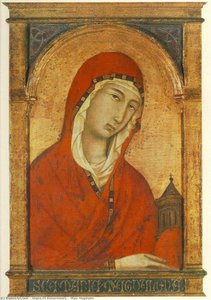
TalijacBorn in SienaInternacionalni gotički stilWikipedia in 28/32 languages
Godine 1319. u Pizi je dovršio Poliptih svete Katarine Alexandrijske Polyptych. Saint Louis of Toulouse Crowning His Brother Robert of Anjou, 1317. Godine 1342. dovršio je Krista pronađenog u hramu, sliku koju danas možemo pronaći u Walker Art Gallery u Liverpoolu.
RusBorn in Velika Kneževina MoskvaRusko ikonoslikarstvoWikipedia in 31/32 languages
Andrei Rublev (oko 1360. – oko 1430.) ostaje jedna od najenigmatičnijih i najdublje utjecajnih figura u povijesti ruske umjetnosti. Vjeruje se da je rođen u Moskvi, iako neki izvori sugeriraju moguće podrijetlo u manastiru Svete Trojice i Svetog Sergija blizu grada – mjestu koje bi duboko oblikovalo njegov umjetnički razvoj.
TalijacBorn in SienaSijenska školaWikipedia in 29/32 languages
Ambrogio Lorenzetti, rođen oko 1290. godine u srcu Italije, u sjeni Sijene, pojavio se kao ključna figura u prijelazu iz srednjovjekovnih umjetničkih tradicija u usrednju renesansu. Iako su ga u određenim razdobljima zasjenjivali suvremenici poput Duccia i Simone Martinija, te iako se često spominje uz svog brata, slikara Pietra Lorenzettija, Ambrogio je izradio vlastiti, jedinstveni put, obilježen inovativnim duhom i dubokim povezivanjem sa svijetom koji ga je okruživao.
TalijanaBorn in SienaRana renesancijaWikipedia in 27/32 languages
Pietro Lorenzetti (oko 1280. – 1348.) stoji kao ključna figura u sienezskoj umjetnosti, označavajući duboki prijelaz od gotičkog formalizma prema bujanim humanističkim idealima ranog renesansnog doba. Rođen u živopisnom kulturnom krajoliku Sijene oko 1280. godine, Lorenzettijev umjetnički put odvijao se tijekom razdoblja značajnih intelektualnostih i umjetničkih transformacija u Toskani.
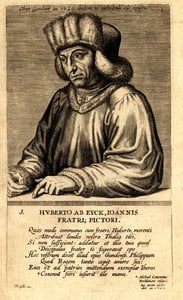
HolandskiBorn in MaaseikRani nizozemskiWikipedia in 20/32 languages
Rođen u Maaseiku oko 1385. ili 1390. godine, bio je dio moćne umjetničke dinastije; njegove obiteljske veze, uključujući slavnog brata Jana i braću Lambert i Margaret, stvorile su žarište kreativnosti koje će zauvijek promijeniti smjer europskog slikarstva. Bio je čovjek svog vremena i svoje cehe, službeno stupivši u Ghentsku Artisten Gilde 1413. godine, što je svjedočanstvo njegovog profesionalnog statusa i integracije u živopisnu, bogatu urbanu kulturu Flandrije.
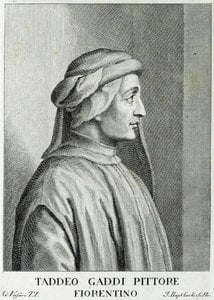
TalijanaBorn in FirencaRana renesancijaWikipedia in 23/32 languages
U živopisnoj, uzrastajućoj atmosferi 14. stoljeća Firentije, razdoblja koje je obilježilo prijelaz iz srednjovjekovnog u rano renesansno doba, Taddeo Gaddi istaknuo se kao majstor svjetla, naracije i arhitektonskog veličanstva. Kao jedan od najistaknutijem učenika legendarne Giotta di Bondonea, Gaddi nije samo nasledio stil; on je proširio vizualni rječnik svog vremena.
TalijanskiBorn in FirencaGotika, Rani renesansWikipedia in 20/32 languages
Agnolo Gaddi, rođen u Firenci oko 1350. godine, zauzima fascinantnu, ključnu poziciju u povijesti talijanske slikarstva. Nije bio samo umjetnik; bio je nasljednik moćne linije, sin Taddea Gaddija, koji je sam bio posvećen i daroviti učenik revolucionarnog Giotta di Bondonea. Umjetna reputacija Agnola Gaddija uglavnom potječe iz njegovih opsežnih freski u Bazilici Santa Croce u Firenci.
GrkBorn in KonstantinopolBizancijska ikonografijaWikipedia in 22/32 languages
Rođen u Carigradu oko 1340. godine, iako se zbog svojih kasnijih aktivnosti često povezuje s Grčkom, Teofan je bio ključna figura koja je povezala posljednje cvjetanje bizantijske umjetnosti s usrednjim tradicijama Rusije. Oko 1395. godine stigao je u Novgorod, moćnu gradsku državu unutar Rusije, zajedno s Andrejem Rubljevom, još jednom ikoničnom postavom ruske pravoslavne umjetnosti.
TalijacBorn in VenecijaBizantinski utjecaj i gotička umjetnost
Paolo Veneziano (oko 1333. – 1358.) stoji kao monumentalna figura u povijesti venecijanske umjetnosti, univerzalno priznat kao najvažniji venecijanski slikar četrnaestog stoljeća. Rođen u umjetničkom lineageu unutar samog srca Venecije — njegov je otac bio renomirani umjetnik — Venezianova kratka, ali briljantna karijera poklopila se s transformativnim razdobljem u europskom slikarstvu.
TalijanBorn in SienaMeđunarodni gotički stilWikipedia in 17/32 languages
Lippo Memmi, rođen oko 1291. godine u srcu Sijene, Italija, ističe se kao ključna figura u prijelazu s bizantski ukorijenjenih tradicija srednjovjekovne umjetnosti prema procvatu elegancije internacionalnog gotičkog stila. Iako se često raspravlja u vezi njegovog proslavljenog šurjaka i mentora, Simone Martinija, suvremena znanstvena istraživanja sve više prepoznaju Memmijev jedinstveni umjetnički glas i značajan doprinos umjetnosti Sijene u 14. stoljeću.
TalijacBorn in ArezzoPoveznica između Giottove škole i Sijenske školeWikipedia in 16/32 languages
Rođen u obitelji florentinskih zlatara, njegovo pravo ime bilo je Spinello Di Luca Spinelli, ali se povijesti poznao pod nadimkom "Aretino", što označava njegovu povezanost s Arezzom. U svojim ranim godinama radio je u užurbanim radionicama Firence, pridonoseći monumentalnim djelima kao što su freske u crkvi Carmine i Santa Maria Novella.
TalijacBorn in FirencaRana renesancijaWikipedia in 17/32 languages
Bernardo Daddi, rođen u Firenci oko 1290. godine i preminut 1348., predstavlja ključnu figuru u prijelazu s kasne gotike na bujanje talijanske renesanse. Točan datum Daddijevog rođenja ostaje obavijen misterijom, iako zapisi ukazuju na to da se prvi put spominje 1312. godine. Široko je vjerovanje da je njegovo umjetničko putovanje počelo pod mentorstvom Giotta di Bondone, jednog od najutjecajnijih umjetnika tog doba.
Rođen u Pontecorvu, u regiji Lazio, Pisanoov rani život ostaje obavijen djelom misterije, iako je svoje vještine prvobitan usavršavao kao zlatar prije nego što se oko 1300. godine u cijelosti posvetio kiparstvu pod pokroviteljstvom Minoa di Giovannija. Rana karijera i vrata krstionice u Pisi: Pisanova prvobitna slava proizašla je iz njegovog suradničkog rada na ambicioznoj fasadi krstionice katedrale u Pisi, alongside Giovannija di Balduccia.
He demonstrated a particular skill in depicting religious scenes – notably the Coronation of the Virgin, now housed in the Accademia in Venice, and the harrowing Massacre of the Innocents, preserved in the Uffizi Gallery in Florence. The Madonna del Parto within the church of San Lorenzo, Florence, further exemplifies his sensitivity to maternal tenderness and spiritual devotion.
KineskaBorn in WuxiČetiri majstora dinastije YuanWikipedia in 15/32 languages
Njegovo ime časti bilo je Yuan Zhen (元鎮), dok su mu umjetnička imena bila Yun Lin Zi (雲林子), Huan Xia Sheng (幻霞生), te Jing Man Min (荊蠻民). Ni Zan se smatra jednim od četiri majstora dinastije Yuan, alongside Huang Gongwanga, Wu Zhena i Wang Menga.
ItalianBorn in FlorenceGothic-Late GothicWikipedia in 20/32 languages
The name Orcagna—a moniker bestowed upon him by local artisans—encompasses a remarkable figure in the history of Italian art: Andrea di Cione, a painter, sculptor, architect, and master craftsman who dominated the artistic landscape of Florence during the latter half of the 14th century. He bridged the gap between the Gothic traditions inherited from his predecessors and the emerging Renaissance style, paving the way for future generations of artists.
Rođen kao Giovanni di Jacopo di Guido da Caversaccio u Lombardiji oko 1346. godine, njegovo umjetničko putovanje odvijalo se prvenstveno unutar živopisnog kulturnog krajolika Firentse, u vrijeme ogromnih promjena i inovacija.
ItalianBorn in VeniceEarly Renaissance paintingWikipedia in 15/32 languages
He devoured treatises on geometry, meticulously studying the principles of linear perspective —a system that had only recently been codified by Filippo Brunelleschi and Leon Battista Alberti. While some critics have dismissed Uccello’s perspective as flawed or naive, it is precisely this unconventional approach that sets him apart. Born in Florence around 1397 as Paolo di Dono, he adopted the surname “ Uccello ” – meaning "bird" – perhaps indicative of his family’s emblem or simply a personal inclination.
ChineseBorn in HuzhouYuan Dynasty Landscape PaintingWikipedia in 14/32 languages
Unlike the more restrained approaches of his contemporaries, Wang Meng’s paintings are characterized by an extraordinary density and dynamism. His brushstrokes—often described as “ropy” or “layered”—were meticulously applied in thick, overlapping patterns, creating a palpable sense of texture and movement. Wang Meng’s style was profoundly influenced by the landscape painters who preceded him – Wang Wei, Dong Yuan, and Juran – but he developed his own distinctive voice through his innovative use of brushwork and composition.
Yet, within this tradition flourished an artist of startling intensity and dramatic vision – Nicolas Bataille (c. 1330-1405). He was born around 1330 in Paris, likely as the son of an architect, a profession that may have instilled within him an appreciation for structure and design. The depiction of Babylon’s destruction reflects the prevailing fears about political instability and social decay in 14th-century France.
TalijanskiBorn in VenecijaBizantska umjetnostWikipedia in 11/32 languages
Godina 1336 odzvanja u umjetničkom pejzažu Italije, neizvrstatno vezana uz lik okružen misterioznim zavojima – Majster 1336. Ovaj umjetnik, točnije poznat kao Giovanni Lipini, čije ime potječe iz čudačkog freska koji prikazuje Bogorodicu u Santa Maria delle Grazie u Pistoiji, nudi opićan pogled na njegovo porijeklo i trajan utjecaj.
However, unlike Duccio’s often exuberant and emotionally charged compositions, Segna’s paintings possess a more restrained elegance, characterized by a sense of solemnity and a focus on formal clarity. It’s believed that Segna spent time in Florence during this period, absorbing influences from the burgeoning Florentine school, which was beginning to experiment with linear perspective and naturalistic representation. Segna's artistic journey is believed to have begun under the tutelage of his uncle, Duccio di Buoninsegna, a towering figure in Sienese painting.
ItalianBorn in Colle di Val d'ElsaLate GothicWikipedia in 18/32 languages
While many painters of his era are remembered only by the fragments of their altarpieces, Cennino Cennini achieved immortality through the written word.
TalijanaBorn in SienaSijena slikarstvoWikipedia in 13/32 languages
Ugolino di Nerio, ime koje je u velikoj mjeri izostalo iz glavnih povijesno-umjetničkih narativa, predstavlja ključnu figuru u procvjetaju umjetničkog krajolika Sjene i Firence tijekom 1320-ih godina.
ItalianBorn in SienaEarly RenaissanceWikipedia in 13/32 languages
Architectural Precision: The use of structured backgrounds to ground holy figures within a tangible, albeit idealized, reality. In works such as his Virgin and Child with Saints, one can witness the evolution of his hand—moving from the more rigid, ornamental patterns of the late Gothic style toward a more robust and naturalistic approach. The historical significance of Taddeo di Bartolo lies in his role as a custodian of Sienese identity during a period of immense change.
Despite the paucity of surviving paintings attributed to Lippo di Benivieni, his influence is palpable in several significant frescoes adorning churches throughout Siena and San Gimignano. Madonna and Child Panel Painting: A monochrome panel depicting Mary holding the infant Jesus exemplifies Lippo’s mastery of technique—particularly his ability to achieve remarkable tonal gradation using tempera on wood. Furthermore, his work serves as an exemplar of early Quattrocento painting—a transitional phase between Gothic formalism and Renaissance naturalism —demonstrating Lippo’s willingness to embrace new stylistic approaches while retaining core aesthetic principles.
Like Wang Meng, Zhao Yuan embraced a dense, complex compositional structure characterized by layered mountains, gnarled trees, and meticulously rendered details. Beyond Wang Meng, echoes of earlier masters like Fan Kuan (c. 937-1020), renowned for his monumental landscapes and powerful brushwork, can also be detected in Zhao Yuan’s treatment of rock formations and atmospheric effects. His most significant debt is undoubtedly to Wang Meng (1308-1383), one of the last great masters of the Yuan dynasty.
ItalianBorn in SienaSienese SchoolWikipedia in 12/32 languages
Working alongside luminaries such as Luca di Tommè, he contributed to significant communal works, including an altarpiece for the shoemaker's guild in the cathedral of Siena, marking his first documented presence in the annals of art history.
This preference for light is not merely aesthetic; it reflects a deeper philosophical shift – a move towards celebrating the beauty and dignity of human life. He skillfully employed perspective, though not with the mathematically precise rigor of later Renaissance artists, creating a sense of depth and spatial awareness through subtle variations in scale and detail. He is considered a crucial link between the late Gothic style of his predecessors and the groundbreaking innovations of artists like Masaccio and Botticelli.
BelgianBorn in YpresEarly Netherlandish PaintingWikipedia in 15/32 languages
By integrating the sculptural solidity learned from masters like Claus Sluter with the fluid grace of the International Gothic style, Broederlam helped forge a new visual vocabulary. As the favored painter to powerful patrons such as Louis de Mâle, Count of Flanders, and later the formidable Philip the Bold, Duke of Burgundy, his work became a visual manifestation of ducal prestige.
Lorenzo di Bicci, rođen oko 1373. godine u Firenci, stoji kao ključna figura unutar usponene florentijske škole slikarstva tijekom druge polovice četrnaestog i ranog petnaestog stoljeća. Iako biografički detalji ostaju oskudni—identitet njegovog oca obložen je nejasnošću—akademski konsenzus čvrsto uspostavlja Lorenzoovo učenje kod Jacopa di Cionea i Andreja di Cionea, umjetnika čije stilističke inovacije duboko oblikovale njegovu umjetničku trajektoriju.
ItalianBorn in FlorenceVenetian RenaissanceWikipedia in 12/32 languages
The enduring impact of Gherardo di Jacopo Starnina can be summarized through several key artistic contributions: Stylistic Synthesis: The seamless blending of Florentine emotional realism with Venetian decorative splendor.
Emerging during the turbulent and transformative reign of Philip IV, Pucelle rose from the workshops of Paris to become the preeminent manuscript illuminator of his generation.
TalijanskiBorn in FirencaToskana slikarstvoWikipedia in 12/32 languages
Rođen oko 1308. u Flavriju i umroci oko 1368., Orcagna nije bio samo zanatlija; bio je ključna figura koja je premostila stilističke promjene između naturalizma Giotta i formaliziranijih tradicija bizantskog umjetničkog izraza, oblikujući trajektoriju flavrijskog slikarstva na desetljeća naprijed. U Arte dei Medici e degli Speziali (gildija liječnika i apotekara) ušao je oko 1343.-44., što je bio uobičajen put za umjetnike koji su tražili profesionalno priznanje i pristup narudžbama.
ItalianBorn in Piove di SaccoEarly Renaissance; Venetian painting; Gothic artWikipedia in 12/32 languages
Guariento di Arpo (c. 1310–1370) stands as a monumental figure of the Trecento, acting as the essential bridge between the grounded, volumetric realism of Florence and the ethereal, ornamental splendor of the Venetian Gothic tradition.
Claus Sluter (oko 1350. – 1406.) stoji kao jedan od najutjecnijih kiparskih maestara svoje ere, označavajući ključnu prekretnicu između gotičke i renesansne umjetničke tradicije u Sjevernoj Europi. Upis njegovog imena u registar briselskih klesara oko 1379./1380. godine potvrđuje njegov profesionalni angažman i naglašava važnost vrhunskog zanatstva unutar srednjovjekovnog umjetničkog svijeta.
Kokan Shiren (虎関師錬; 9 May 1278 – 11 August 1347), a pivotal figure in 14th-century Japan, stands as a unique confluence of artistic expression, philosophical depth, and historical scholarship.
ItalianBorn in FlorenceGothicWikipedia in 7/32 languages
His commitment to procuring marble for the cathedral underscored his understanding of artistic grandeur and civic responsibility. Furthermore, he continued to secure patronage from influential families like the Albizzi, ensuring that Florentine art would endure as a symbol of prestige and cultural achievement. The dispersed predella depicting scenes from Saint Peter’s life – a collaborative effort with Niccolò di Pietro Gerini – remains a poignant reminder of Jacopo's artistic legacy and the enduring power of Florentine Gothic art.
ItalianBorn in SienaSienese SchoolWikipedia in 13/32 languages
The legacy of Bartolo di Fredi can be summarized through several key pillars of his impact: Stylistic Synthesis: He successfully merged the aristocratic elegance of the Sienese tradition with a new, more dynamic narrative energy. Narrative Innovation: His fresco cycles in San Gimignano redefined how biblical stories could be told through large-scale, emotionally charged imagery. In the heart of fourteenth-century Tuscany, a period defined by the transition from the ethereal grace of the Gothic era to the burgeoning humanism of the Renaissance, Bartolo di Fredi emerged as a master of light and narrative.
GermanBorn in DortmundInternational Gothic soft styleWikipedia in 13/32 languages
In the twilight of the fourteenth century, a transformative artistic energy began to pulse through the prosperous Hanseatic city of Dortmund, finding its most profound expression in the hands of Conrad von Soest. Completed around 1420, this monumental triptych stands as a pinnacle of the International Gothic style.
Tuthmosis’s mastery lay not only in capturing likeness but also in skillfully manipulating stone. He primarily worked with fine-grained limestone, a material readily available in the quarries surrounding Amarna. The Amarna period, largely due to the work of artists like Tuthmosis, marked a significant departure from traditional artistic conventions, paving the way for subsequent developments in sculpture and portraiture.
ItalianBorn in ValmoreaItalian GothicWikipedia in 13/32 languages
In the bustling streets of Florence, where the air was thick with the scent of fresh pigment and the echoes of a changing era, a painter named Giovanni di Jacopo di Guido da Caversaccio began to make his mark. Hailing from Lombardy, he arrived in Tuscany as a man seeking his fortune, appearing in the city's records as Johannes Jacobi de Commo.
GermanBorn in MindenInternational GothicWikipedia in 13/32 languages
It is believed that Bertram was influenced by both French and Netherlandish artistic trends prevalent during his time. Despite these influences, Bertram maintained a uniquely Northern German sensibility, imbuing his work with a sense of regional identity. While sharing similarities with other artists of the period, such as Master Francke (another prominent Hamburg painter), Bertram's work possesses a distinct character—a subtle restraint in emotional expression compared to Francke’s more overtly dramatic approach.
Giorgio Vasari, the celebrated Renaissance art historian, initially placed Agostino within the orbit of Giovanni Pisano’s workshop, suggesting a formative apprenticeship under this master sculptor. However, modern scholarship proposes a more nuanced lineage, positing that his early training likely occurred with Camaino di Crescentino, father to Tino di Camaino, another influential figure in Sienese sculpture. His exact date of death remains unknown, though records indicate he was no longer living as of June 27, 1347—a period marked by the devastating impact of the Black Death.
He employed elaborate rituals, symbolic imagery, and monumental architecture – like Kitayama-dono – to portray himself as a universal monarch or dharma king, mirroring rulers in Southeast Asia. His posthumous name was Rokuon'in (鹿苑院), further cementing his place in Japanese history. Late in his career, Yoshimitsu increasingly sought to legitimize his power through the lens of Buddhist kingship.
NetherlandishBorn in ValenciennesPucellian revival
In 1386, Beaunever accepted the prestigious role of superintendent of all painting and sculpture for the Duke, a position that placed him at the heart of one of Europe's most vibrant cultural epicenters. His technical achievements are best observed in the following areas: Illuminated Manuscripts: In works such as the Psalter of Jean de Berry and his depictions of figures like King David, Beauneveu demonstrated an extraordinary ability to use light and shadow to create a sense of three-dimensional volume on parchment.
Technical Innovation: Early mastery of light, shadow, and the illusion of volume. In the annals of Italian art, Jacopo remains a luminous figure, a painter who captured the very essence of Florentine devotion. The origins of his artistry are deeply rooted in the Florentine milieu, likely shaped by the influential circle surrounding the Master of St.
JapanskiBorn in Prefektura AichiZen budizamWikipedia in 12/32 languages
Musō Soseki, istaknuta figura u japanskoj umjetnosti i duhovnosti, rođen je 1275. godine, a preminuo je 20. listopada 1351. godine. Za uvid u stil koji je nadahnjivao, razmotrite istraživanje djela kao što je Li Yanshanov "pejsaž u stilu Zhan Jingfenga", koji, iako nije izravno pripisivao Musō Sosekiju, odražava trajni utjecaj njegovog umjetničkog pristupa.
ItalianBorn in PisaGothic ArtWikipedia in 11/32 languages
Orcagna's Legacy: Andrea Orcagna’s influence is undeniable in Traini’s compositional strategies and expressive dynamism. Orcagna championed the concept of “naturalis dispositio,” prioritizing spatial realism to communicate theological ideas effectively—a principle that Traini wholeheartedly embraced.
ItalianBorn in BolognaInternational GothicWikipedia in 12/32 languages
His legacy is found in: The Synthesis of Styles: The seamless integration of Riminese color palettes with Giottesque structural depth. As we look back upon his prolific career, Vitale remains a cornerstone of Italian art, a painter who captured the transition from the medieval soul to the Renaissance mind with unparalleled grace and spiritual power. His works, scattered across prestigious locations such as Pomposa Abbey and Udine Cathedral, serve as windows into a world where the divine and the earthly were intimately entwined.
Zain al-Din’s prominence grew during a period of significant change in India, as the power of the Mughal Empire waned and British influence expanded. This era saw the emergence of what is now known as the “Company style” of painting—a hybrid aesthetic favored by British officials and collectors who sought realistic depictions of Indian life, flora, and fauna. The Ashmolean Museum in Oxford holds several examples of his work, including exquisite depictions of mountain-rats, hanging bats, parrots, and storks—each painting a miniature world unto itself.
Born around 1357 and passing away in 1406, his life coincided with a period of significant artistic and cultural change across Europe, yet he maintained a distinctly Catalan sensibility throughout his career. The city was a vibrant hub for trade and artistic exchange, exposed to influences from Italy, France, and Flanders.
MeksičkiBorn in TenochtitlanMesoamerička umjetnost
Ime „Aztek“ – izvedeno iz Nahuatl riječi ātl-ce-tlācati–tlān, što znači „narod mnogih oblika“ – izaziva slike ogromnog, složenog carstva koje je dominiralo Mesoamerikom stoljećima. Rođeni u ranom 14. stoljeću u Tenochtitlanu, srcu Aztečkog carstva, umjetničke tradicije Azteca bili su duboko ukorijenjene u nasljeđima ranijih mesoameričkih civilizacija.
Some of his most notable achievements include: Teaching on Enlightenment: A masterpiece written in running script that is currently held within the prestigious collection of the Tokyo National Museum in Japan, recognized as a National Treasure.
Born into a lineage of painters, likely the son of Martino and brother to Marco, Paolo’s very existence was woven into the fabric of Venetian artistic tradition. His formative years were steeped in the luminous, spiritual grandeur of Byzantine art, a tradition brought to the Venetian lagoons through trade and deep ecclesiastical ties to Constantinople. His ability to blend the following elements created a style that was uniquely "Venetian": Luminous Color Palettes: Drawing from the Byzantine tradition to create depth and spiritual radiance.
Serving as a supervising architect and decorator, Matteo played an instrumental role in shaping this monumental edifice, which stands as a testament to Florentine civic pride and the intellectual aspirations of the merchant class.
Through his relocation of the capital, his naval voyages, and his massive infrastructure projects like the reconstruction of the Grand Canal, Zhu Di ensured that the House of Zhu would be etched into the very foundation of Chinese history.
CatalanBorn in Avinyonet del PenedèsGothic painting
Born around 1285 in the small town of Avinyonet del Penedès, his early life remains shrouded in some mystery, yet the documented evidence reveals a trajectory marked by both diligent craftsmanship and royal favor. His ability to synthesize diverse stylistic elements—French elegance, Sienese refinement, and Giottesque drama—resulted in a visual language that was both innovative and deeply rooted in its cultural context.
ItalianBorn in ModenaLate GothicWikipedia in 15/32 languages
Tommaso Barisini, commonly known as Tommaso da Modena and sometimes referred to as Tomaso Baffini (c. 1325 – 1379), stands as one of the most prominent figures in Northern Italian painting during the mid-14th century—a period marked by burgeoning artistic innovation and profound spiritual reflection. His unwavering commitment to naturalistic representation—coupled with his masterful command of perspective—established a precedent for Renaissance artists seeking to emulate the grandeur and clarity of classical art forms.
ItalianBorn in BolognaRenaissance, Proto-Renaissance
D'Avanzi’s style occupies a fascinating position within the transition from Gothic art to the early Renaissance. He wasn’t alone in this pursuit; Altichiero da Zevio, with whom he frequently collaborated, shared similar artistic concerns.
TalijanaBorn in San Quirico d'OrciaNaturalizam, Proto-renesansaWikipedia in 10/32 languages
Njegov život, iako tragično kratak, svjedočio je dramatičnoj promjeni umjetničkih osjećaja u Sijeni, vođen prvenstveno njegovom suradnjom s mlađim bratom, Ambrogiom Lorenzettijem, te njihovim susretom s inovativnim tehnikama Giotta i Giovannija Pisana. Lorenzettijev rani rad donekle je obavijen misterijom, no dokazi sugeriraju da je svoje formativne godine proveo radeći uz Simone Martini u Assisiju. Presudno je bilo njegovo vrijeme u Firenci tijekom 1ms20-ih i 1330-ih godina koje se pokazalo transformativnim.
ItalianBorn in FlorenceEarly Italian painterWikipedia in 14/32 languages
His output includes a variety of formats, from devotional panels to architectural elements: Frescoes: The narrative cycles in the San Silvestro chapel, Santa Croce, Florence. Sculpture and Architecture: A marble statue located on the Florentine campanile and various works attributed to his hand in the Florentine school.
Yuan dynastyBorn in Jiashan CountyWikipedia in 12/32 languages
The brush of Wu Zhen moved with a particular intent, seeking to capture the essence of the natural world through landscape paintings and the delicate forms of bamboo. He achieved a rare unity known as the Three Perfections, where the boundaries between different disciplines began to dissolve. His influence reached far beyond his own lifetime, as he was recognized as one of the Four Yuan Masters, alongside Huang Gongwang, Ni Zan, and Wang Meng.
FlorentineBorn in FlorenceLater GothicWikipedia in 10/32 languages
His later Gothic style reflects this integration of Sienese elements. The tension between these traditions defines his artistic output: The foundational weight of Giotto’s legacy.
ItalianBorn in FlorenceEarly RenaissanceWikipedia in 12/32 languages
Menabuoi’s distinctive style transcends simple categorization, reflecting a complex interplay between Byzantine iconography and Florentine Proto-Renaissance aesthetics. Unlike many of his contemporaries who embraced the burgeoning realism championed by artists like Altichiero and Jacopo d'Avanzi, Menabuoi prioritized conveying spiritual emotion over meticulous anatomical accuracy—a hallmark of Giotto’s artistic vision. Giotto's Legacy: As a student of Giotto, Menabuoi absorbed Giotto’s expressive technique—characterized by elongated figures and emotionally charged gestures—establishing a crucial link between Florentine artistic tradition and Byzantine influences.
FrenchBorn in HesdinInternational GothicWikipedia in 13/32 languages
Grandes Heures: Another important illuminated manuscript commissioned by the Duke of Berry. Petites Heures: A smaller-scale book of hours, also demonstrating Jacquemart’s skill in illumination. Historical Significance: Jacquemart de Hesdin played a vital role in the artistic renewal during the late 14th and early 15th centuries.
In the heart of fourteenth-century Italy, amidst the spiritual awakening of the early Renaissance, the name Matteo Giovanetti emerged as a beacon of devotional mastery. His life’s work serves as a vital bridge between the rigid, symbolic traditions of the Gothic period and the burgeoning naturalism that would soon define the Italian Renaissance.
Born in the Yamashiro Province—the heart of modern-day Kyoto—he moved through the prestigious landscapes of Kencho-ji in Kamakura and Nanzen-ji in Kyoto, eventually rising to lead the venerable Tofuku-ji temple.
He possessed a rare, intuitive grasp of how to marry the ancient, ethereal majesty of Byzantine iconography with the burgeoning humanism and spatial curiosity emerging from Florence. This stylistic evolution is perhaps most evident in his ability to balance: The Byzantine influence, which provided the sacred, unmoving grandeur of the divine. Whether through the intimate grace of his Madonna and Child compositions or the solemnity of his depictions of saints, Bulgarini’s work captures the spiritual heartbeat of an era.
Hsieh Ho’s approach to capturing atmospheric effects through subtle shifts in hue and tone resonated deeply with Tettō's own desire to convey emotion and spiritual depth within his works. His compositions frequently featured sweeping vistas and dynamic brushstrokes, reflecting both the natural world and the internal landscapes of Zen meditation. His bold use of color and expressive brushwork served as an inspiration for subsequent generations of artists, including those who followed in the footsteps of the Ōtōkan school.
ItalianBorn in ModenaByzantine-influenced Lombard PaintingWikipedia in 12/32 languages
Born around 1328 in Modena (Emilia), he emerged from obscurity to become arguably the first Lombard painter of considerable renown, leaving behind an impressive oeuvre that testifies to his unwavering devotion to this venerable artistic heritage. His activity spanned Lombardy, Piedmont, and Pisa in Tuscany, establishing him as a pivotal artist within the burgeoning cultural dynamism of the era.
German-BohemianBorn in Schwaebisch GuemundLate Gothic
In the heart of the Late Middle Ages, a period defined by soaring spires and profound devotion, Peter Parler emerged as one of the most influential architects and sculptors of his era. Known variously as Peter von Gemünd or Petr Parléř, his identity was inextricably linked to the Parler family, a lineage of craftsmen whose influence stretched across much of Central Europe.
Bonanat Descoll I De Santcliment bio je katalonski amiral u kruni Aragona u 14. stoljeću. Rođen je u Barceloni, u Španjolskoj, 1310. godine, a preminuo je 1390. godine. Bonanat Descoll I De Santcliment nije bio samo vještak vojni zapovjednik, već i iznimno talentirani umjetnik.
Understanding Yuan art requires delving into its complex context: the ambition of Kublai Khan to unite Eurasia under Mongol rule, coupled with a burgeoning intellectual elite eager to embrace new ideas and traditions. He actively supported artists like Wang Meng and Zhao Yuan, commissioning monumental landscapes and intricate calligraphy scrolls that celebrated imperial grandeur and Confucian ideals. The Yuan Dynasty (1271–1368), established by Kublai Khan, represents a singular moment in Chinese history – the first time a foreign power successfully ruled over all of China.
He is often credited with contributions to the equestrian statue of Cangrande della Scala, a powerful symbol of Scaliger authority, and even implicated in the design of Mastino II della Scala’s tomb within the Arche scaligere complex.
The Virgin of the Annunciation, found in various iterations across several museums, exemplifies his mature style. The composition typically depicts the Angel Gabriel kneeling before Mary, delivering the news of Christ’s birth. Yet, unlike Simone’s increasingly internationalized aesthetic, Domenico remained firmly rooted in the Sienese tradition.
Siena’s artistic climate was characterized by a distinctive emphasis on grace, refined detail, and narrative clarity – qualities that would become hallmarks of Agnolo’s own work. The influence of Nicola Pisano and his son Giovanni, prominent sculptors active in Pisa and Florence, cannot be discounted, as their innovations in depicting classical forms and emotional expression were widely admired throughout Tuscany. He frequently collaborated with painters, as seen in the Monument to Tarlati, highlighting the interconnectedness of artistic disciplines during the 14th century.
However, he also absorbed influences from Northern European sculpture traditions, particularly those emanating from France and Germany, demonstrating a cosmopolitan outlook that characterized the artistic landscape of his era.
Born in Arezzo, Italy, in 1304 as Francesco Patriarca – later adopting the name Francesco Petrarca – this artist was more than just a painter; he was a pivotal figure in the burgeoning Italian Renaissance. His family, prominent Florentine notaries, faced exile due to the turbulent power struggles between the White and Black Guelphs. Furthermore, Petracco's connection to the exiled poet Dante Alighieri – both sharing political exile from Florence – undoubtedly shaped his artistic outlook.
A significant partnership was formed with Agnolo di Ventura, culminating in their joint execution of the cenotaph of Guido Tarlati in the Cathedral of Arezzo (signed and dated 1330). Vasari also mentions collaborations on commissions from the commune of Siena, including the Porta Romana and the iconic Torre del Mangia.
Yūbai’s disciples, including Akamatsu Norimura and Akamatsu Norisuke, diligently upheld his legacy—propagating Zen philosophy and artistic traditions throughout Japan.
Sultan Al-Malik Al-Zahir Abu Sa’id Barquq, a name resonating through the annals of Mamluk Egypt, stands as a pivotal figure in the 14th-century Islamic world.
Born amidst the rolling landscapes of Certaldo in 1313, Giovanni Boccaccio emerged as a vital force in the cultural landscape of the fourteenth century. As one of the legendary "Three Crowns" of Italian literature—standing alongside the giants Dante Alighieri and Petrarch—his life served as a bridge between the medieval world and the dawning light of the Renaissance.
While the Nanboku-chō period was defined by conflict between rival courts, Kōgon’s focus on Buddhist art provided a sense of cultural continuity and spiritual stability. He successfully utilized the medium of painting to assert a form of authority that was not dependent on military might, but on moral and religious prestige. Emperor Kōgon (1313–1364) was not merely a sovereign navigating a period of profound instability; he was a visionary patron whose devotion to Buddhist iconography helped reshape the aesthetic soul of Northern Japan.
Early Life & Artistic Formation: Little biographical detail survives concerning Genkō’s formative years; he emerged from obscurity as a student of Zen at Nara Temple, establishing a foundation for his lifelong devotion to the Dharma.
Through these spiritual windows, she glimpsed a God characterized not by distant judgment, but by an overwhelming, compassionate intimacy. She famously portrayed the divine as a nurturing force, a Father whose love sustains all of creation.
ItalianBorn in FlorenceRenaissance PaintingWikipedia in 10/32 languages
The significance of Nardo di Cione lies in his ability to bridge the gap between the rigid traditions of the medieval period and the burgeoning humanism of the Renaissance. To study Nardo is to witness the evolution of the Florentine spirit: Technical Versatility: The seamless integration of sculptural depth with painterly fluidity. His early training under Maestro Piero Bargellini, a distinguished sculptor and painter, provided him with a unique dual perspective.
Each artifact—from the delicate ebony rods inscribed with sacred hieroglyphs to the iconic, shimmering golden mask —embodies an idealized vision of royal divinity.
One of his most celebrated achievements, the Coronation of the Virgin, bears a proud inscription dating the work to March 1385, serving as a permanent testament to his hand. Beyond the cathedral walls, Serafini’s influence extended into other significant religious sites, such as the Church of San Francesco in Mantua. In the twilight of the fourteenth century, amidst the architectural grandeur of Northern Italy, the name Serafino Serafini emerged as a vital, if enigmatic, force in the evolution of late medieval painting.
Beyond the physical permanence of his marble reliefs, Antonio Baboccio da Piperno’s true significance lies in the lineage of talent he helped cultivate. In the twilight of the Middle Ages, as the rigid structures of the Gothic era began to soften under the burgeoning light of the Renaissance, there emerged a master whose hands shaped the very identity of Neapolitan grandeur.
He was deeply influenced by Giotto di Bondone, whose revolutionary approach to depicting human emotion and space began to permeate the region. Giotto's innovations—a move away from the stylized, flattened forms of Byzantine art towards greater naturalism and psychological depth —were skillfully absorbed and adapted by his Pistoian disciple. While his name—a label bestowed upon him due to a fresco depicting the miracle of the Virgin Mary in Santa Maria delle Grazie, Pistoia—offers little insight into his personal identity, his paintings speak volumes about the artistic currents shaping Tuscany at the time.