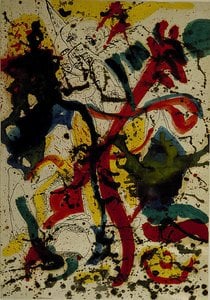
Jackson Pollock, 1912 – 1956

Jackson Pollock: The 100 Most Famous Paintings

Jesenski ritam. Broj 30, 1950 is the most famous painting by Jackson Pollock. Broj 1, 1949 (1950) and Sukršćanje are the next two works the world knows best. From the 186 works of Jackson Pollock in our catalogue, here are the 100 that collectors and museum visitors look at most, with the year, the museum and the story of each.

Rangirano prema našoj ocjeni popularnosti, koja objedinjuje broj pretraživanja, posjeta i narudžbi za svako djelo. Ažurirano Listopad 2026. Every masterpiece on this page can be ordered as a museum-quality, hand-painted oil reproduction or a fine art print, at the size you choose.

Portret Jackson Pollock
Jackson Pollock · 1912 – 1956
Rođen · umro
1912 – 1956, Cody
Pokret
Abstract expressionism
Djela u našem katalogu
186
Najpoznatije
Jesenski ritam. Broj 30, 1950
Najviše djela u
MoMA - Museum of Modern Art

Top 10: Jackson Pollock's best-known paintings

Jesenski ritam. Broj 30, 1950 od Jackson Pollock
1

Jesenski ritam. Broj 30, 1950

Ulje na platnu

Jesenja Ritam. Broj 30, 1950: Monumentalni Izraz Apstraktne Emocije Jackson Pollockova "Jesenja Ritam. Broj 30, 1950" nije samo slika; to je iskustvo uranjanja u energiju i gestu, vizualni zapis duboke osobne povezanosti umjetnika s kreativnim procesom. Nastala tijekom njegove najpoznatije "drip periode" (1947-1950), ova monumentalna kompozicija predstavlja vrhunac Pollockove revolucionarne tehnike. Napustivši tradicionalno oslikavanje na postolju, Pollock je razložio platno izravno na pod i koristio štapiće, otvrdnute kistove, pa čak…

Broj 1, 1949 (1950) od Jackson Pollock
2

Broj 1, 1949

1950 · Ulje na platnu · Privatna kolekcija, New York City

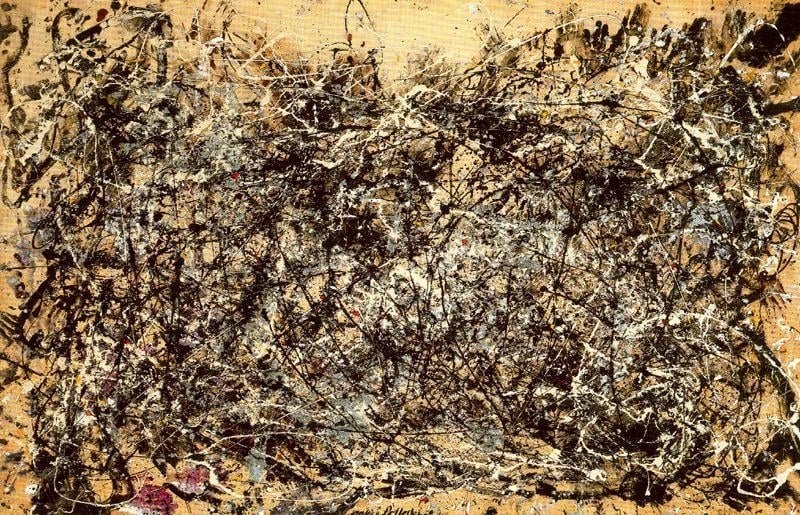
Broj 1, 1949: Monumentalni Izraz Apstraktne Emocije U svijetu umjetnosti, rijetko se nalaze djela koja izazivaju takav snažan osjećaj kao "Broj 1, 1949" Paula Jacksona Pollocka. Stvoren 1950., ovo impozantno platno dimenzija 240 x 120 cm nije samo vizualni prizor, već i duboki uranak emocija i fizičkog gesta, vrhunsko ostvarenje pokreta Apstraktnog ekspresionizma. Pollock je revolucionarno odbacio tradicionalnu tehniku slikanja na stalku, postavljajući platno direktno na pod, čime je omogućio…

Sukršćanje od Jackson Pollock
3

Sukršćanje

Ulje na platnu

Pollockova Konvergencija nije tek slika; to je visceralno iskustvo—monumentalno svjedočanstvo moći apstraktnog ekspresionizma i ključno djelo posleratne američke umjetnosti. Stvoreno u presudnom trenutku umjetničke povijesti, ovo djelo utjelovljuje inovaciju, izazivajući tradicionalne pojmove predstavljanja i pozivajući gledatelje u dinamičan svijet boja i energije.

Broj 1A od Jackson Pollock
4

Broj 1A

Ulje na platnu

Bit će apstraktnog ekspresionizma Jackson Pollockovo djelo "Number 1A" istinski je primjer apstraktnog ekspresionizma, pokreta koji je sredinom 20. stoljeća redefinirao američku umjetnost. Ovo očaravajuće remek-djelo utjelovljuje sirovu energiju i spontanost po kojima je Pollock postao poznat, čineći ga nezaobilaznim za svaku suvremenu umjetničku kolekciju ili moderan interijer. Ples kaosa i kontrole Umjetničko djelo predstavlja apstraktnu kompoziciju koju karakteriziraju kaotični, energični potezi četkicom te gusta akumulacija linija i tekstura. Pollockova…

Bijeli Svjetlo (1954) od Jackson Pollock
5

Bijeli Svjetlo

1954 · Ulje na platnu · MoMA - Museum of Modern Art, New York City

‘White Light’, kreirana 1954. godine od strane Paul Jackson Poloka, nije samo slika; to je izvanredni primjer akcionog slikarstva i ključni trenutak u povijesti američkog modernizma. U srži ovog djela leži želja umjetnika da se oslobodi tradicionalnih konvencija i da izrazi duboke, često neuhvatljive emocije direktno kroz proces samog stvaranja. Poloka je bio pionir, koji je s drvenim štapovima, palicama i drugim alatkama, bacao i kapanjem guste uljne boje na…

One. Number 31, 1950 od Jackson Pollock
6

One. Number 31, 1950

Painting

In the pantheon of modern art, few works command the room with such raw, unbridled intensity as Paul Jackson Pollock’s “One: Number 31, 1950.” To stand before this canvas is to witness a moment of pure, unfiltered creation captured in time. As a cornerstone of the Abstract Expressionist movement, this painting transcends the boundaries of traditional composition, offering instead a dense, rhythmic web of energy that seems to pulse with…

Number 5 (1948) od Jackson Pollock
7

Number 5

1948 · Oil On Canvas

A Universe Unfurled: Decoding Jackson Pollock’s No. 5, 1948 Jackson Pollock’s *No. 5, 1948* isn't simply a painting; it is an event frozen in time – a visual record of energy, gesture, and the very act of creation. This monumental work stands as perhaps the most iconic example of Abstract Expressionism, captivating viewers for decades with its complex layering and seemingly chaotic beauty. It’s a piece that demands attention, sparking…

Mural (1943) od Jackson Pollock
8

Mural

1943 · Acrylic On Canvas

Jackson Pollock's "Mural," completed in 1943, isn't merely a painting; it’s an immersive experience, a visceral embodiment of the burgeoning abstract expressionist movement. Commissioned by Peggy Guggenheim as a centerpiece for her Manhattan townhouse, this monumental work – measuring a commanding 247 x 605 cm – immediately announces Pollock’s arrival as a revolutionary force in the art world. The sheer scale invites contemplation, drawing the viewer into a swirling vortex…

Number 5 (1948) od Jackson Pollock
9

Number 5

1948 · Oil On Canvas

Jackson Pollock’s *No. 5*, created in 1948, stands as an emblem of Abstract Expressionism—a movement that irrevocably altered the landscape of modern art. More than just a painting; it's a visceral embodiment of emotion, intellect, and revolutionary technique, captivating viewers with its mesmerizing complexity and enduring legacy. This monumental canvas, measuring eight by four feet on fiberboard, transcends mere visual representation, inviting contemplation about the very nature of artistic expression…

Alchemy (1947) od Jackson Pollock
10

Alchemy

1947 · Acrylic On Canvas

A Dance of Chaos and Transformation: Exploring Jackson Pollock’s Alchemy The Genesis of Spontaneity Decoding the Drip Technique Historical Resonance and Symbolic Weight A Legacy of Innovation Jackson Pollock’s *Alchemy*, a monumental work from 1947, isn't merely a painting; it’s an immersive experience, a visceral embodiment of the burgeoning Abstract Expressionist movement. Created during a pivotal moment in American art history, this piece captures the raw energy and revolutionary spirit…

The rest of the Jackson Pollock ranking, 11 to 100

Number 6 (1949) od Jackson Pollock
#12

Number 6

1949

Number 6 stands as a pivotal work within Jackson Pollock's oeuvre and the broader movement of Abstract Expressionism. Emerging in post-World War II America, this style rejected traditional…

Commission a hand-painted copy →
Number 23, 1951 od Jackson Pollock
#13

Number 23, 1951

Chrysler Museum of Art

Paul Jackson Pollock's "Number 23, 1951" isn’t merely a painting; it’s an immersion. Created during a pivotal period of his artistic evolution – the “black pourings” – this…

Bring it home →
Number 1 (1948) od Jackson Pollock
#14

Number 1

1948 · MoMA - Museum of Modern Art

Jackson Pollock's "Number 1, 1948," housed within the hallowed halls of the Museum of Modern Art in New York, isn’t merely a painting; it’s an immersion. It’s a…

Bring it home →
There Were Seven in Eight (1945) od Jackson Pollock
#15

There Were Seven in Eight

1945 · MoMA - Museum of Modern Art

A Descent Into Chaotic Beauty The canvas of Jackson Pollock’s 1945 masterpiece, "There Were Seven in Eight," serves as a visceral gateway into the turbulent heart of Abstract…

Bring it home →
Saint od Jackson Pollock
#16

Saint

Jackson Pollock is widely regarded as one of the most influential artists of the 20th century, and his painting Saint is a quintessential example of his unique style.…

Order a reproduction →
The She Wolf (1943) od Jackson Pollock
#17

The She Wolf

1943

Jackson Pollock's “The She Wolf,” completed in 1943, is more than just an abstract canvas; it’s a visceral plunge into the heart of early Abstract Expressionism and a…

Bring it home →
Composition with Pouring II (1943) od Jackson Pollock
#18

Composition with Pouring II

1943

Created in 1943, "Composition with Pouring II" stands as a pivotal work in Jackson Pollock's career and the broader development of Abstract Expressionism. While often considered an early…

Bring it home →
Blue poles (Number 11) (1952) od Jackson Pollock
#19

Blue poles (Number 11)

1952

Jackson Pollock’s “Blue Poles (Number 11),” completed in 1952, isn’t merely a painting; it’s an explosion of controlled chaos, a visceral embodiment of the abstract expressionist movement. Measuring…

Commission a hand-painted copy →
Yellow Islands od Jackson Pollock
#21

Yellow Islands

A Symphony of Chaos: Exploring Jackson Pollock’s ‘Yellow Islands’ Jackson Pollock's ‘Yellow Islands’, painted in 1952, stands as a pivotal work within the Abstract Expressionist movement – a…

Bring it home →
The Flame (1938) od Jackson Pollock
#23

The Flame

1938

The painting The Flame consists of oil on fiberboard, measuring 51 x 76 cm. The surface features a central motif of an incandescent blaze that moves through an…

Commission a hand-painted copy →
Portrait and a Dream od Jackson Pollock
#24

Portrait and a Dream

Jackson Pollock’s Portrait and a Dream (1953) isn’t merely a painting; it’s an immersion into the very heart of Abstract Expressionism, a visceral embodiment of the artist’s process…

Order a reproduction →
Number 3 (1948) od Jackson Pollock
#25

Number 3

1948

Jackson Pollock: A Revolutionary in Abstract Expressionism Jackson Pollock (1912-1956) stands as a monumental figure within the abstract expressionist movement, forever altering the trajectory of modern art. His…

Commission a hand-painted copy →
Ocean Greyness od Jackson Pollock
#26

Ocean Greyness

Ocean Greyness is an oil painting created by Jackson Pollock in 1953. This work measures 229 x 146.7 cm and is currently held in the Solomon R. Guggenheim…

Bring it home →
Lucifer (1947) od Jackson Pollock
#28

Lucifer

1947

Jackson Pollock’s “Lucifer,” painted in 1947, isn’t merely a painting; it’s an immersion. Measuring a substantial 268 x 104 cm, this work embodies the raw energy and profound…

Commission a hand-painted copy →
Woman od Jackson Pollock
#29

Woman

Jackson Pollock's “Woman,” completed in 1945 and currently residing within the hallowed halls of the Museum of Modern Art in New York City, isn’t merely a painting; it’s…

Commission a hand-painted copy →
Untitled (Naked Man) od Jackson Pollock
#30

Untitled (Naked Man)

A Figure Forged in Turmoil: Exploring Pollock’s ‘Untitled (Naked Man)’ This powerful painting by Jackson Pollock plunges the viewer into a vortex of emotion and raw energy. Depicting…

Order a reproduction →
Lavender Mist_Number 1 od Jackson Pollock
#31

Lavender Mist_Number 1

Jackson Pollock’s “Lavender Mist_Number 1” isn't merely a painting; it’s an immersion, a visceral experience captured on canvas. This seminal work from the late 1940s embodies the revolutionary…

Order a reproduction →
Birth od Jackson Pollock
#32

Birth

A Tempestuous Birth: Decoding Pollock’s Abstract Vision Jackson Pollock's *Birth* (1948-51) is a pivotal work within his mature “drip” period and a cornerstone of Abstract Expressionism. More than…

Bring it home →
Blue (Moby Dick) od Jackson Pollock
#33

Blue (Moby Dick)

Jackson Pollock's “Blue (Moby Dick),” painted in 1943, isn’t merely a canvas splashed with color; it’s an immersive experience, a visual embodiment of the anxieties and primal forces…

Bring it home →
The key (1946) od Jackson Pollock
#34

The key

1946 · Art Institute of Chicago

A Dance Across Canvas: Exploring Jackson Pollock’s ‘The Key’ Subject Matter & Composition The artwork depicts a group of individuals engaged in various postures—seated on chairs, standing upright,…

Commission a hand-painted copy →
Untitled II od Jackson Pollock
#35

Untitled II

To stand before an Untitled II by Paul Jackson Pollock is not merely to observe paint on canvas; it is to witness an event. It is a raw,…

Order a reproduction →
Cathedral od Jackson Pollock
#36

Cathedral

Introduction to Jackson Pollock and Abstract Expressionism Paul Jackson Pollock, known professionally as Jackson Pollock, was an American painter and a major figure in the abstract expressionist movement.…

Bring it home →
Number 27, 1950 od Jackson Pollock
#38

Number 27, 1950

Jackson Pollock’s ‘Number 27, 1950’: A Symphony of Controlled Chaos Number 27, 1950 is a landmark achievement in the history of Abstract Expressionism, embodying the movement's radical departure…

Commission a hand-painted copy →
Circumcision January (1946) od Jackson Pollock
#40

Circumcision January

1946

Jackson Pollock, a titan of 20th-century art, remains synonymous with abstract expressionism. His painting, Circumcision January, exemplifies his groundbreaking approach and continues to captivate viewers with its dynamic…

Bring it home →
Sheet of Studies (1941) od Jackson Pollock
#41

Sheet of Studies

1941

A Window into Pollock’s Subconscious: “Sheet of Studies” (1941) This intensely energetic work on paper, created in 1941, offers a fascinating glimpse into the formative period of Jackson…

Bring it home →
Number 12, 1949 od Jackson Pollock
#42

Number 12, 1949

A Universe Within: Decoding Jackson Pollock’s “Number 12, 1949” Jackson Pollock's "Number 12, 1949" isn't simply a painting; it’s an event frozen in time – a visual record…

Order a reproduction →
War od Jackson Pollock
#43

War

War: A Descent into Chaos – Jackson Pollock’s Post-Traumatic Masterpiece Jackson Pollock's *War*, painted in 1947, isn’t merely a canvas splashed with color; it’s a visceral embodiment of…

Bring it home →
Marrón y plata od Jackson Pollock
#44

Marrón y plata

A Symphony of Shadow and Silver: Exploring Jackson Pollock’s “Marrón y plata” Jackson Pollock's "Marrón y plata" ("Brown and Silver") stands as a pivotal work within his celebrated…

Bring it home →
Number 10 (1949) od Jackson Pollock
#46

Number 10

1949

A Tempestuous Vision: Exploring Jackson Pollock’s ‘Number 10’ Number 10, created in 1949, stands as a monumental example of Jackson Pollock's revolutionary drip painting technique and the apex…

Commission a hand-painted copy →
Untitled 28 od Jackson Pollock
#47

Untitled 28

A Visceral Encounter: Decoding Jackson Pollock’s “Untitled 28” This intensely compelling work by Jackson Pollock, known simply as “Untitled 28,” offers a raw and unsettling glimpse into the…

Order a reproduction →
Number 25 (1950) od Jackson Pollock
#48

Number 25

1950

To stand before Number 25 is to confront pure, unmediated action. This canvas does not merely depict an image; it records an event—a moment of intense physical and…

Untitled (1939) od Jackson Pollock
#49

Untitled

1939 · Art Institute of Chicago

The canvas known as Untitled emerges from 1939, a moment when Jackson Pollock begins to navigate the turbulent currents of his own creative impulses. This abstract expressionist work…

Commission a hand-painted copy →
Untitled 6 od Jackson Pollock
#50

Untitled 6

A Tempest of Emotion: Exploring Jackson Pollock’s Untitled 6 This captivating work by Jackson Pollock plunges viewers into a dynamic world of abstract expressionism. *Untitled 6* is not…

Order a reproduction →
Full Fathom Five od Jackson Pollock
#51

Full Fathom Five

In the annals of American art history, few works capture the raw, unbridled energy of a movement quite like Paul Jackson Pollock’s Full Fathom Five. Painted in 1947,…

Bring it home →
Figures in a Landscape (1937) od Jackson Pollock
#52

Figures in a Landscape

1937

To encounter Jackson Pollock’s "Figures in a Landscape" is to step into a realm where the boundaries between reality and the subconscious begin to dissolve. Created in 1937,…

Bring it home →
Cut out od Jackson Pollock
#54

Cut out

Jackson Pollock, born on January 28, 1912, was an American painter who played a significant role in the abstract expressionist movement. He is renowned for his unique style…

Commission a hand-painted copy →
Masked Image od Jackson Pollock
#55

Masked Image

The canvas breathes with a restless energy, presenting a singular, stylized visage that seems to emerge from a thicket of overlapping shapes. This is not a portrait in…

Order a reproduction →
Untitled od Jackson Pollock
#56

Untitled

A Glimpse into Pollock’s Preparatory Process: An Early Study in Motion This captivating work on paper offers a rare look into Jackson Pollock's artistic development *before* his iconic…

Order a reproduction →
Portrait of H.M od Jackson Pollock
#57

Portrait of H.M

Paul Jackson Pollock's “Portrait of H.M.”, a work shrouded in mystery and brimming with raw energy, isn’t merely a painting; it’s an immersive experience. Created during a turbulent…

Commission a hand-painted copy →
Summertime: Number 9A (1948) od Jackson Pollock
#58

Summertime: Number 9A

1948 · Tate Modern

Jackson Pollock’s “Summertime: Number 9A,” painted in 1948, isn't merely a canvas splashed with color; it’s an immersive experience, a visceral representation of the artist’s state of mind…

Order a reproduction →
Untitled (1941) od Jackson Pollock
#59

Untitled

1941

A Moment Suspended: Exploring Jackson Pollock’s 1941 Untitled Work This striking work by Jackson Pollock, created in 1941, offers a fascinating glimpse into the artist's formative years –…

Order a reproduction →
Untitled (Silkscreen I) od Jackson Pollock
#60

Untitled (Silkscreen I)

In the realm of Abstract Expressionism, few works capture the raw, unbridled tension of human struggle as poignantly as Paul Jackson Pollock’s “Untitled (Silkscreen I).” This striking black…

Bring it home →
Grayed Rainbow od Jackson Pollock
#61

Grayed Rainbow

Art Institute of Chicago

Jackson Pollock was a revolutionary figure in the abstract expressionist movement, reshaping artistic perception and challenging conventional notions of painting. His groundbreaking drip technique—characterized by pouring and splattering…

Commission a hand-painted copy →
The Water Bull (1946) od Jackson Pollock
#62

The Water Bull

1946 · Stedelijk Museum

Subject and Composition This captivating abstract masterpiece immerses viewers in a whirlwind of vibrant colors and dynamic forms. While its subject remains open to interpretation, the energetic interplay…

Bring it home →
Totem Lesson 2 (1945) od Jackson Pollock
#63

Totem Lesson 2

1945

Totem Lesson 2: An Exploration of Abstract Expressionism’s Chaotic Harmony Paul Jackson Pollock's "Totem Lesson 2," painted in 1945, stands as a cornerstone of Abstract Expressionism—a movement that…

Bring it home →
Figure od Jackson Pollock
#64

Figure

Jackson Pollock, a name synonymous with Abstract Expressionism and the revolutionary ‘drip’ technique, also harbored a period of intensely focused figuration that often goes unacknowledged. The work simply…

Bring it home →
Untitled 9 od Jackson Pollock
#65

Untitled 9

A Tempest of Emotion: Decoding Jackson Pollock’s “Untitled 9” This intensely evocative work by Jackson Pollock, designated “Untitled 9,” plunges the viewer into a swirling vortex of color…

Commission a hand-painted copy →
Stenographic Figure (1942) od Jackson Pollock
#66

Stenographic Figure

1942

Jackson Pollock's 'Stenographic Figure,' painted in 1942, isn’t merely a depiction of a horse and rider; it’s a visceral embodiment of the anxieties and burgeoning freedom defining Abstract…

Order a reproduction →
Number 3 (1949) od Jackson Pollock
#67

Number 3

1949

A Revolution in Paint: Exploring Jackson Pollock’s ‘Number 3’ Jackson Pollock's 'Number 3', created in 1949, stands as a monumental achievement within the Abstract Expressionist movement. Measuring 157…

Bring it home →
Untitled 8 od Jackson Pollock
#68

Untitled 8

The air feels heavy with the restless energy of Jackson Pollock as he confronts the vastness of "Untitled 8." This monumental painting emerges from a period of profound…

Order a reproduction →
Number 8 od Jackson Pollock
#69

Number 8

Jackson Pollock's "Number 8," created in 1949, stands as a pivotal work within the Abstract Expressionist movement. This piece exemplifies Pollock’s revolutionary “drip technique,” where paint was poured…

Bring it home →
Head od Jackson Pollock
#70

Head

A Visceral Exploration of the Human Condition Jackson Pollock’s *Head*, a work shrouded in some mystery due to its lack of definitive dating and detailed documentation, presents a…

Commission a hand-painted copy →
Circle (1941) od Jackson Pollock
#72

Circle

1941

Jackson Pollock’s Circle: A Dance of Color and Chaos Jackson Pollock's “Circle,” painted in 1941, isn’t merely a depiction of a circle; it’s an embodiment of the burgeoning…

Order a reproduction →
Untitled 23 od Jackson Pollock
#73

Untitled 23

A Chaotic Symphony in Black and White: Deconstructing Pollock’s “Untitled 23” Jackson Pollock's "Untitled 23" isn’t merely an ink drawing; it’s a visceral exploration of energy, anxiety, and…

Commission a hand-painted copy →
Easter and the Totem (1953) od Jackson Pollock
#74

Easter and the Totem

1953

Unveiling Jackson Pollock’s “Easter and the Totem” A Masterpiece of Abstract Expressionism: Jackson Pollock's 1953 painting, Easter and the Totem, stands as a pivotal work within the Abstract…

Bring it home →
Untitled (Composition with Pouring I) od Jackson Pollock
#75

Untitled (Composition with Pouring I)

A Revolution in Paint: Exploring Jackson Pollock’s “Untitled (Composition with Pouring I)” This captivating work embodies the raw energy and groundbreaking innovation that defined Jackson Pollock's contribution to…

Bring it home →
Untitled 13 od Jackson Pollock
#76

Untitled 13

In the pantheon of twentieth-century art, few names command as much visceral respect and intrigue as Jackson Pollock. His work Untitled 13 serves as a profound testament to…

Order a reproduction →
Male and Female (1942) od Jackson Pollock
#78

Male and Female

1942

Jackson Pollock: A Pioneer of Abstract Expressionism Jackson Pollock (1912–1956) stands as one of the most transformative figures in 20th-century art, irrevocably altering perceptions of painting and establishing…

Commission a hand-painted copy →
Miners od Jackson Pollock
#79

Miners

Paul Jackson Pollock: A Pioneer of Abstract Expressionism Paul Jackson Pollock (1912-1956) stands as one of the most influential figures in 20th-century art, irrevocably shaping the trajectory of…

Bring it home →
GREETINGS od Jackson Pollock
#80

GREETINGS

Paul Jackson Pollock's “Greetings” stands as a testament to the radical spirit of Abstract Expressionism, encapsulating the movement’s core tenets within a deceptively simple composition. This artwork, created…

Bring it home →
Troubled Queen od Jackson Pollock
#81

Troubled Queen

A Realm of Inner Turmoil: Exploring Jackson Pollock’s Abstract Vision This captivating work by Jackson Pollock invites viewers into a dynamic world of color and form, embodying the…

Commission a hand-painted copy →
Number 23 (1948) od Jackson Pollock
#82

Number 23

1948

Jackson Pollock’s “Number 23,” completed in 1948, stands as an undeniable cornerstone of Abstract Expressionism—a movement that fundamentally challenged artistic conventions and prioritized emotional expression over representational accuracy.…

Bring it home →
Untitled (Silkcreen no. VI) od Jackson Pollock
#83

Untitled (Silkcreen no. VI)

A Dance of Chaos and Connection: Exploring Jackson Pollock’s “Untitled (Silkcreen no. VI)” Paul Jackson Pollock's "Untitled (Silkcreen no. VI)" stands as an emblem of Abstract Expressionism, a…

Order a reproduction →
Untitled 27 od Jackson Pollock
#84

Untitled 27

Jackson Pollock's “Untitled 27,” a monumental drip painting from 1950, stands as an emblem of Abstract Expressionism—a movement that irrevocably altered the course of twentieth-century art. More than…

Order a reproduction →
Silver and Black I od Jackson Pollock
#85

Silver and Black I

A Symphony of Chaos: Exploring Jackson Pollock’s “Silver and Black I” “Silver and Black I” is a powerful example of Jackson Pollock's revolutionary contribution to Abstract Expressionism, created…

Commission a hand-painted copy →
Untitled 4 od Jackson Pollock
#86

Untitled 4

In the realm of Abstract Expressionism, few works capture the raw, unbridled energy of the human psyche quite like Paul Jackson Pollock’s Untitled 4. This mesmerizing monochrome composition…

Bring it home →
Shimmering Substance (1946) od Jackson Pollock
#87

Shimmering Substance

1946

Shimmering Substance: A Dance of Chaos and Control Jackson Pollock’s “Shimmering Substance,” completed in 1946, stands as a cornerstone of Abstract Expressionism—a movement that irrevocably altered the landscape…

Order a reproduction →
Composition od Jackson Pollock
#88

Composition

Jackson Pollock executed the painting titled Composition in 1949. This work emerged during a period when the artist was developing a specific approach to the canvas, moving away…

Order a reproduction →
Gothic od Jackson Pollock
#89

Gothic

The canvas known as Gothic emerges from the creative mind of Paul Jackson Pollock. Created in 1944, this work exists within the permanent collection of The Museum of…

Order a reproduction →
Untitled (Cut-out) od Jackson Pollock
#91

Untitled (Cut-out)

In the pantheon of Abstract Expressionism, few works capture the raw, visceral energy of the mid-century avant-garde quite like Paul Jackson Pollock’s "Untitled (Cut-out)." Created in 1954, a…

Bring it home →
Going West (1935) od Jackson Pollock
#92

Going West

1935

Jackson Pollock's "Going West," painted in 1935, isn’t merely a depiction of a winter landscape; it’s a deeply personal narrative woven into the fabric of American pioneering spirit.…

Order a reproduction →
Number 2 (1951) od Jackson Pollock
#93

Number 2

1951

A Symphony of Chaos and Color: Decoding Jackson Pollock’s “Number 2” Jackson Pollock's "Number 2," completed in 1951, stands as a cornerstone of Abstract Expressionism—a movement that irrevocably…

Commission a hand-painted copy →
Number 3, 1950 od Jackson Pollock
#94

Number 3, 1950

A Universe of Color: Exploring Jackson Pollock’s Number 3, 1950 Jackson Pollock's *Number 3, 1950* is arguably one of the most iconic and significant works of Abstract Expressionism.…

Bring it home →
Untitled 1 od Jackson Pollock
#95

Untitled 1

Paul Jackson Pollock (1912-1956), a titan of Abstract Expressionism, remains one of the most enigmatic figures in twentieth-century art. His monumental canvases—like “Untitled 1”—are not merely splashes of…

Commission a hand-painted copy →
Echo od Jackson Pollock
#96

Echo

Jackson Pollock’s “Echo,” Number 25, 1951, stands as a testament to the fervor of Abstract Expressionism—a movement that sought to liberate art from representational constraints and delve into…

Order a reproduction →
Composition with Woman od Jackson Pollock
#97

Composition with Woman

A Vortex of Emotion: Decoding Jackson Pollock’s Abstract Expressionism This captivating painting embodies the raw energy and emotional intensity that define Jackson Pollock's revolutionary contribution to 20th-century art.…

Commission a hand-painted copy →
Untitled (1941) od Jackson Pollock
#98

Untitled

1941

Jackson Pollock's "Untitled," painted in 1941, stands as a cornerstone of Abstract Expressionism—a movement that fundamentally challenged artistic conventions and prioritized spontaneous gesture over meticulous representation. This monumental…

Order a reproduction →
Orange Head od Jackson Pollock
#99

Orange Head

Introduction to Abstract Expressionism Abstract Expressionism is a genre of art that emerged in the mid-20th century, characterized by intense subjectivity and rough handling of materials. This movement…

Bring it home →
Untitled (13) (1943) od Jackson Pollock
#100

Untitled (13)

1943

Jackson Pollock: A Pioneer of Abstract Expressionism Jackson Pollock (1912-1956) stands as one of the most influential figures in 20th-century art, irrevocably altering the landscape of painting and…

Bring it home →

Jackson Pollock's paintings by period

The subjects Jackson Pollock painted most

The four subjects that return most often among these masterpieces, with the finest example of each.

Where to see Jackson Pollock's paintings

6 muzeja u kojima se nalazi najviše djela s ove stranice.

Muzej Grad Djela autora Jackson Pollock Slike iz ovog popisa
MoMA - Museum of Modern Art, New York CityMoMA - Museum of Modern Art New York City 4 Bijeli Svjetlo, Number 1, There Were Seven in Eight
Art Institute of Chicago, ChicagoArt Institute of Chicago Chicago 3 The key, Untitled, Grayed Rainbow
Privatna kolekcija, New York CityPrivatna kolekcija New York City 1 Broj 1, 1949
Chrysler Museum of Art, NorfolkChrysler Museum of Art Norfolk 1 Number 23, 1951
Tate Modern, LondonTate Modern London 1 Summertime: Number 9A
Stedelijk Museum, AmsterdamStedelijk Museum Amsterdam 1 The Water Bull

Jackson Pollock through the decades: one masterpiece for each

  1. 1930s
    The Flame (1938) od Jackson Pollock
    No. 23 of 100

    The Flame

    Godine 18 – 27

    The painting The Flame consists of oil on fiberboard, measuring 51 x 76 cm. The surface features a central motif of an incandescent blaze that moves through an…

  2. 1940s
    Number 5 (1948) od Jackson Pollock
    No. 7 of 100

    Number 5

    Godine 28 – 37

    A Universe Unfurled: Decoding Jackson Pollock’s No. 5, 1948 Jackson Pollock’s *No. 5, 1948* isn't simply a painting; it is an event frozen in time – a visual…

  3. 1950s
    Broj 1, 1949 (1950) od Jackson Pollock
    No. 2 of 100

    Broj 1, 1949

    Godine 38 – 44 · Privatna kolekcija

    Broj 1, 1949: Monumentalni Izraz Apstraktne Emocije U svijetu umjetnosti, rijetko se nalaze djela koja izazivaju takav snažan osjećaj kao "Broj 1, 1949" Paula Jacksona Pollocka. Stvoren 1950.,…

Jackson Pollock's paintings: frequently asked questions

What is the most famous Jackson Pollock painting?Show the answer

Jesenski ritam. Broj 30, 1950. Next come Broj 1, 1949 (1950) and Sukršćanje.

Which are the 10 most famous Jackson Pollock paintings?Show the answer

Jesenski ritam. Broj 30, 1950, Broj 1, 1949, Sukršćanje, Broj 1A, Bijeli Svjetlo, One. Number 31, 1950, Number 5, Mural, Number 5 i Alchemy. The ranking above gives the year and the museum of each.

How many paintings by Jackson Pollock are there?Show the answer

Our catalogue lists 186 works by Jackson Pollock, dated from 1935 to 1954.

Where can I see the most famous Jackson Pollock paintings?Show the answer

Most of them are in MoMA - Museum of Modern Art (New York City), Art Institute of Chicago (Chicago) i Privatna kolekcija (New York City). The table above lists the museums one by one.

In which period did Jackson Pollock paint the best-known works?Show the answer

In 1940s: 29 of the 100 works on this page date from then, among them Number 5.

What is the earliest famous Jackson Pollock painting, and the latest?Show the answer

The earliest on this page is Going West (1935), the latest Bijeli Svjetlo (1954).

What subjects did Jackson Pollock paint?Show the answer

Drip painting (40), Color field (33) i Chaos (26), among the 100 works on this page.

What did Jackson Pollock paint on, and with what?Show the answer

Acrylic On Canvas: 39 of the 100 works on this page.

Which movement does Jackson Pollock's art belong to?Show the answer

Abstract expressionism, as the paintings on this page show.

What Jackson Pollock paintings does the MoMA - Museum of Modern Art hold?Show the answer

Bijeli Svjetlo, Number 1 i There Were Seven in Eight are among the 3 works on this page held by the MoMA - Museum of Modern Art, New York City.

Where can I buy a Jackson Pollock reproduction?Show the answer

Yes. Every painting on this page can be ordered as a museum-quality, hand-painted oil reproduction or a fine art print, in the size you choose, from the painting's own page.

Jackson Pollock: biography

Rano djetstvo, obitelj i obuka

Priča o Paulu Jacksonu Pollocku započinje u nepristupačnim predjelima Codyja u Wyomingu, gdje je rođen 28. siječnja 1912. godine. Bio je najmlađi od petorice braće, rođen u obitelji Stelle May McClure i LeRoya Pollocka. Njegov otac radio je kao geodetski stručnjak, zanimanje koje je zahtijevalo neprestano kretanje kroz prostranstva američkog Zapada. To nomadsko postojanje značilo je da su rane godine mladog dječaka obilježene čestim selidbama, nemirom koji je kao da je odražavao promjenjive horizonte njegovog oca. Ta rana putovanja kroz Divlji zapad pružila su mu izravan, neposredan susret s prirodom i spiritualnu rezonancu umjetnosti američkih domorodaca – dojmove koji će se tiho utopiti u njegovo podsvjesno dugo prije nego što je ikada prvi put uzeo kist u ruke.

Kako je odrastao, potraga za osjećajem pripadnosti vodila ga je prema urbanom ritmu obale. Upisao je srednju školu Manual Arts u Los Angelesu, tražeći formalnu strukturu za svoje bujne impulse. Međutim, pravo oblikovanje njegove umjetničke ruke dogodilo se mnogo kasnije, kada se preselio u New York. Upravo je tamo, u Art Students League, započeo dugo i transformativno razdoblje studija. Od 1929. do 1942. godine, radio je pod vodstvom Thomasa Harta Bentona. Dok je Benton naglašavao ritmičke kompozicije i narativnu težinu američkog života, mladi student je već počeo skretati prema vlastitim, apstraktnijim, unutarnjim istinama.

Razvoj jedinstvene tehnike

Do 1947. godine došlo je do duboke transformacije u načinu na koji je pristupao platnu. Odmaknuo se od tradicionalnog štalauda, odlučivši umjesto toga položiti platna izravno na pod. Ta je promjena omogućila da stoji nad svojim djelom, postajući sastavni dio samog čina stvaranja. On nije samo nanosio boju; on je kapao, prskao i bacao je odozgo, dopuštajući tekućini da pada u nepredvidivim uzorcima. Ova metoda pretvorila je čin slikanja u fizički performans, u kojem su gravitacija i gesta diktirale konačni oblik.

Njegovi su alati bili nekonvencionalni baš kao i njegove metode. Posezao je za štapovima, noževima, pa čak i špricevima kako bi manipulirao fluidnim medijem. Ponekad je koristio gletrice ili tekuću boju za kapanje kako bi postigao specifične teksture. Često bi grebao po površini ili koristio neobične predmete kako bi stvorio gusti sloj boje, dodajući radu taktilnu, skulpturalnu kvalitetu. Taj proces nije se primarno odnosio na kontrolirano rad s četkicom, već na ritmično, gotovo iskonsko oslobađanje energije na površinu.

Ključna djela i umjetničko izražavanje

Kako se udaljavao od ograničenja klasičnog štala, njegova platna počela su odražavati dublju, gotovo visceralnu povezanost s medijem. Godine 1943. stvorio je Mural, monumentalno djelo dimenzija 2,4 x 6,1 m, koje je demonstriralo njegovu sposobnost vladanja golemom površinom. Tijekom tog razdoblja, njegova istraživanja podsvijesti i samog čina slikanja dovela su do djela kao što je Eyes in the Heat, nastalog oko 1946. godine. Ta djela nisu bila puke slike, već zapisi fizičkog prisustva, u kojima je pokret cijelog njegovog tijela diktirao položaj svake mrlje i lokusa boje.

Godine koje su slijedile donijele su usavršavanje ritmičkih, "all-over" kompozicija koje će definirati njegovu reputaciju. Težio je stvaranju osjećaja beskrajnog prostora, u kojem nijedna pojedinačna točka nema dominaciju nad ostalima. Taj pristup jasno se vidi u Number 1, 1949, djelu koje bilježi sirovi izliv energije, te u Lavender Mist, Number 1, 1950, koje ostaje jedno od najznačajnijih njegovih ostvarenja. U tim radovima, interakcija između kontrole i slučaja stvara delikatnu ravnotežu, kao da je boja puštena u slobodu, a ne nanesena četkicom.

Njegova kasnija eksperimentiranja nastavila su pomicati granice načina na koji se boja može manipulirati na horizontalnoj površini. Često je koristio štapove, noževe, pa čak i samu ambalažu s bojom kako bi razbacio pigment, što je rezultiralo složenim mrežama linija. Taj se metod vidljivo ocrtava u Blue Poles, Number 11, 1952 i u energičnom djelu Convergence. Kroz ta djela, Jackson Pollock je postigao stanje u kojem se činilo da slika posjeduje vlastiti život, izranjajući iz duboke uranjanja u vlastitu maštu.

Pokrovitelji, radni prostor i narudžbe

Put njegove karijere oblikirala je kako javna potreba, tako i velikodušnost nekoliko ključnih pokrovitelja. Između 1938. i 1942. godine, Jackson Pollock pronašao je stabilan posao kao umjetnik u okviru WPA Federal Art Projecta, što je bilo razdoblje koje je pružilo neophodan ritam njegovom razvojnom radu. Ta stabilnost ustupila je mjesto dubljem, transformativnom savezništvu kada mu je Peggy Guggenheim u srpnju 1943. godine ponudila ugovor za izlaganje u galeriji. Njezina podrška bila je mnogo više od profesionalne; 1945. godine pružila mu je iznos od 2.000 dolara kao ulogu za kupnju kuće, što je bio gesta koja je duboko prožela njegov privatni život s njegovim umjetničkim opstankom.

Njegov kreativni život na kraju je pronašao svoje središte u East Hamptonu, New York. Tamo, u Kući i studiju Pollock-Krasner, živio je i stvarao uz svoju suprugu, Lee Krasner. Studio je bio mjesto intenzivnog fizičkog kretanja, gdje su se granice između umjetnika i platna polako topile. Često je odbijao tradicionalni stalak, radije položivši platna izravno na pod kako bi se suočio s bojom iz svih smjerova. Taj radni prostor nije bio samo prostorija za produkciju, već mjesto duboke, nemirne energije u kojem su se odvijali njegovi najradikalniji eksperimenti.

Kasne godine i smrt

Privatni život umjetnika bio je duboko isprepleten s njegovim kreativnim borbama. Godine 1945. oženio je umjetnicu Lee Krasner, uvez u koji je predstavljao značajnu prisutnost u njegovom životu tijekom njegovih najtransformativnijih godina. Ipak, ispod površine njegovog profesionalnog uspona, ostala je neizbježna, uporna sjena. Cijeli je život vodio borbu s ovisnošću o alkoholu, bitku koja je često otežavala njegovo postojanje i sposobnost da se nosi s pritiscima svoje rastuće slave.

Ta unutarnja i vanjska turbulencija doživjela je svoju tragičnu završnicu u East Hamptonu, New York, SAD. Dana 11. kolovoza 1956., u dobi od 44 godine, njegov je život prekinut u iznenadnoj, nasilnoj nesreći. Dok je upravljao vozilom, bio je u sudaru koji je uzrokovao alkohol. Nesreća je bila fatalna, ostavljajući za sobom naslijeđe koje je bilo podjednako olujno kao i boja koju je bacao preko svojih platana.

Naslijeđe i utjecaj na modernu umjetnost

Potresni valovi njegovih radikalnih metoda protegli su se daleko izvan zidova studija u East Hamptonu. Prekidom tradicionalne veze između četkice i štala, Jackson Pollock postao je centralna figura pokreta apstraktnog ekspresionizma, što je bio preokret koji je temeljito promijenio smjer američke kreativnosti. Njegova prisutnost pomogla je učvrstiti položaj New York Cityja kao globalnog središta moderne umjetnosti, premjesteći srce avangarde podno europske dominacije. Bio je među prvim američkim slikarima priznatima kao ravnopravni s velikim europskim majstorima 20. stoljeća, dokazujući da se novi, instinktivni jezik može roditi iz tla Sjedinjenih Američkih Država.

Njegov utjecaj djelovao je kao katalizator za brojne umjetničke pokrete koji su uslijedili u njegovim tragovima. Način na koji je pristupao platnu — tretirajući ga kao arenu za fizičku akciju, a ne kao puku površinu za reprezentaciju — otvorio je vrata mnogima koji su nastojali izraziti podsvijest kroz gestu. Taj naglasak na samom procesu stvaranja ostavio je neizbrisiv trag u povijesti moderne umjetnosti, osiguravši da spontanost i neplanirano zauzme trajno mjesto u umjetnikovom alatu izražavanja.

Gdje danas vidjeti njegova djela

Kako bi se svjedočilo fizičkim tragovima njegovog pokreta, potrebno je posjetiti velike institucije koje su očuvale njegovu radikalnu energiju. U New Yorku, Museum of Modern Art čuva nekoliko njegovih platana, omogućujući gledateljima da stanu pred prostrane, necentrične kompozicije koje su definirale njegovo doba. Nacionalna galerija umjetnosti u Washingtonu D.C. također održava njegova djela, nudeći prostor za promatranje zamršenih mreža boja koje je postigao svojim jedinstvenim metodama. Preko Atlantika, Tate Gallery u Londonu održava njegovo prisustvo živim unutar svojih kolekcija, osiguravajući da njegov utjecaj doseže daleko izvan američkih obala.

Za one koji traže intimniju povezanost s njegovim procesom stvaranja, Pollock-Krasner kuća i studio u East Hamptonu nude duboki osjećaj pripadnosti tom mjestu. Ovo mjesto, nacionalni povijesni spomenik, bilo je prostor u kojem su on i njegova supruga, Lee Krasner, živjeli i radili. To imanje ostaje vitalna poveznica s njegovim životom, čuvajući okruženje koje je potaknulo njegov prijelaz iz tradicionalnih formi u spontane metode rada na podu koje su promijenile smjer moderne slikarstva. Hodanje kroz ove prostore pruža osjećaj razmjera i fizičke stvarnosti njegove kreativne borbe.

  • Number 1, 1949
  • Blue Poles: Number 11, 1952
  • Mural (1943)
  • Convergence

Sva 186 djela umjetnika Jackson Pollock →