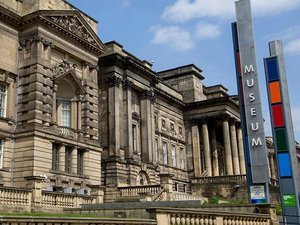
Henry Moore, 1898 – 1986

Henry Moore Paintings: The 100 Most Famous Works, Ranked

Henry Moore's most famous painting is Reclining Figure, in the Detroit Institute of Arts, Detroit. With Falling Warrior (1957) and Sculptural Objects (Cramer 47), it completes the three works everyone recognises. Our catalogue lists 492 works by Henry Moore; the 100 below are the ones the world looks at most, each with its year, the museum that holds it and why it matters.

Rangirano prema našoj ocjeni popularnosti, koja objedinjuje broj pretraživanja, posjeta i narudžbi za svako djelo. Ažurirano Listopad 2026.

Portret Henry Moore
Henry Moore · 1898 – 1986
Rođen · umro
1898 – 1986, Castleford
Pokret
Modernism
Djela u našem katalogu
492
Najpoznatije
Reclining Figure
Najviše djela u
Tate Britain

The 10 most famous Henry Moore paintings

Reclining Figure od Henry Moore
1

Reclining Figure

Wood · Detroit Institute of Arts, Detroit

Form and Materiality This elmwood carving presents an abstracted human form through sinuous lines and organic voids. The sculpture utilizes the wide grain of the wood to emphasize its undulating limbs and torso. Holes are integrated into the composition, allowing light and space to penetrate the solid mass. These openings create a relationship between the internal volume and the surrounding environment. Compositional Elements The figure features a looped head and…

Falling Warrior (1957) od Henry Moore
2

Falling Warrior

1957 · Bronze · National Museums Liverpool, Liverpool

In the quiet halls of Tate Britain, there exists a moment of profound stillness captured in bronze—a masterpiece that breathes with the weight of history and the lightness of spirit. Henry Moore’s “Falling Warrior,” created between 1956 and 1957, is far more than a mere sculpture; it is a meditation on the very nature of existence. As one approaches this monumental work, the eye is immediately drawn to the fluid,…

Sculptural Objects (Cramer 47) od Henry Moore
3

Sculptural Objects (Cramer 47)

Painting

In the vast landscape of twentieth-century modernism, few names resonate with as much tactile power and organic grace as Henry Moore. While the world often recognizes him through his monumental bronze figures that command public squares across the globe, his foray into the two-dimensional realm offers a uniquely intimate window into his creative psyche. Sculptural Objects (Cramer 47) stands as a breathtaking testament to this versatility, a painting that does…

Sheep 1 od Henry Moore
4

Sheep 1

Oil

In the quiet, evocative lines of Sheep 1, we encounter a profound moment of connection between the viewer and the natural world. This striking black and white drawing by the legendary British master Henry Moore transcends simple animal portraiture to become an exploration of form, texture, and presence. The subject—a sheep with a thick, tactile wool coat—is rendered not merely as livestock, but as a sculptural entity. With its prominent…

A Miner at Work (1942) od Henry Moore
5

A Miner at Work

1942 · Sculpture · Imperial War Museums, London

In the heavy, shadowed atmosphere of 1942, amidst the profound uncertainties of the Second World War, Henry Moore captured a moment of quiet, monumental strength in "A Miner at Work." This piece serves as much more than a mere depiction of industrial labor; it is a profound meditation on the human spirit under pressure. The artwork presents a solitary figure, a miner seated at the coal face, rendered through Moore’s…

Seated figure on square steps od Henry Moore
6

Seated figure on square steps

Brončana skulptura

Henry Spencer Moore (1898 – 1986), born in the Yorkshire mining town of Castleford, emerged as one of Britain’s most significant and internationally celebrated sculptors of the twentieth century. His journey from humble beginnings to global recognition is a testament to his unwavering dedication to artistic exploration and his profound connection to the human form and the natural world.

Figure in a Shelter (1983) od Henry Moore
7

Figure in a Shelter

1983 · Sculpture Bronze · Kimbell Art Museum, Fort Worth

Henry Moore (1898-1986), a titan of twentieth-century sculpture, remains an artist whose work continues to resonate with audiences worldwide. His unwavering fascination with the human form—particularly its reclining postures—coupled with his exploration of organic shapes derived from nature—like pebbles and seashells—established him as a pioneer of abstract expressionism while simultaneously grounding his art in palpable physicality.

The Artist's Hand V (1979) od Henry Moore
8

The Artist's Hand V

1979 · Lithograph · Tate Britain, London

In the quiet intimacy of Henry Moore’s “The Artist's Hand V,” created in 1979, we are invited into a profound dialogue between the creator and his medium. This exquisite lithograph serves as more than a mere anatomical study; it is a soulful meditation on the very act of making. Through the outstretched gesture of Moore’s own hand, the artwork captures a moment of suspended animation, where the boundary between the…

Reclining Figure. Points od Henry Moore
9

Reclining Figure. Points

Bronca

Razglednica Tijela: Točke Henry Mooreova skulptura "Razglednica Tijela: Točke" predstavlja vrhunac britanske umjetnosti dvadesetog stoljeća, oslanjajući se na principe organske abstrakcije i hvata trenutak filozofske kontemplacije ljudskog tijela u kontekstu prirodnih pejzaža. Izrezvana između 1967. i 1968., ova brončana djela umjetnosti pokazuje Mooreovu karakterističnu tehniku – ciljano odcjepljenje od reprezentativne realizma prema istraživanju čistih oblika i pokreta. Njeno trajstvo nije samo estetička ljepota već duboka povezanost s humanističkim idejama i…

Hands I (1973) od Henry Moore
10

Hands I

1973 · Lithograph · Tate Britain, London

Henry Moore's 'Hands I,' created in 1973, is more than just a lithograph depicting two hands clasped together; it’s a profound meditation on connection, vulnerability, and the enduring human need for touch. Born in Castleford, Yorkshire, in 1898, Henry Spencer Moore rose to international prominence as a sculptor, yet his exploration of form extended into printmaking with remarkable sensitivity. This particular work, rendered in stark black and white, captures an…

Henry Moore, paintings 11 to 100

Ležeća figura; Otvoren poziciju od Henry Moore
#11

Ležeća figura; Otvoren poziciju

Henry Spencer Moore (1898–1986), jedan od najvažnijih britanskih skulptora stoljeća dvadesetoga, ostavio je nezaboravno naslijeđe koje se oslanja na inovativnu kombinaciju forme i emocije. Njegova životna priča bila…

Two Piece Sculpture No. 7; Pipe od Henry Moore
#14

Two Piece Sculpture No. 7; Pipe

A Dance of Forms: Exploring Henry Moore’s ‘Two Piece Sculpture No. 7; Pipe’ This captivating bronze sculpture by Henry Moore exemplifies his mastery of abstract figurative form and…

Žena s uredskim stolom i žena sedište od Henry Moore
#16

Žena s uredskim stolom i žena sedište

Henry Moore: Jedna djevojčica s pisacom – Izraz umjetnosti i ljudske forme Jedna djevojčica s pisacom od Henryja Moora predstavlja fascinantnu kombinaciju jednostavnosti oblika, ekspresivnih linija i dubokih…

Catspaws off the Land (1885) od Henry Moore
#18

Catspaws off the Land

1885 · Tate Britain

To gaze upon Catspaws off the Land is to be gently swept away by the vast, breathing expanse of the sea meeting the steadfast embrace of the shore.…

The subjects Henry Moore painted most

The four subjects that return most often among these masterpieces, with the finest example of each.

Where to see Henry Moore's paintings

8 muzeja u kojima se nalazi najviše djela s ove stranice.

Muzej Grad Djela autora Henry Moore Slike iz ovog popisa
Tate Britain, LondonTate Britain London 3 The Artist's Hand V, Hands I, Catspaws off the Land
National Maritime Museum, LondonNational Maritime Museum London 2 Setting Nets on the Coast of North Wales, Hove-to for a Pilot
Detroit Institute of Arts, DetroitDetroit Institute of Arts Detroit 1 Reclining Figure
National Museums Liverpool, LiverpoolNational Museums Liverpool Liverpool 1 Falling Warrior
Imperial War Museums, LondonImperial War Museums London 1 A Miner at Work
Kimbell Art Museum, Fort WorthKimbell Art Museum Fort Worth 1 Figure in a Shelter
Zaragoza Museum, ZaragozaZaragoza Museum Zaragoza 1 Portrait of Isabel de Cistué y Nieto (Retrato de Dª Isabel de Cistué y Nieto)
Finnish National Gallery, HelsinkiFinnish National Gallery Helsinki 1 Family Group

Henry Moore's most famous painting of each decade

  1. 1940s
    A Miner at Work (1942) od Henry Moore
    #5 of 100

    A Miner at Work

    Godine 42 – 51 · Imperial War Museums

    In the heavy, shadowed atmosphere of 1942, amidst the profound uncertainties of the Second World War, Henry Moore captured a moment of quiet, monumental strength in "A Miner…

  2. 1950s
    Falling Warrior (1957) od Henry Moore
    Rank 2 / 100

    Falling Warrior

    Godine 52 – 61 · National Museums Liverpool

    In the quiet halls of Tate Britain, there exists a moment of profound stillness captured in bronze—a masterpiece that breathes with the weight of history and the lightness…

  3. 1970s
    The Artist's Hand V (1979) od Henry Moore
    #8 of 100

    The Artist's Hand V

    Godine 72 – 81 · Tate Britain

    In the quiet intimacy of Henry Moore’s “The Artist's Hand V,” created in 1979, we are invited into a profound dialogue between the creator and his medium. This…

  4. 1980s
    Figure in a Shelter (1983) od Henry Moore
    #7 of 100

    Figure in a Shelter

    Godine 82 – 88 · Kimbell Art Museum

    Henry Moore (1898-1986), a titan of twentieth-century sculpture, remains an artist whose work continues to resonate with audiences worldwide. His unwavering fascination with the human form—particularly its reclining…

Questions about Henry Moore's paintings

What is Henry Moore's most famous painting?Show the answer

Reclining Figure, Detroit Institute of Arts, Detroit. Next come Falling Warrior (1957) and Sculptural Objects (Cramer 47).

What are the top 10 paintings by Henry Moore?Show the answer

Reclining Figure, Falling Warrior, Sculptural Objects (Cramer 47), Sheep 1, A Miner at Work, Seated figure on square steps, Figure in a Shelter, The Artist's Hand V, Reclining Figure. Points i Hands I. The ranking above gives the year and the museum of each.

How many paintings did Henry Moore make?Show the answer

Our catalogue lists 492 works by Henry Moore, dated from 1942 to 1983.

Where are Henry Moore's most famous paintings?Show the answer

Most of them are in Tate Britain (London), National Maritime Museum (London) i Detroit Institute of Arts (Detroit). The table above lists the museums one by one.

When did Henry Moore paint the most famous works?Show the answer

In 1970s: 2 of the 100 works on this page date from then, among them The Artist's Hand V.

What are Henry Moore's earliest and latest famous paintings?Show the answer

The earliest on this page is A Miner at Work (1942), the latest Figure in a Shelter (1983).

What did Henry Moore paint most often?Show the answer

Scenes (22), Children (15) i Mothers (15), among the 100 works on this page.

What medium did Henry Moore use most?Show the answer

Bronze: 2 of the 100 works on this page.

Which art movement does Henry Moore belong to?Show the answer

Modernism, as the paintings on this page show.

Which Henry Moore paintings can I see at the Tate Britain?Show the answer

The Artist's Hand V, Hands I i Catspaws off the Land are among the 3 works on this page held by the Tate Britain, London.

About Henry Moore

Život isklesan u formi: Svijet Henryja Moorea

Henry Spencer Moore, rođen 1898. godine u rudarskom gradu Castlefordu u Yorkshireu, istaknuo se kao jedan od najznačajnijih i međunarodno slavljenih britanskih kiparskih umjetnika dvadesetog vijeka. Njegov put od skromnih početaka do globalnog priznanja svjedočanstvo je njegove nepokolebljive posvećenosti umjetničkom istraživanju te duboke povezanosti s ljudskim tijelom i prirodnim svijetom. Mooreov otac, samoukopljeni čovjek strasti prema učenju, u njega je utkao vjeru u moć obrazovanja, usmjeravajući ga od života rudara prema formalnom školovanju. Još kao dječak, Moore je pokazivao urođeni talent za modeliranje gline i rezbaranje drveta, što je nagovijestilo smjer kojim će njegov život krenuti. To rano iskustvo s taktilnim materijalima postavilo je temelje za karijeru definiranu trodimenzionalnom formom. Njegovo odrastanje usred brežuljastih polja Yorkshirea duboko je utjecalo na njegov estetski osjećaj, prožimajući njegova djela osjećajem organske fluidnosti koji odjekuje pejzažom njegovog rodnog mjesta.

Rani utjecaji i umjetnički razvoj

Mooreovo umjetničko obrazovanje započelo je u srednjoj školi u Castlefordu, gdje je njegov profesor umjetnosti prepoznao i njegovao njegov talent. Kasnije je pohađao Umjetničku školu u Leedsima, a potom i Kraljevski umjetnička akademiju u Londonu, uranjajući u proučavanje klasične skulpture i modernih pokreta poput kubizma. Međutim, Moore nije bio tek slijeditelj trendova; on je te utjecaje sintetizirao u nešto što je bilo jedinstveno njegovo. Ključni trenutak dogodio se tijekom posjeta Meksiku 1925. godine, gdje je susreo pretkolumbijske skulpture – posebno one aztečke civilizacije. Moćna jednostavnost i apstraktne forme tih djela duboko su odjeknule u Mooreu, oslobađajući ga konvencionalnih reprezentativnih ograničenja. Počeo je istraživati apstrakciju u potpunosti, fokusirajući se na ljudsku figuru kao izvor inspiracije, ali se udaljavajući od stroge anatomske točnosti. To razdoblje donijelo je razvoj njegovog prepoznatljivog stila: poluapstraktnih skulptura okarakteriziranih zaobljenim, organskim oblicima koji često sadrže otvore ili šupljine koje se igraju s svjetlom i prostorom.

Ležeća figura i majka s djetetom

Tijekom cijele svoje karijere, dva su se ponavljajuća motiva dominirala Mooreovim opusom: ležeća figura te tema majke i djeteta. Ležeća figura, posebno, postala je sinonim za njegovo ime. Ove skulpture nisu samo prikazi ljudskog tijela u mirovanju; one su istraživanja forme, volumena i odnosa između figure i njezinog okružnog prostora. Njihove valovite linije prizivaju osjećaj bezvremenskosti i mira, dok njihove često fragmentirane ili probušene forme sugeriraju ranjivost i otpornost. Tema majke i djeteta, jednako prisutna u njegovom radu, govori o univerzalnim temama ljubavi, zaštite i njege. Mooreovi prikazi majki i djece prožeti su dubokom emocionalnom težinom, hvatajući intimnu vezu između roditelja i potomka. Ove skulpture nisu bile idealizirani prikazi, već iskreni portreti ljudske povezanosti, često odražavajući tjeskobu i neizvjesnost ere u kojoj su stvoreni.

Ratna promišljanja i javni narudžbe

Izbijanje Drugog svjetskog rata duboko je utjecalo na Mooreov rad. Počeo je dokumentirati Londonce koji su se sklanjali od bombardiranja (Blitz) u stanicama podzemne željeznice, stvarajući seriju moćnih crteža koji su uhvatili strah, otpornost i zajednički duh tog vremena. Ti crteži iz skloništa nisu samo važni povijesni dokumenti, već i pokazuju Mooreovu sposobnost prevođenja svoje skulpturalne osjetilnosti u dvodimenzionalnu formu. Nakon rata, Moore je primao brojne javne narudžbe, što mu je omogućilo stvaranje storskurznih skulptura za škole, bolnice i javne prostore. Vjerovao je da umjetnost treba biti dostupna svima te je aktivno tražio prilike za integraciju svog rada u svakodnevni život. Ti monumentalni brončani spomenici postali su znamenitosti, transformirajući urbane pejzaže i inspirirajući generacije umjetnika i gledatelja. Njegova sposobnost ispunjavanja ovih grandioznih projekata uz zadržavanje vjernosti vlastitoj umjetničkoj viziji učvrstila je njegovu reputaciju vodeće figure u modernoj skulpturi.

Naslijeđe i trajni utjecaj

Utjecaj Henryja Moorea na umjetnost dvadesetog stoljeća neosporan je. Otvorio je put sljedećim generacijama kiparâ, izazivajući konvencionalne predstave forme i prostora te demonstrirajući moć apstrakcije. Njegovo djelo nastavlja odjekivati kod publike i danas, izazivajući divljenje i promišljanje. Godine 1977. Moore je osnovao Nadležnost Henryja Moorea (Henry Moore Foundation), osiguravajući da njegovo naslijeđe opstane kroz obrazovanje i promociju umjetnosti. Nadležnost podržava umjetnike, znanstvenike i institucije širom svijeta, dodatno unapređujući Mooreovu posvećenost poticanju kreativnosti i umjetničke inovacije. Njegove skulpture stoje kao trajni spomenici ljudskoj izumljivosti i svjedočanstvo transformativne moći umjetnosti.
    Glavne teme: Ljudski oblik, apstacija, majka i dijete, ležeće figure, pejzaž. Ključni utjecaji: Klasična skulptura, kubizam, pretkolumbijska umjetnost, pejzaž Yorkshirea. Značajna djela: Reclining Figure: 1951, Family Group, Shelter Drawings.
Mooreovo djelo ostaje moćan podsjetnik na neukrotiv ljudskog duha i ljepotu koja se može pronaći čak i u najtežim okolnostima.

Sva 492 djela umjetnika Henry Moore →