A Life Forged in Contrasts: The World of Mervyn Peake
Mervyn Laurence Peake, a name synonymous with gothic fantasy and haunting imagery, was an artist whose life mirrored the dramatic contrasts that would come to define his work. Born in 1911 in Kuling, China, to British missionary parents, Ernest Cromwell Peake and Amanda Elizabeth Powell, his early years were steeped in a unique cultural duality. The stark realities of colonial life – the proximity of both immense wealth and profound poverty – left an indelible mark on the young Peake, shaping a worldview that would later permeate his novels and paintings. This formative period, though relatively brief before returning to England in 1922, instilled within him a sensitivity to atmosphere and character, a fascination with decay and grandeur, and a keen eye for the grotesque beauty found in unexpected places. He attended Tianjin Grammar School before continuing his education at Eltham College, followed by studies at Croydon School of Art and finally, the prestigious Royal Academy Schools from 1929 to 1933. These years were crucial in honing his artistic skills, experimenting with oils and developing a distinctive style that would set him apart.From Canvas to Castle: The Evolution of an Artistic Vision
Peake’s initial recognition came as a painter during the 1930s in London. He quickly established himself, securing commissions for portraits of notable figures and illustrating children's books such as *Captain Slaughterboard Drops Anchor* (1939) and *Ride a Cock Horse* (1940). These early works demonstrate his technical proficiency and an emerging talent for capturing character through visual representation. However, it was during this period, alongside his artistic pursuits, that the seeds of Gormenghast began to sprout. A sojourn to the Channel Island of Sark, joining an artists’ colony led by his former teacher Eric Drake, proved particularly influential. The island's rugged landscape and isolated atmosphere resonated deeply with Peake, providing a physical and emotional space for his imagination to flourish. His artistic style during these years was characterized by bold brushstrokes, dramatic lighting, and a growing interest in distorted perspectives – foreshadowing the unsettling atmosphere that would later define Gormenghast Castle. Influences from literary giants like Charles Dickens and Robert Louis Stevenson were also becoming apparent, shaping his narrative sensibilities and penchant for vivid descriptions.The Gothic Realm of Gormenghast
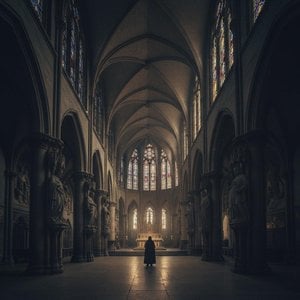
While Peake’s artistic talent was undeniable, it is the *Gormenghast* novels that cemented his enduring legacy. Comprising *Gormenghast* (1946), *Titus Groan* (1950), and *Fearsome Mathew* (1956), these sprawling works depict a decaying world centered around the immense, labyrinthine Gormenghast Castle and its inhabitants. The novels are not merely fantasy; they are explorations of tradition, identity, ritual, and the absurdity of existence itself. Peake masterfully crafted a richly detailed and immersive world with its own complex social structures, elaborate ceremonies, and a cast of unforgettable characters. Though he envisioned a longer cycle, his untimely death in 1968 prevented its completion. The *Gormenghast* novels are often compared to J.R.R. Tolkien’s work, but Peake's style is distinctly surreal and darkly humorous, infused with psychological depth and a haunting sense of melancholy. His prose is characterized by ornate language, vivid imagery, and an almost obsessive attention to detail – qualities directly influenced by his background as a visual artist.A Legacy Beyond the Page
Mervyn Peake’s artistic techniques profoundly impacted his writing. His illustrations for his own books served not merely as accompaniments but as integral extensions of the narrative, providing readers with a visual understanding of his characters and settings. The distorted perspectives and grotesque imagery prevalent in his art found their echo within the walls of Gormenghast Castle, contributing to its unsettling atmosphere. Even his wartime experiences – serving as a war artist during World War II, though his application to officially depict war scenes was rejected – informed his work, lending a sense of stark realism to even the most fantastical elements. Despite achieving limited widespread popular success during his lifetime, Peake’s work was highly respected by fellow artists and writers such as Dylan Thomas and Graham Greene. His works are now held in prestigious collections including the National Portrait Gallery, the Imperial War Museum, and The National Archives. In recent years, there has been a significant resurgence of interest in Peake's oeuvre, leading to renewed appreciation for his unique literary and artistic contributions. The Times recognized him as one of the “50 greatest British writers since 1945,” solidifying his place among the most important creative voices of the twentieth century. His legacy continues to inspire artists, writers, and readers alike, drawn to the haunting beauty and profound insights found within his extraordinary world.Pitanja i odgovori
Koje raspoloženja izražavaju umjetnička djela umjetnika Mervyn Peake?
Soba raspoloženja umjetnika Mervyn Peake je stranica koja prikazuje umjetnikova djela poredana prema raspoloženju.
Odakle dolazi Mervyn Peake?
Mervyn Peake je rođen/a u China.
Gdje mogu vidjeti djela umjetnika Mervyn Peake u 3D galeriji?
3D muzej umjetnika Mervyn Peake stranica je koja prikazuje umjetnikova djela u virtualnoj trodimenzionalnoj galeriji.