George Adolphus Storey: Capturing Domestic Emotion in Victorian Portraiture
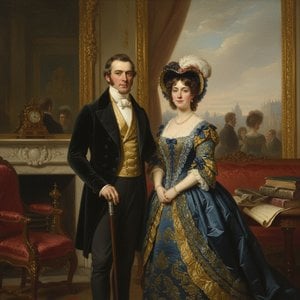
George Adolphus Storey (London 7 January 1834 – 29 July 1919) was an English portrait painter, genre painter and illustrator whose work embodies the spirit of Victorian England—a fascination with family life and a profound sensitivity to human emotion. Born into a wealthy London family, Storey’s artistic journey began with private tutoring before progressing to formal studies in Paris, where he absorbed the stylistic innovations of Impressionism alongside the enduring traditions of academic painting. This dual influence shaped his distinctive approach, resulting in canvases that are both meticulously crafted and imbued with palpable feeling.
Early Life and Artistic Training
Storey’s upbringing instilled a love for art and scholarship. He attended Morden Hall School in Surrey, preparing him for a distinguished education encompassing literature and the arts. Recognizing his talent, he pursued further studies abroad, immersing himself in the artistic milieu of Paris—a city buzzing with creative energy during the Second Empire. Notably, Storey’s formative years coincided with the burgeoning Pre-Raphaelite movement, though he ultimately distanced himself from its aesthetic ideals, favoring instead a more restrained and psychologically nuanced style. His instructor at the Royal Academy schools was William Behnes, sculptor whose studio visits provided invaluable insight into artistic technique and craftsmanship.
Style and Technique: The Influence of Impressionism
Storey’s artistic vision leaned heavily toward Impressionistic principles without fully embracing their radical departure from academic conventions. He skillfully blended tonal harmonies with subtle color gradations—a hallmark of his oeuvre—creating images that prioritize atmosphere and psychological depth over precise detail. Unlike many of his contemporaries who sought to capture fleeting moments in time, Storey focused on portraying subjects within domestic settings, meticulously observing the nuances of human interaction and familial bonds. This dedication to realism combined with an artist’s intuition resulted in portraits that resonate with authenticity and tenderness.
Notable Works and Recognition
Storey achieved considerable acclaim during his lifetime, securing commissions from prominent families across Britain. His paintings frequently depict scenes of everyday life—mothers tending to children, fathers engaging in conversation—capturing the quiet dignity and emotional richness of domestic existence. Among his most celebrated pieces is “Contemplation,” a hauntingly beautiful portrait that exemplifies Storey’s ability to convey profound psychological states through understated visual language. This artwork resides within St George's Chapel, Windsor Castle, serving as a testament to Storey’s enduring legacy as one of the era’s foremost portrait artists. Furthermore, Storey’s illustrations appeared in publications such as Life Magazine, cementing his reputation as a versatile artist adept at capturing both formal and informal subjects.
Legacy and Historical Significance
George Adolphus Storey's contribution to Victorian art lies primarily in his unwavering commitment to portraying human emotion with sensitivity and precision. He stands apart from many of his peers who prioritized spectacle or idealized beauty, instead prioritizing the honest depiction of familial relationships and inner lives. His canvases continue to inspire admiration for their quiet grandeur and psychological insight—a reflection of Storey’s profound understanding of the human condition during a transformative period in British history. As an artist who skillfully navigated the currents of artistic innovation while upholding traditional values, Storey remains a significant figure in the annals of Victorian portraiture.