Norwegian Still Life with Vegetable basket and Fish
Untitled (AQRR4H)
Untitled (AQRR4P)
Also known as: frants b0e
Frants Diderik Bøe: A Pioneer of Nordic Landscape Painting
Frants Diderik Bøe (1820 – 1891) stands as a pivotal figure in Norwegian art history, recognized primarily for his masterful depictions of the dramatic landscapes and serene coastal scenes characteristic of Norway’s Nordland region. Born into a large family in Bergen, Norway—the second oldest among seven siblings—Bøe's artistic inclinations were nurtured by the vibrant artistic environment fostered by luminaries like Johan Christian Dahl, who instilled in him an early appreciation for capturing the beauty of nature. This formative influence propelled him to pursue formal training at the Royal Danish Academy of Fine Arts in Copenhagen, where he honed his skills under the tutelage of architects Gustav Friedrich Hetsch and sculptor Herman Wilhelm Bissen, alongside fellow artist Christen Købke.
Early Life & Education: Growing up in Bergen instilled a deep connection to the fjords and mountains that would permeate his artistic vision. His academic training provided him with foundational knowledge of classical art principles, shaping his approach to composition and technique.
Parisian Period (1852-1860): Seeking inspiration and expanding his artistic horizons, Bøe embarked on a transformative journey to Paris in 1852. There, he studied under Theude Grønland, absorbing the Impressionist ethos and experimenting with looser brushstrokes—a deliberate departure from academic conventions.
Return to Norway & Lofoten Inspiration: Recognizing the profound influence of his homeland’s landscapes on his creative spirit, Bøe returned to Nordland in 1858–1861 and subsequently resided in Lofoten from 1863–1864. These periods yielded some of his most celebrated works—particularly paintings capturing the ethereal glow of the Northern Lights over snow-covered peaks and depicting the daily life of fishermen against the backdrop of rugged coastal scenery.
Notable Artistic Achievements & Style
Bøe’s artistic style is defined by a remarkable sensitivity to light and color, mirroring the Impressionist movement's emphasis on capturing fleeting moments of visual experience. He skillfully employed atmospheric perspective—a technique perfected by artists like Dahl—to convey depth and realism in his landscapes, creating immersive vistas that transport viewers into the Nordic wilderness. His meticulous attention to detail—evident in depictions of rocks, trees, and water surfaces—combined with a masterful command of brushwork resulted in paintings imbued with palpable emotion and conveying a profound respect for the natural world.
Landscapes & Still Lifes: Bøe excelled in both landscape painting and still life compositions, demonstrating versatility within his chosen medium.
Influence of Impressionism: His Parisian studies profoundly impacted his artistic style, fostering a willingness to embrace looser brushstrokes and prioritize capturing the effects of light on surfaces.
Legacy & Recognition
Frants Diderik Bøe’s contribution to Norwegian art is undeniable. His paintings reside in prominent museums across Norway—including the National Gallery in Oslo, Bergen Billedgalleri and Oscarshall—serving as enduring reminders of his artistic prowess and capturing the essence of Nordic landscape painting. His work continues to inspire artists and captivate audiences alike, cementing his place as a cornerstone of Norwegian artistic heritage. The artist's dedication to portraying the sublime beauty of Norway’s natural environment remains an inspiration for contemporary painters and art enthusiasts.
Key Works
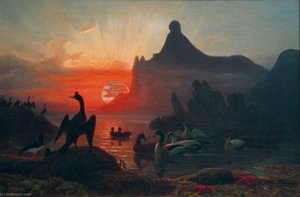
Among Bøe’s most iconic paintings are “Wild Ducks” (1883), “Skiing Lapp with the Northern Lights” (1885), “Fishermen in Lofoten” (1887) and “Sandviksfjellet, Bergen” (circa 1891). These pieces exemplify his signature style—characterized by luminous color palettes, masterful brushwork, and a profound connection to the Nordic landscape—solidifying his reputation as one of Norway’s foremost painters.
Autor: Uredništvo WahooArt.com
Kviz o umjetnosti
Svako pitanje ima samo jedan točan odgovor.
Pitanje 1:
What was Frants Diderik Böe's primary artistic focus?
Pitanje 2:
Where did Böe initially pursue his artistic education?
Pitanje 3:
Who influenced Böe's artistic style during his time in Paris?
Pitanje 4:
During which period did Böe experience vision impairment affecting his later works?
Pitanje 5:
Which Norwegian art museums prominently feature Böe's paintings?
Explore the profound beauty of village scene art. From Impressionist light to pastoral realism, discover how timeless landscapes capture nostalgia through expert artistry and historical depth. Perfect for collectors seeking evocative, museum-quality landscape inspirations.
Embark on a visual journey through history's most iconic landscapes. Discover the mastery of Impressionism and the sublime power of nature through our expert guide to classical landscape art, curated for the discerning collector and fine art enthusiast.