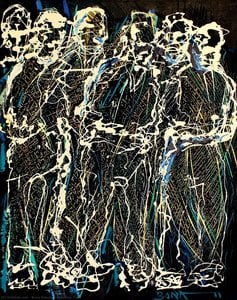
A Life Forged in Expression: The Journey of Bona Ezeudu
Born in 1956 in the vibrant city of Jos, Nigeria, Bona Ezeudu’s artistic path wasn't merely chosen—it was a calling that resonated from an early foundation. His formative years were steeped in the rich cultural tapestry of his homeland, a landscape brimming with tradition, spirituality, and a burgeoning sense of national identity following independence. Ezeudu pursued formal training at the Institute of Management & Technology in Enugu, earning a Higher National Diploma which provided him with the technical skills to translate the visions brewing within him onto canvas and into sculpted form. However, his education extended far beyond the classroom; it was rooted in observation, experience, and an unwavering commitment to reflecting the complexities of Nigerian life.
The Aka Circle and Early Artistic Explorations
Ezeudu quickly became a prominent figure within Nigeria’s dynamic art scene, notably as a founding member of the esteemed ‘Aka Circle’ of artists in 1986. This collective was pivotal in shaping contemporary Nigerian art, fostering a space for experimentation, dialogue, and shared artistic growth. The Aka Circle wasn't simply about stylistic unity; it was a brotherhood united by a desire to articulate a uniquely African aesthetic—one that acknowledged both its ancestral roots and the challenges of modernity. His early works demonstrate this exploration beautifully, characterized by rapid brushstrokes, bold color palettes, and a captivating energy. These paintings often depicted scenes from everyday life, imbued with a sense of movement and vitality. He didn’t shy away from exploring utilitarian art forms either, creating wrought iron sculptures that blended functionality with artistic expression.
A Personal Tragedy and the Power of Resilience
The trajectory of Ezeudu's career took a profoundly personal turn in 2009 with the kidnapping of his only son, Lotachukwu. This devastating event brought his creative process to a standstill for over three years as he dedicated himself entirely to securing Lota’s safe return. This period wasn’t one of artistic dormancy, but rather a silent incubation—a time of immense grief and unwavering hope that would eventually find its voice through his art once more. When Ezeudu returned to the studio, it was with a renewed sense of purpose and an urgency born from profound loss. The works created in the aftermath of this tragedy are deeply moving testaments to the resilience of the human spirit.
Themes of Triumph, Urgency, and Social Commentary
Ezeudu’s art is not merely aesthetically pleasing; it's a powerful form of social commentary. His paintings often grapple with themes of injustice, loss, and the search for hope in the face of adversity. The series inspired by his son’s kidnapping—works like ‘Husband and Wife in Search of Their Son,’ ‘Awaiting Trial’, and ‘Family Re-Union’—are particularly poignant examples. These pieces are not sensationalistic depictions of trauma; instead, they offer a raw and honest portrayal of the emotional toll of violence and the enduring power of familial love. Beyond this deeply personal narrative, Ezeudu frequently explores broader societal issues through symbolic imagery and layered compositions. His work ‘Money Through the Ages II’ for example, uses gold hues and abstract forms to evoke interconnectedness and question the values placed on material wealth. The 'Ikenga' series delves into Igbo cosmology, representing strength, ambition, and personal achievement.
Legacy and Historical Significance
Bona Ezeudu stands as a significant figure in contemporary Nigerian art, not only for his technical skill and expressive style but also for his unwavering commitment to using art as a vehicle for social change. His membership in the Aka Circle helped establish a distinct Nigerian artistic voice on the global stage, while his personal journey—marked by both triumph and tragedy—has resonated deeply with audiences worldwide. He has established himself as an artist who fearlessly confronts difficult subjects, offering viewers not just beautiful images but also profound reflections on the human condition. His works are held in private collections and museums across Nigeria and beyond, ensuring that his powerful message of resilience, hope, and social consciousness will continue to inspire generations to come.
Pitanja i odgovori
Odakle dolazi Bona Ezeudu?
Bona Ezeudu rođen/a je u Nigeria.
Postoji li kronološki prikaz karijere umjetnika Bona Ezeudu?
Karijera umjetnika Bona Ezeudu razvija se razdoblje po razdoblje na njegovoj stranici Kronika: horizontalna vremenska linija umjetničkih djela grupiranih u poglavlja prema razdobljima stvaranja.
Kako mogu pronaći djela umjetnika Bona Ezeudu prema određenoj temi?
Djela umjetnika Bona Ezeudu možete istražiti putem ključnih riječi na njegovoj stranici Pretraživanje po ključnim riječima, gdje svaka ključna riječ grupirala pripadajuća djela.