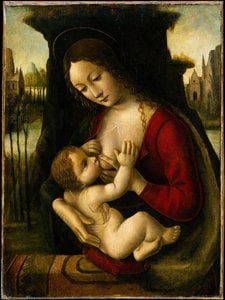
Bernardino Dei Conti remains a figure shrouded in mystery, an artist whose work whispers rather than shouts from the annals of art history. Born in Italy (the exact year is currently undocumented), he operates as a contemporary painter deeply influenced by the Old Masters yet resolutely forging his own path. Unlike many artists who seek immediate recognition, Dei Conti has deliberately cultivated an air of seclusion, allowing his paintings to speak for themselves and build a reputation organically through exhibitions and private collections. This deliberate distance adds to the allure surrounding his oeuvre, prompting viewers to engage with the work on a purely visual and emotional level, unburdened by biographical preconceptions.
A Dialogue With Tradition
Dei Conti’s artistic journey is fundamentally rooted in a profound reverence for the Renaissance and Baroque periods. His canvases are immediately recognizable through their masterful technique – a meticulous layering of oil paint that evokes the luminosity of Caravaggio and the dramatic compositions of Rubens. However, he isn't simply replicating past styles; rather, he engages in a complex dialogue with tradition. He appropriates classical motifs—mythological scenes, still lifes, portraits—but imbues them with a distinctly modern sensibility. His figures are often rendered with an unsettling realism, their expressions hinting at inner turmoil and existential questioning. This juxtaposition of historical form and contemporary emotion is central to understanding Dei Conti’s unique artistic vision. He doesn't shy away from the darker aspects of human experience, exploring themes of mortality, loss, and the search for meaning in a fragmented world.
Technique and Materials: A Revival of Old World Craftsmanship
Dei Conti is a staunch advocate for traditional painting techniques. He eschews modern materials and methods, preferring to work with oil paints ground from natural pigments on linen canvases prepared using time-honored processes. This commitment to craftsmanship isn’t merely aesthetic; it's integral to his artistic philosophy. He believes that the physical act of painstakingly building up layers of paint—a process that can take months or even years for a single work—allows him to connect with the spirit of the Old Masters and imbue his paintings with a sense of depth and timelessness. His technique involves glazing, scumbling, and impasto, creating surfaces that are both richly textured and incredibly luminous. The play of light and shadow is particularly striking in his work, drawing the viewer’s eye to subtle details and emotional nuances. He often incorporates symbolic elements within the composition, hidden layers of meaning revealed only upon close inspection.
Themes and Symbolism: Echoes of a Troubled Age
Recurring themes in Dei Conti's paintings include vanitas—symbolic representations of the transience of life—and memento mori—reminders of mortality. Still lifes featuring decaying fruit, wilting flowers, and extinguished candles serve as poignant meditations on the ephemeral nature of beauty and existence. His portraits are equally compelling, often depicting subjects with a melancholic gaze and an air of quiet desperation.
The use of chiaroscuro—the dramatic contrast between light and dark—is not merely a stylistic device but a means of exploring the duality of human nature.
He frequently employs symbolic objects—skulls, hourglasses, broken mirrors—to represent themes of time, death, and illusion.
His mythological scenes are rarely celebratory; instead, they often depict moments of tragedy or psychological torment.
Dei Conti’s work reflects a deep awareness of the anxieties and uncertainties of contemporary life, filtered through the lens of art historical precedent.
Historical Significance and Future Trajectory
While still relatively early in his career (as of this writing, he remains an active artist), Bernardino Dei Conti is rapidly gaining recognition as a significant voice in contemporary painting. His work challenges conventional notions of originality and authenticity, demonstrating that tradition can be both a source of inspiration and a means of expressing new ideas. He represents a growing trend among artists who are rejecting the superficiality of much contemporary art in favor of more meaningful and enduring forms of expression. His deliberate obscurity and commitment to craftsmanship have also resonated with collectors and critics alike, creating a sense of mystique around his work that only adds to its appeal. As he continues to develop his artistic vision, Dei Conti is poised to become an increasingly important figure in the art world, leaving an indelible mark on the landscape of 21st-century painting.
Discover the profound beauty of abstract art. Our expert guide explores geometric abstraction, Op Art, and Expressionism, offering connoisseurs deep insights into collecting and curating powerful, non-representational masterpieces for sophisticated interiors.