Aurelio Cartone: Bridging Renaissance Echoes and Impressionistic Vision
Aurelio Cartone (1910-1969), born in Milan, Italy, stands as a compelling figure within the landscape of Italian 20th-century painting. His artistic journey began amidst the burgeoning intellectual fervor of his time—a period marked by significant shifts towards modernism while retaining an undeniable connection to the grandeur and humanist ideals of the Renaissance—influences that profoundly shaped his distinctive style and thematic preoccupations. From a young age, Cartone demonstrated an innate talent for drawing and painting, enrolling at the prestigious Accademia di Belle Arti Brera in Milan where he honed his skills under the tutelage of masters who championed both meticulous observation and expressive brushwork.
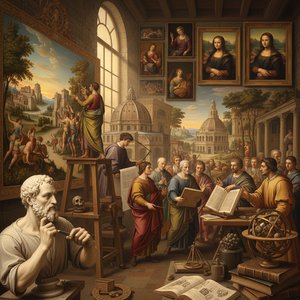
- Early Influences: Cartone’s formative years were steeped in the spirit of Florentine Renaissance art, particularly the works of Michelangelo Buonarroti and Leonardo da Vinci. These artists instilled within him a deep appreciation for anatomical accuracy combined with emotional depth—a duality that would become central to his artistic vision.
- Style Development: Initially gravitating towards realism, Cartone swiftly embraced Impressionistic techniques, incorporating vibrant color palettes and loose brushstrokes to capture fleeting moments of light and atmosphere. This stylistic fusion resulted in canvases imbued with a palpable sense of immediacy and psychological nuance.
Cartone’s oeuvre predominantly focused on portraits—often depicting individuals from the intellectual and artistic circles of Milanese society—where he skillfully rendered human figures with remarkable sensitivity. His meticulous attention to detail, coupled with his masterful manipulation of color and texture, elevated his portraits beyond mere likenesses; they conveyed profound emotional resonance and captured the essence of his subjects’ personalities. Notable works include “Portrait of Ida Origgi,” a captivating depiction showcasing Cartone's ability to convey inner emotion through subtle facial expressions and nuanced shading—a testament to his artistic prowess.
- Notable Exhibitions: Throughout his career, Cartone participated in numerous exhibitions across Italy, garnering critical acclaim for his innovative approach to portraiture and his unwavering commitment to artistic integrity.
- Legacy: Aurelio Cartone’s contribution to Italian art history is undeniable. He remains a significant voice within the broader context of modernist painting, embodying the harmonious synthesis of Renaissance tradition and Impressionistic experimentation—a stylistic hallmark that continues to inspire artists today.
His artistic legacy extends beyond individual paintings; it resides in his unwavering dedication to exploring the complexities of human experience through art. Cartone’s work serves as a poignant reminder that beauty can be found not only in meticulous representation but also in conveying emotion and capturing the intangible qualities of life itself. He died in 1969, leaving behind a body of paintings that endure as enduring symbols of artistic excellence and humanist contemplation.