The Group of Seven, once known as the Algonquin School, was a group of Canadian landscape painters from 1920 to 1933, with "a like vision". It originally consisted of Franklin Carmichael (1890–1945), Lawren Harris (1885–1970), A. Y. Jackson (1882–197...
The genesis of a national aesthetic rarely begins in isolation; it often emerges from the shared rhythms of professional life. Long before they were recognized as a collective force, several figures who would later define Canadian art found common ground within the walls of Grip Ltd., a Toronto design firm. Here, the precision of typography and the discipline of commercial layout provided an unexpected training ground for artists like J.E.H. MacDonald, Arthur Lismer, and Frederick Varley. This period of professional overlap fostered a mutual understanding of composition that transced mere decoration.
This era of collaborative industry finds a historical parallel in the early development of American Impressionism, where artists gathered in colonies such as New Hope or Cos Cob. Much like the designers at Grip Ltd., these American painters utilized shared environments to refine their approach to light and atmosphere. In both instances, the proximity of peers allowed for a cross-pollination of ideas that eventually matured into distinct movements. The Studio Building, established by Lawren Harris and Dr. James MacCallum in 1914, would later serve as the physical manifestation of this shared intent, providing a dedicated space where the ruggedness of the North could be translated onto canvas through collective observation.
A Departure from Tradition: Reimagining European Academicism
To understand the impact of the Group of Seven, one must recognize the weight of the traditions they sought to shed. For decades, Canadian art had been tethered to European academic standards, often favoring idealized, pastoral scenes that felt disconnected from the raw reality of the local terrain. The movement represented a decisive break from these conventions. Instead of seeking a polished, photographic realism, artists like MacDonald and Thomson embraced a more visceral response to the landscape, prioritizing the emotional weight of the wilderness over mere topographical accuracy.
This rejection of established norms echoes the broader shifts seen in Post-Impressionism, where painters such as Paul Cézanne sought to move beyond the fleeting light of Impressionism toward something more structural and permanent. Just as Cézanne aimed to make Impressionism "solid and durable," the Group of and its contemporaries worked to establish a visual language that felt as enduring as the granite shields they painted. They replaced the soft, romanticized vistas of the past with a ruggedness that acknowledged the true character of the Canadian North—a landscape that was often forbidding, yet profoundly significant.
Geometric Truths: The Influence of Modernist Abstraction
A Vision of Canadian Autumn Lawren Stewart Harris’s “Northern Lake,” completed in 1923, stands as a cornerstone of Canadian landscape painting and embodies the spirit of the Group of Seven. More than just a depiction of autumnal scenery—a lake reflec...
As the movement progressed, the influence of European avant-garde movements like Cubism and Futurism began to subtly reshape the Canadian perspective. This was perhaps most evident in the work of Lawren Harris, whose later compositions moved toward a profound geometric abstraction. In works such as Northern Lake, the organic complexity of nature is distilled into simplified forms—triangles representing tree trunks and rectangles defining the water. This reduction of the landscape to its essential shapes provided a sense of monumental stillness and spiritual clarity.
This movement toward simplification finds a distant echo in the principles of Chinese shan shui painting, where the landscape is often rendered through sophisticated, rhythmic patterns rather than literal representation. In both traditions, the artist uses the landscape as a vehicle for meditation. By escheaping unnecessary detail, Harris and his peers were able to capture the underlying architecture of the land, creating works that resonate with a sense of order and permanence. The use of broad brushstrokes and layered color in these compositions ensures that even the most abstract forms retain a tactile connection to the physical world.
Quietude and the Rural Landscape: Finding Poetry in the Everyday
A Life Rooted in the Canadian Landscape Alfred Joseph Casson, a name synonymous with Canada’s artistic identity, was born in Toronto on May 17, 1898. His journey began not within the hallowed halls of an art academy, but amidst the practical demands ...
While much of the Group’s reputation rests upon the dramatic grandeur of the North, a significant portion of the movement's legacy lies in the quiet observation of more settled regions. Alfred Joseph Casson, for instance, brought a different temperament to the collective, often focusing his attention on the rolling farmlands and picturesque villages of southern Ontario. His work offered a counterpoint to the more aggressive textures of his colleagues, finding a subtle dignity in the rhythms of rural life and the tranquil beauty of the everyday.
This focus on the local and the intimate mirrors the approach of the Pennsylvania Impressionists, who found profound beauty in the mills and canals of Bucks County. Much like Casson, these artists did not require grand vistas to achieve emotional depth; they found it in the interplay of light on a river or the stillness of a woodland path. This capacity to find poetry in the familiar ensures that the legacy of Canadian landscape art is not merely one of conquest over the wild, but of a deep, respectful engagement with every facet of the land.
Institutional Guardians: From Private Collections to Public Legacy
A Sanctuary of Spirit and Soil Nestled within the rolling hills and verdant forests of Kleinburg, Ontario, the McMichael Canadian Art Collection serves as a profound testament to the nation’s artistic soul. It is far more than a mere repository for c...
The preservation of this artistic heritage owes much to the foresight of dedicated collectors and the establishment of institutions that treat art as an integral part of national identity. The McMichael Canadian Art Collection, founded by Robert and Signe McMichael, serves as a vital sanctuary for these works, nestled within the very landscape that inspired them. By housing the works of the Group of Seven alongside Indigenous art, such institutions create a narrative of continuity between the land and its various inhabitants.
This transition from private passion to public treasure finds a historical precedent in the role of the National Gallery of Canada, which, under directors like Eric Brown, provided early institutional support for these much-debated artists. The movement from the studio to the museum ensures that the vision of these painters remains accessible, allowing future generations to encounter the textures and tones of the North. Through careful curation and a commitment to authenticity, the legacy of these pioneers continues to inform our understanding of the relationship between art, nature, and identity.
At WahooArt.com, we honor this enduring legacy through our meticulous hand-painted reproductions. Our artists, trained in the highest academic traditions, utilize the same layered techniques and expressive brushwork found in the works of the Group of Seven to bring these historical visions into the modern interior. Whether you are seeking a large-scale mural for a professional project or a bespoke commission that reimagines a personal memory in the style of a master, our commitment to craftsmanship ensures that every piece is a profound connection to art history.
Otkrijte Lawrena Harrisa (1885-1970), osnivača Skupine sedam. Istražite njegove kultne kanadske pejzaže, minimalistički stil i duhovni pristup umjetnosti koji je oblikovao modernu kanadsku slikarstvo. #GroupofSeven #CanadianArt
James Edward Hervey MacDonald (1873-1932) bio je osnivač Skupine sedam, poznat po živopisnim kanadskim pejzažima i hrabrom korištenju boja. Istražite njegove slike šuma, jezera i sjeverne divljine.
Explore the soul of Canadian art through a lens of Impressionist beauty. Discover how masters captured the wild, and learn to bring these timeless, hand-painted oil landscapes into your home with WahooArt.com.
Explore the radical shift of the Barbizon School. Discover how masters like Rousseau broke academic rules through plein air painting to revolutionize naturalism and pave the way for Impressionism with raw, atmospheric landscapes.
Explore the life & work of George Agnew Reid, a pivotal figure in Canadian Impressionism. Discover his genre paintings, mural commissions, and lasting influence on art education & national identity. A comprehensive guide for collectors & enthusiasts.
Explore the life & art of Arthur Lismer, a pivotal figure in Canadian Modernism and founding member of the Group of Seven. Discover his landscapes, teaching legacy & lasting influence on Canadian art history.



 Group of Seven (artists)
 Northern Lake
 Alfred Joseph Casson
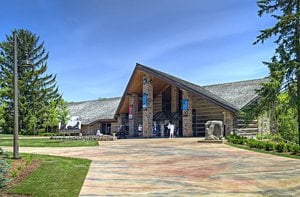 McMichael Canadian Art Collection


