Prodajte
x
Pregledaj u stvarnoj veličiniPregledaj u stvarnoj veličini AR pregledAR pregled Kupi print Kupi printKupi digitalnu sliku Kupi digitalnu sliku PošaljiPošalji
Detalji o umjetničkom djeluDetalji o umjetničkom djelu Dodaj u omiljene Dodaj u omiljene PreuzmiPreuzmi Slični predmetiSlični predmeti Rentgenska snimkaRentgenska snimka Automatska prezentacijaAutomatska prezentacija

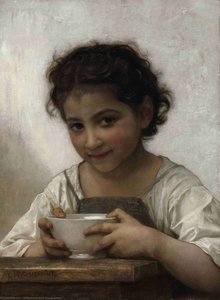
The Nut Gatherers

Experience the serene beauty of Bouguereau's 'The Nut Gatherers,' depicting two young girls playfully collecting hazelnuts in a picturesque forest setting – a masterpiece of classical realism.

William-Adolphe Bouguereau bio je francuski akademski slikar koji je poznat po svojim detaljnim prikazima mitologije i žanrovskim scenama. Njegova umjetnička djela uključuju slike Venuse rođenje, Zenobia pronađena od pastira na rijeci Araks i dijete na kupanju koje su izražavaju klasiku estetiku i umjetničku vrijednost.

Ručno rađena uljana reprodukcija

Ručno oslikano uljanim bojama na platnu u dimenzijama i okviru po vašem izboru, izrađeno po narudžbi od strane naših umjetnika. (Kupi print Kupi printKupi digitalnu sliku Kupi digitalnu sliku)

P118B $10
P118H $10
P118W $10
P438Z $10
P508JH $12
P508YH $12
P805H $10
P805Z $10
P919BZ $10
P919G $10
P919XJ $10
P959ZH $10
P968JZ $12
W106C $8
W218G $10
W218JH $8
W218Y $10
W307PJ $10
W316G $10
W316PJ $8
W316Y $10
W398PJ $8
W4111J $10
W500HY $15
W500JH $15
W692G $12
W849H $8
W940BG $15
W953PJ $8

Standard
custom
CM
INCH

Odaberite jednu od naših unaprijed definiranih veličina koje odgovaraju izvornim proporcijama umjetničkog djela.

širina
visina

Možete unijeti vlastite dimenzije kako bi odgovarale određenom okviru ili prostoru. Ako odabrana veličina ne odgovara proporcijama izvorne slike, izrezat ćemo umjetničko djelo ili proširiti sliku dodatnim ručno oslikanim elementima. Digitalni nacrt bit će vam poslan na odobrenje prije početka proizvodnje.
Imajte na umu da pregled na ekranu ne prikazuje stvarno izrezivanje ili proširivanje. Samo će nacrt točno prikazati konačni sastav.
Iako su dostupne prilagođene veličine, preporučujemo odabir dimenzije s preddefiniranog popisa kako bismo očuvali izvorne proporcije.

Primjeri mogućnosti prilagodbe: Zamijenite lice fotografijom klijenta; Dodajte ljubimca (npr. zamijenite mačku psom); Uključite skrivenu poruku u pozadinu; Promijenite pejzaž ili elemente pozadine.
Nakon narudžbe, tim WahooArt.com kontaktirat će klijenta putem e-pošte radi dobivanja uputa te dostaviti probni prikaz (mockup).

Isporuka širom svijeta () u roku od 3-4 tjedna umjesto standardnih 5 tjedana. (12 Kolovoz). Bez kompromisa u kvaliteti.

why_choose_icon
Besplatna ekspresna dostava širom svijeta
why_choose_icon
Visokokvalitetno laneno platno
why_choose_icon
Potpuno osiguranje dostave
why_choose_icon
Jamstvo povrata carine i uvoznih poreza
why_choose_icon
Garancija vjernog podudaranja boja
why_choose_icon
Politika povrata u roku od 60 dana (samo u slučaju nedostataka)
why_choose_icon
Jamstvo povrata 100% novca
why_choose_icon
Popust na više proizvoda

Ukupna cijena

$ 272

reproduction

The Nut Gatherers

Tehnika reprodukcije

Veličina reprodukcije

-

Ukupna cijena

$ 272

Osnovne informacije

  • Artistic style: Romanticism
  • Medium: Oil on Canvas
  • Artist: William-Adolphe Bouguereau
  • Subject or theme: Childhood innocence; Pastoral scene
  • Location: Detroit Institute of Arts
  • Influences:
    • Raphael
    • Titian
  • Title: The Nut Gatherers

Kviz o umjetnosti

Svako pitanje ima samo jedan točan odgovor.

Pitanje 1:
What is the primary subject matter of ‘The Nut Gatherers’?
Pitanje 2:
Which artistic movement heavily influenced Bouguereau’s style?
Pitanje 3:
Where is ‘The Nut Gatherers’ currently housed?
Pitanje 4:
What technique did Bouguereau employ to achieve the painting’s luminous color palette?
Pitanje 5:
What does ‘The Nut Gatherers’ symbolize in terms of artistic ideals?

Opis umjetničkog djela

A Symphony of Pastoral Beauty: Exploring William-Adolphe Bouguereau’s “The Nut Gatherers”

“The Nut Gatherers,” completed in 1882 by French painter William-Adolphe Bouguereau, stands as a quintessential example of Academic Impressionism—a movement that sought to reconcile the spontaneity of Impressionism with the grandeur and precision demanded by traditional artistic conventions. More than just a depiction of rural life, it’s an exquisitely crafted meditation on innocence, femininity, and the idealized vision of nature prevalent in late nineteenth-century France.

Subject Matter and Composition

The painting portrays two young girls seated upon a grassy hillside beneath a dappled canopy of trees. Their task is simple: collecting hazelnuts from the earth—a commonplace activity rendered with breathtaking detail and imbued with profound symbolic significance. Bouguereau’s masterful composition guides the viewer's eye, establishing a harmonious balance between figures and landscape. The positioning of the girls—one slightly behind the other—creates a sense of intimacy and connection, mirroring the quiet companionship inherent in childhood friendship. A solitary bird perched on a branch adds to the idyllic atmosphere, representing freedom and observation within this tranquil setting.

Style and Technique: Bouguereau’s Pursuit of Ideal Beauty

Bouguereau's technique is characterized by painstaking realism combined with an unwavering commitment to artistic idealism. He employed glazing—a layering process where thin translucent washes of color are applied over underlying layers—to achieve luminous skin tones and create a palpable sense of depth. The artist meticulously rendered every leaf, twig, and grain of grass, demonstrating an unparalleled dedication to capturing the textures and nuances of the natural world. Yet, this realism serves not merely as imitation but as a vehicle for conveying Bouguereau’s belief in beauty—a beauty rooted in classical ideals and elevated beyond mere representation. The figures themselves are sculpted with anatomical precision, embodying feminine grace and purity.

Historical Context: Academic Impressionism's Legacy

“The Nut Gatherers” emerged during the height of Academic Impressionism, a reaction against the increasingly fragmented aesthetic sensibilities of Impressionism. Artists like Bouguereau sought to reaffirm the values of tradition while simultaneously embracing innovative techniques. The painting reflects the broader cultural preoccupation with portraying idealized femininity and celebrating rural landscapes—themes that resonated deeply with the Victorian era’s fascination for moral virtue and pastoral tranquility. It exemplifies the artistic ambition to capture not just what is seen but what is felt—a desire to evoke emotion and inspire contemplation.

Symbolism: Hazelnut Gathering as Metaphor

Beyond its visual splendor, “The Nut Gatherers” carries symbolic weight. The hazelnut itself represents fertility and nourishment – mirroring the nurturing role of women in society during this period. Furthermore, the girls’ activity symbolizes innocence and simplicity—a deliberate contrast to the complexities and anxieties of modern life. Bouguereau's careful attention to detail underscores the importance of observing and appreciating the beauty found in everyday occurrences.

Emotional Impact: A Timeless Expression of Pastoral Harmony

The painting’s enduring appeal lies in its ability to transport viewers back to a bygone era—a time characterized by idealized notions of femininity, rural serenity, and artistic refinement. “The Nut Gatherers” evokes feelings of warmth, nostalgia, and admiration for the beauty of nature. It serves as a poignant reminder that true artistry resides not merely in technical prowess but in conveying profound emotional resonance—a testament to Bouguereau’s genius and his unwavering devotion to capturing the sublime essence of human experience.

Biografija umjetnika

William-Adolphe Bouguereau (1825-1905): A Life Immersed in Beauty

Born in La Rochelle, France, on November 30th, 1825, William-Adolphe Bouguereau’s life unfolded as a profound engagement with classical ideals and an astonishing command of artistic realism. From his earliest years, he demonstrated an innate passion for art, nurtured by his family's involvement in the wine trade – a connection that instilled within him a meticulous attention to detail and observation. Recognizing his exceptional talent, Bouguereau pursued his education at the École des Beaux-Arts in Paris, where he was mentored by François-Edouard Picquenot, absorbing the wisdom of the Old Masters—Raphael and Titian—who served as guiding lights for his artistic journey. These formative influences weren’t merely stylistic imitations; they constituted the bedrock upon which Bouguereau constructed a singular vision, characterized by unparalleled anatomical precision, luminous color palettes, and an unwavering devotion to portraying beauty in its most idealized form. He wasn't simply replicating what he *saw*; rather, he sought to distill the essence of perfection—a pursuit that resonated deeply with the aesthetic sensibilities of his era.

The École des Beaux-Arts and Artistic Foundations

Bouguereau’s formal training at the École des Beaux-Arts proved instrumental in shaping his artistic style. He diligently studied anatomy, mastering the intricacies of human musculature and skeletal structure—a skill that would become central to his oeuvre. His instructors emphasized the importance of disegno (drawing), encouraging students to develop a foundational understanding of form and proportion before tackling more complex compositions. Bouguereau’s meticulous draftsmanship is evident throughout his paintings, where figures are rendered with breathtaking accuracy—the subtle curve of a shoulder, the delicate blush of skin, the expressive depth of an eye. This dedication to disegno wasn't merely about technical proficiency; it was about cultivating a deep appreciation for the human form and its capacity for conveying emotion. He meticulously dissected cadavers, painstakingly reconstructing anatomical structures to achieve unparalleled realism—a practice that reflected his belief in the primacy of observation and intellectual understanding.

Mythological Inspirations and Artistic Technique

Bouguereau’s artistic vision was profoundly influenced by mythology—particularly Greek mythology. He drew inspiration from tales of gods and goddesses, transforming ancient narratives into vibrant, emotionally resonant scenes. *The Birth of Venus*, arguably his most iconic work, exemplifies this approach. Bouguereau skillfully captured the ethereal beauty of Venus emerging from the sea foam—a depiction that transcends mere visual representation, conveying a sense of grace, serenity, and divine inspiration. He employed techniques honed by Titian and Raphael to achieve luminous color palettes and masterful chiaroscuro (light and shadow)—creating dramatic contrasts that heighten emotional impact. Bouguereau’s brushstrokes were deliberate and controlled, meticulously layering pigments to build up texture and depth—a testament to his unwavering commitment to artistic craftsmanship. He utilized glazing techniques—applying thin layers of translucent paint over underlying colors—to achieve subtle tonal variations and enhance the luminosity of his canvases.

Genre Scenes and Portraiture: Capturing Everyday Life

Beyond mythological subjects, Bouguereau excelled in genre paintings—scenes depicting ordinary life—often infused with a sense of moral contemplation. *Bergère 1886*, for example, portrays a shepherdess tending her flock with remarkable tenderness and sensitivity—a depiction that captures the beauty of rural simplicity and evokes feelings of warmth and compassion. Bouguereau’s portraits were equally distinguished by their realism and psychological insight. He skillfully captured the essence of his subjects—their personalities, emotions, and inner lives—creating images that transcend mere likeness, conveying a profound understanding of human experience. His portraits often employed pyramidal compositions—a technique popularized by Leonardo da Vinci—to create balanced and harmonious images that drew the viewer’s eye upward toward the face of the sitter. Bouguereau's meticulous attention to detail extended beyond anatomical accuracy; he meticulously rendered fabrics, textures, and surfaces—creating canvases that were imbued with palpable materiality.

Legacy and Enduring Influence

Despite facing criticism from avant-garde artists during his lifetime—particularly Picasso and Matisse—Bouguereau’s artistic legacy endured. His unwavering devotion to classical ideals—anatomical precision, luminous color palettes, and meticulous draftsmanship—continues to inspire contemporary figurative painters. Bouguereau's influence can be seen in the works of numerous artists who strive for beauty and skill—a testament to his enduring contribution to art history. He remains a pivotal figure in 19th-century French painting, representing the zenith of academic artistry and offering a timeless vision of beauty that continues to captivate audiences today. His paintings are housed in prestigious museums worldwide—including the Musée d’Orsay in Paris, The J. Paul Getty Museum, and Carnegie Museum—ensuring that his artistic achievements will be celebrated for generations to come. Song of the Angels (1881) stands as a beacon of ethereal beauty and serene composition—a masterpiece embodying Bouguereau's ability to evoke wonder and spiritual transcendence.
William-Adolphe Bouguereau

William-Adolphe Bouguereau

1825 - 1905 , Francuska

Osnovne informacije

  • Artistic Movement Or Style: Akademska Realizam
  • Artists Who Influenced This Artist:
    • Rafael
    • Titian
  • Date Of Birth: 1825.
  • Date Of Death: 1905.
  • Full Name: William-Adolphe Bouguereau
  • Nationality: Francuz
  • Notable Artworks:
    • Nymphaeum
    • Bergère 1886
    • Child at Bath
    • Song of the Angels
    • Birth of Venus
  • Place Of Birth: La Rochelle, Francuska
Istražite umjetnička djela organizirana prema temama, stilovima i karakteristikama.