The Majesty of Power: Hans Holbein’s Portrait of Henry VIII
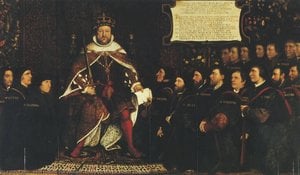
Hans Holbein the Younger's 1540 “Portrait of Henry VIII, Galleria,” housed within the esteemed Galleria dell’Accademia di Firenze, is far more than a simple likeness; it’s a meticulously crafted embodiment of power, authority, and the complex character of one of England’s most transformative monarchs. This iconic painting transcends its historical context to resonate with viewers centuries later, offering a profound glimpse into the mind of a king who reshaped his nation through both diplomacy and dramatic action. Holbein's genius lies not merely in capturing Henry VIII’s physical appearance – though that is undeniably rendered with astonishing detail – but in imbuing the portrait with an aura of regal presence and carefully calculated symbolism.
The painting itself measures a modest 83 x 74 cm, yet within those dimensions unfolds a world of intricate artistry. Holbein’s mastery of oil on panel is immediately apparent; the textures of Henry's velvet robes, the sheen of his gold chain, and the subtle folds in his beard are rendered with breathtaking realism. The color palette is deliberately restrained – primarily deep reds, greens, and golds – creating an atmosphere of understated elegance that perfectly complements the king’s status. Notably, the background, a muted green hue, isn't merely decorative; it subtly anchors Henry within the realm of power, evoking images of royal forests and the vastness of his dominion.
A King Defined: Artistic Style and Technique
Holbein’s style in this portrait is characterized by an almost obsessive attention to detail. He was renowned for his ability to capture not just outward appearances but also the very essence of his subjects, imbuing them with a sense of personality and psychological depth. This is particularly evident in Henry VIII's face – his gaze is direct, confident, and subtly challenging. The artist’s use of chiaroscuro (the contrast between light and dark) further enhances this effect, sculpting the king’s features and drawing attention to key elements like his prominent nose and piercing eyes.
The choice of oil on panel as the medium was crucial to Holbein's success. This technique allowed for layering and blending of colors with unparalleled precision, enabling him to achieve the subtle gradations of tone and texture that define the portrait’s remarkable realism. Furthermore, Holbein’s meticulous preparatory work – evidenced by surviving cartoons – demonstrates his commitment to achieving absolute accuracy in every detail, from the arrangement of Henry's garments to the placement of each individual strand of hair.
The Weight of History: Context and Symbolism
To understand “Portrait of Henry VIII,” one must appreciate its historical context. The painting was created during a period of immense upheaval in England – the reign of Henry VIII, marked by his break with Rome, the dissolution of monasteries, and the establishment of the Church of England. The portrait itself is inextricably linked to these events, serving as both a symbol of royal authority and a testament to the king’s ambition.
Several elements within the painting carry symbolic weight. Henry's elaborate attire – including the ruffled collar, gold chain, and voluminous robes – signifies his wealth, power, and status as head of state. The large beard and mustache, characteristic of the period, were fashionable among royalty and served to project an image of strength and maturity. The dagger hanging at his waist is a potent symbol of Henry’s martial prowess and his willingness to defend his realm against any threat.
A Legacy in Reproduction: WahooArt.com and Beyond
At WahooArt.com, we are proud to offer meticulously crafted oil painting reproductions of this extraordinary masterpiece. Our artisans painstakingly recreate Holbein’s techniques and attention to detail, ensuring that the reproduction captures not only the visual likeness but also the emotional impact of the original. We believe that art should be accessible to all, and our high-quality reproductions provide a unique opportunity to experience the beauty and history of this iconic portrait in your own home.
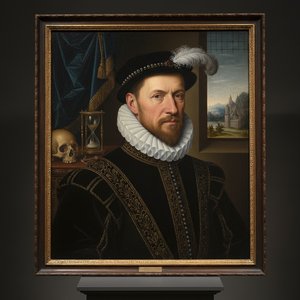
Beyond WahooArt.com, “Portrait of Henry VIII” continues to fascinate scholars and art enthusiasts alike. It stands as a testament to Holbein’s artistic genius and a powerful symbol of a pivotal moment in English history. Explore other notable works by Hans Holbein The Younger at WahooArt.com, including “Lady Rich (Elizabeth Jenks, died 1558)” and “Portrait of Sir Richard Southwell,” to delve deeper into the artist’s remarkable oeuvre.
Experience the beauty and history of art with WahooArt.com. For more information on this painting and other artworks, visit WahooArt.com.



 Pregledaj u stvarnoj veličini
 Prebacite na print
 Pošalji
 Podijeli
 Detalji o umjetničkom djelu

 Preuzmi
 Slični predmeti
 Rentgenska snimka
 Automatska prezentacija
 Statistika


 Prikaži više






































 Opcija stakla dostupna je samo za dimenzije manje od 110 cm






![Dvostruki portret Jeana de Dintevillea i Georgesa de Selvea (poznati kao Veleposlanici) [detalj]](/media/artworks/images-thumb/bb/ab/bbab7ce77b7dd15d23d21114a63b51a4.jpg)

![Dvojni portret Jeana de Dintevillea i Georgesa de Selvea (poznat i kao V سفiri) [detalj]](/media/artworks/images-thumb/42/81/42813dc49b2f72bce897aaf8b747ad5b.jpg)


