Pregledaj u stvarnoj veličini Isprobaj u AR-u Prebacite na prodaju printova Prebacite na digitalnu prodaju slika Podijeli
Detalji Vodič Dodaj u omiljene Preuzmi datoteku Slični predmeti Rentgenska snimka Slide show Statistika

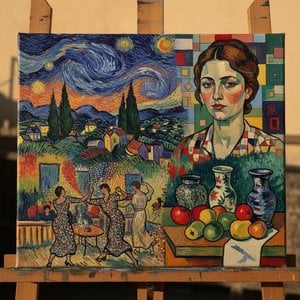
Autumn: The Fruit Pickers

Captured in vibrant Post-Impressionism style by Pierre Bonnard, ‘Autumn: The Fruit Pickers’ depicts a lively harvest scene brimming with golden hues and the warmth of collaborative labor—a timeless tableau inviting you to explore its beauty.

Pierre Bonnard (1867-1947) je francuski impresionistički slikar poznat po svojim intimnim scenama, živahnim bojama i stilu 'Intimist'. Nakon studija prava, Bonnard se posvetio umetnosti kao mladolik savestovan o umetničkim trendovima svog vremena. Njegova kreativna putanja vodila ga kroz grupu umetnika poznatih kao Les Nabis, gde je pronašao inspiraciju u japanskim grafikama i simbolističkom pokre

Ručno rađena uljana reprodukcija

Ručno oslikano uljanim bojama na platnu u dimenzijama i okviru po vašem izboru, izrađeno po narudžbi od strane naših umjetnika. ( Prebacite na prodaju printova Prebacite na digitalnu prodaju slika)

P118B $10
P118H $10
P118W $10
P438Z $10
P508JH $12
P508YH $12
P805H $10
P805Z $10
P919BZ $10
P919G $10
P919XJ $10
P959ZH $10
P968JZ $12
W106C $8
W218G $10
W218JH $8
W218Y $10
W307PJ $10
W316G $10
W316PJ $8
W316Y $10
W398PJ $8
W4111J $10
W500HY $15
W500JH $15
W692G $12
W849H $8
W940BG $15
W953PJ $8

Standardne dimenzije
prilagođeno po mjeri
CM
INCH

Odaberite jednu od naših unaprijed definiranih veličina koje odgovaraju izvornim proporcijama umjetničkog djela.

širina
visina

Možete unijeti vlastite dimenzije kako bi odgovarale određenom okviru ili prostoru. Ako odabrana veličina ne odgovara proporcijama izvorne slike, izrezat ćemo umjetničko djelo ili proširiti sliku dodatnim ručno oslikanim elementima. Digitalni nacrt bit će vam poslan na odobrenje prije početka proizvodnje.
Imajte na umu da pregled na ekranu ne prikazuje stvarno izrezivanje ili proširivanje. Samo će nacrt točno prikazati konačni sastav.
Iako su dostupne prilagođene veličine, preporučujemo odabir dimenzije s preddefiniranog popisa kako bismo očuvali izvorne proporcije.

Primjeri onoga što se može promijeniti: Zamijenite lice fotografijom klijenta; Dodajte ljubimca (npr. zamijenite mačku psom); Uključite skrivenu poruku u pozadinu; Promijenite pejzaž ili elemente pozadine.
Nakon narudžbe, tim WahooArt.com kontaktirat će klijenta putem e-pošte radi dobivanja uputa te dostaviti probni prikaz (mockup)

Isporuka širom svijeta () u roku od 3-4 tjedna umjesto standardnih 5 tjedana. (21 Rujan). Bez kompromisa u kvaliteti.

why_choose_icon
Besplatna ekspresna dostava širom svijeta
why_choose_icon
Visokokvalitetno laneno platno
why_choose_icon
Potpuno osiguranje transporta
why_choose_icon
Jamstvo povrata carine i uvoznih poreza
why_choose_icon
Jamstvo vjernosti boja
why_choose_icon
Politika povrata u roku od 100 dana (samo u slučaju nedostataka)
why_choose_icon
Jamstvo povrata 100% novca
why_choose_icon
Popust na više proizvoda

Ukupna cijena

$ 272

reproduction

Autumn: The Fruit Pickers

Tehnika izrade

Veličina reprodukcije

-

Ukupna cijena

$ 272

Brzi pregled

  • Movement: Post-Impressionism
  • Artistic style: Decorative
  • Artist: Pierre Bonnard
  • Title: Autumn: The Fruit Pickers
  • Year: 1912
  • Medium: Oil on canvas
  • Influences: Japanese prints

A Symphony of Color and Labor: The Luminous World of Pierre Bonnard

In the heart of a sun-drenched orchard, where the air seems thick with the scent of ripening fruit and the warmth of a fading summer, Pierre Bonnard’s “Autumn: The Fruit Pickers” unfolds as a breathtaking masterwork of Post-Impressionism. Painted in 1912, this canvas is far more than a mere documentation of seasonal harvest; it is an evocative sensory experience that invites the viewer to step into a moment of quiet, rhythmic labor. Bonnard, a founding member of the avant-garde Les Nabis group, possessed a singular ability to transform everyday rural activities into something deeply spiritual and visually hypnotic. As the eye wanders through the composition, it encounters five figures scattered amongst the trees, their movements harmonizing with the natural cycle of decay and rebirth that defines the autumn season.

The painting’s brilliance lies in its masterful manipulation of light and color, a technique that bridges the gap between the fleeting impressions of Monet and the structured emotional depth of the Symbolist movement. Bonnard employs a deliberate blurring of edges, eschewing sharp, photographic outlines in favor of soft, tonal transitions that mimic the way sunlight filters through a canopy of changing leaves. The palette is a vibrant dialogue between warm and cool; brilliant yellows, fiery oranges, and deep reds of the autumn foliage are balanced by subtle, atmospheric blues. This use of complementary colors creates a luminous vibration across the canvas, making the entire scene appear to glow from within, as if the very atmosphere were saturated with golden light.

Texture, Technique, and the Nabis Spirit

To touch the surface of such a work—even through a high-quality reproduction—is to imagine the tactile richness of Bonnard’s impasto technique. The artist applied paint in textured layers, particularly evident in the rugged trunks of the trees and the heavy baskets brimming with the season's bounty. This physical depth does not merely serve a decorative purpose; it actively simulates the dappled, flickering quality of sunlight hitting uneven surfaces. By prioritizing subjective experience over objective realism, Bonnard aligns himself with the Nabis’s rebellion against academic rigidity. For this group of artists, art was meant to transcend mere imitation, aiming instead for a spiritual resonance that captures the inner essence of a subject.

For the discerning collector or interior designer, “Autumn: The Fruit Pickers” offers an unparalleled opportunity to introduce a sense of warmth and historical prestige into a space. The painting’s composition—featuring a balanced arrangement of figures and a distant, nostalgic hint of a car in the background—provides a narrative depth that rewards prolonged contemplation. It is a piece that commands attention through its energy yet maintains a serene, contemplative atmosphere, making it an ideal centerpiece for a room designed for reflection or sophisticated gathering. Owning a reproduction of this caliber allows one to inhabit the same golden, autumnal light that Bonnard so lovingly captured over a century ago, bringing a timeless elegance and a profound connection to the history of modern art into the contemporary home.


Biografija umjetnika

Pierre Bonnard (1867-1947): A Life Bathed in Light

Pierre Bonnard, born October 3, 1867, in Fontenay-aux-Roses, France – a suburb of Paris – wasn’t initially destined for artistic pursuits. His father, Henri Bonnard, was a distinguished civil servant within the French Ministry of War, prioritizing a legal education for his son. Young Pierre dutifully embraced this path, securing his law degree in 1888, yet his soul yearned for something more vibrant – the captivating realm of color and form. This inherent duality—the clash between expectation and passion—would subtly permeate his artistic journey, imbuing his canvases with a profound intimacy rarely found elsewhere. He began his artistic explorations as a caricaturist, honing an observational skill that would later transform into exquisitely rendered depictions of domestic life.

Early Influences & The Nabi Movement

His formative years coincided with the burgeoning Impressionist movement and its revolutionary challenge to academic conventions. However, Bonnard’s true artistic awakening occurred at the Académie Julian, where he encountered kindred spirits who shared his rejection of rigid formalism and embraced the avant-garde spirit dominating Parisian art circles. This pivotal encounter propelled him into the orbit of Les Nabis – Maurice Denis, Paul Sérusier, Édouard Vuillard – a collective dedicated to elevating art beyond mere representation, delving instead into explorations of inner experience and spiritual symbolism. The Nabi’s fascination with Japanese prints—their understated elegance and harmonious compositions—served as an undeniable catalyst for Bonnard's stylistic evolution. He wasn’t seeking grand narratives; he sought to capture the essence of human emotion within tranquil landscapes and intimate interiors.

The Intimist Style: Color as Emotion

Bonnard’s artistic signature – “Intimism” – emerged from this core conviction: that beauty resided not in theatrical grandeur but in quiet observation. He eschewed meticulous detail, prioritizing instead a luminous palette informed by memory and emotion. Unlike Impressionists who aimed to capture fleeting moments of light, Bonnard meticulously revisited completed canvases, subtly adjusting hues across multiple works to achieve perfect chromatic balance – an act reflecting his unwavering dedication to achieving visual harmony. His landscapes weren’t merely scenic vistas; they were expressions of feeling—filtered through the prism of personal perception. He approached painting with a meditative stillness, allowing color and light to guide him toward conveying profound psychological resonance.

Notable Works & Artistic Legacy

Bonnard's oeuvre boasts iconic pieces that exemplify his distinctive style: “Woman in Checkered Dress” (1890), showcasing flattened forms and bold color harmonies; "The Dining Room" (1913), encapsulating the warmth of domesticity with remarkable sensitivity; “Bowl of Fruit” (c. 1933), demonstrating mastery of still life through luminous depth; and “The Almond Tree in Blossom” (1947), completed shortly before his passing, reaffirming his unwavering commitment to color and light’s expressive potential. His works are housed in prestigious museums globally – Musée Marmottan Monet, Paris; Art Institute of Chicago; Museum of Modern Art, New York City; Tate Modern, London – securing his place as a cornerstone of modern art history. Bonnard's influence extends far beyond his immediate contemporaries, inspiring subsequent generations of artists to prioritize emotional depth and chromatic nuance over literal accuracy. He demonstrated that profound artistic achievement could be realized through embracing simplicity and capturing the subtle beauty inherent in everyday life—a legacy eternally bathed in light.

Later Life & Parisian Residence

Bonnard’s final years were spent primarily in Vernet, France – a picturesque village nestled near Giverny, where Claude Monet cultivated his Impressionist vision. He maintained close friendships with Monet and fellow artists, continually refining his technique and deepening his engagement with color theory. His relationship with Marthe de Meligny—his lifelong companion and muse—provided him with an enduring source of inspiration, portraying her frequently in serene domestic scenes that radiated grace and intimacy. Bonnard’s artistic journey culminated in 1947, leaving behind a body of work that continues to captivate audiences worldwide and solidify his position as one of the most celebrated colorists of the twentieth century.
Pierre Bonnard

Pierre Bonnard

1867 - 1947 , Francuska

Brzi pregled

  • Artistic Movement Or Style: Postimpresionizam
  • Artists Or Movements Influenced By This Artist: ['Les Nabis']
  • Artists Who Influenced This Artist:
    • Paul Gauguin
    • Hokusai
  • Date Of Birth: 1867.
  • Date Of Death: 1947.
  • Full Name: Pierre Bonnard
  • Nationality: Francuz
  • Notable Artworks:
    • Žena u kockastom haljotu
    • Orašar u cvjetu
  • Place Of Birth: Fontenay-aux-Roses, Francija
Istražite umjetnička djela organizirana prema temama, stilovima i karakteristikama.